In a nutshell
- 🔥 Heat + Occlusion reduces TEWL, softens the stratum corneum, and boosts absorption of emollients like olive oil for faster heel softening.
- 🧴 How-to: Warm extra‑virgin olive oil to ~40–45°C, massage for 2 minutes, wrap with cling film and a cotton sock, add gentle heat for 10–15 minutes, then seal with a 10–25% urea or lactic acid cream.
- 🛠️ Smart choices: Pick fresh extra‑virgin olive oil (or avocado/almond), use occlusive socks or cling film, and rely on a towel‑wrapped hot‑water bottle for safe, consistent warmth.
- ⚠️ Safety first: Avoid heat/occlusion with diabetes, neuropathy, infections, or bleeding fissures; patch‑test oils and see an HCPC‑registered podiatrist for red flags.
- 👣 Maintain results: Apply urea 10–15% daily, use gentle filing, choose syndet cleansers and supportive footwear, and repeat wraps 2× weekly then weekly for upkeep.
Britain’s cold floors and central heating do a number on feet, leaving heels cracked, chalky and tender. A simple home fix is gaining ground: an olive oil wrap gently warmed to push moisture deep into the skin. Under warmth and light occlusion, the stratum corneum behaves differently; oils penetrate, water loss drops, and rough edges soften. Heat turns a simple oil into a targeted treatment, not unlike a mini spa for your soles. Done well, it’s comfortable, inexpensive and surprisingly effective—especially when paired with sensible aftercare. Here’s how the science works, how to do it safely, and when to call in a professional.
Why Heat Supercharges Olive Oil Absorption
Skin is not a brick wall; it’s a living mosaic of corneocytes and lipids. Warmth makes those lipids more fluid, easing the path for emollients like olive oil to slip between cells. At the same time, a wrap reduces transepidermal water loss (TEWL), creating a humid microclimate that encourages hydration to move inward. Combine heat and occlusion, and you amplify absorption while softening compacted keratin. That’s critical for heels, where pressure drives thickening and fissures. The result: better pliability and fewer snaggy, brittle edges.
Why olive oil? It’s rich in oleic acid and squalene, both skin-friendly lipids, plus polyphenols with antioxidant clout. Critics note that high-oleic oils can temporarily disrupt the barrier in some skin types. On heels—already overbuilt and dry—this can be an advantage, allowing deeper conditioning, provided you follow with a barrier cream. The point is not magic but mechanics: heat optimises diffusion, occlusion preserves moisture, and oil fills the gaps.
Step-By-Step: The Olive Oil Heel Wrap
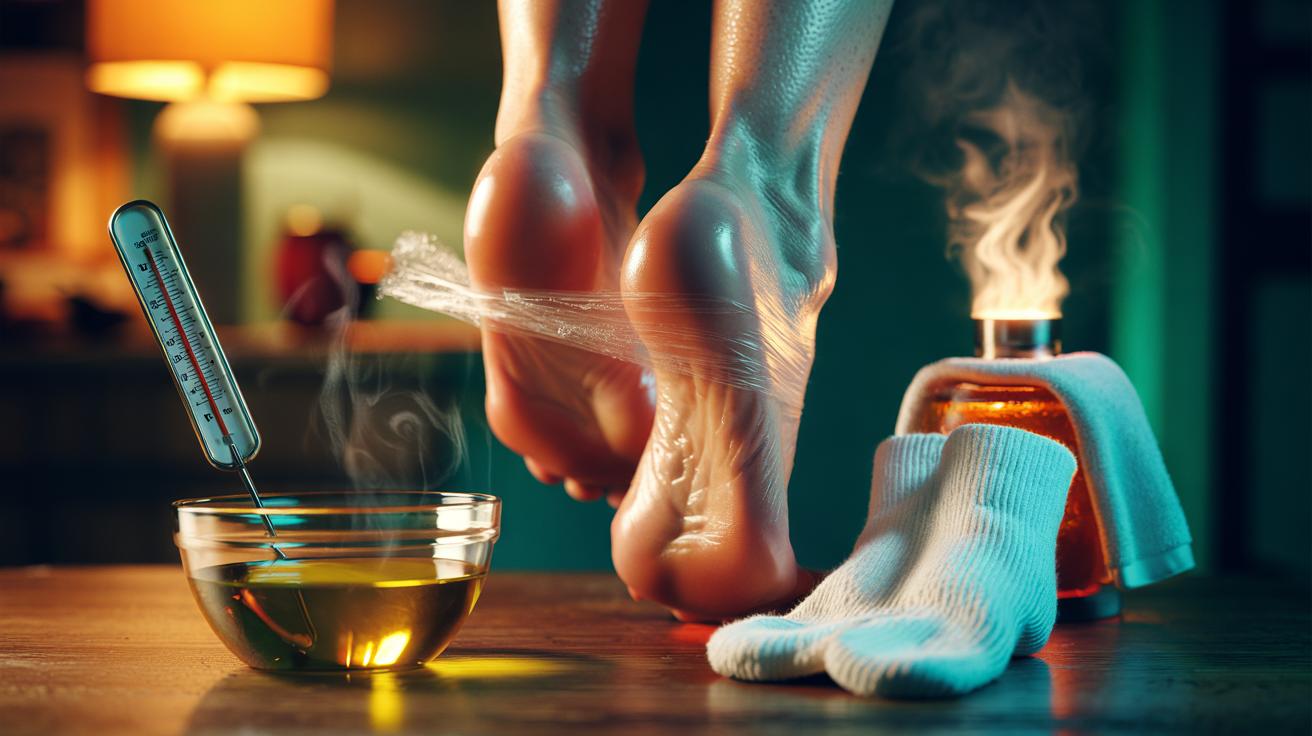
Start with clean, dry feet. Warm 1–2 tablespoons of extra-virgin olive oil in a bowl placed in hot water until it’s pleasantly warm—aim for about 40–45°C; test with a finger. Never apply oil that feels hot on the skin. Massage it into each heel for two minutes to boost circulation and distribute lipids evenly. Slip a small piece of cling film around the heel or use an occlusive cotton heel sock. Add a thick, clean sock on top to trap warmth.
For active heat, rest your feet on a warm (not hot) wheat bag or hot-water bottle wrapped in a towel for 10–15 minutes, then keep the socks on for another 15 minutes. Total: about 30 minutes. Wipe away excess and seal the softness with a 10–25% urea or lactic acid heel cream. If skin is cracked to bleeding, infected, or you have diabetes or neuropathy, skip heat and seek professional advice. Use the wrap twice weekly, tapering to weekly as heels improve.
Choosing the Right Oil, Heat, and Tools
Choose fresh, extra-virgin olive oil for its squalene and antioxidants; refined olive oil is fine but slightly less nourishing. Sensitive to olive? Avocado or sweet almond oil are good substitutes with similar slip. Heat accuracy matters: a kitchen thermometer avoids guesswork, but your skin’s comfort test is the non-negotiable check. For wraps, cling film is effective; breathable occlusive socks are tidier for overnight use. A towel-wrapped hot-water bottle offers controllable, gentle warmth.
| Parameter | Recommendation | Why It Matters |
|---|---|---|
| Oil Type | Extra-virgin olive oil (or avocado/almond) | Rich lipids and antioxidants improve softening |
| Temperature | ~40–45°C; warm, never hot | Maximises absorption without burn risk |
| Duration | 20–30 minutes | Enough to hydrate without over-maceration |
| Wrap Material | Cling film + cotton sock | Occlusion traps moisture and heat |
| Add‑Ons | Urea 10–25% cream after | Locks gains and smooths rough keratin |
| Frequency | 2× weekly, then weekly | Builds and maintains softness |
Safety, Evidence, and When to Seek Help
Heat plus occlusion is a proven route to reduce TEWL and hydrate the outer layer, a principle used in clinical emollient therapy for eczema. While randomised trials specifically on olive oil heel wraps are limited, the underlying mechanics—lipid penetration, hydration gradients, and softening of hyperkeratosis—are well documented. The wrap is a technique, not a miracle; its success hinges on consistent use and sensible temperatures. Pairing with keratolytics like urea or lactic acid boosts results by gently dissolving hardened skin.
Red flags: diabetes, peripheral vascular disease, neuropathy, or fragile skin—heat and tight occlusion can be risky. Avoid wrapping if you have athlete’s foot or weeping dermatitis; moisture can worsen infection. If fissures bleed, hurt to walk on, or show redness and swelling, seek a HCPC-registered podiatrist. Patch-test oil if prone to contact dermatitis. In practice, most people tolerate this routine well when they prioritise comfort, hygiene, and moderation.
Long-Term Heel Care That Keeps Results
The wrap is your accelerator; daily habits are the cruise control. After evening showers, apply a urea 10–15% moisturiser and pull on cotton socks to prevent overnight evaporation. Once or twice a week, use a pumice or foot file on damp skin—light strokes only—to reduce thick patches without provoking rebound hardening. Choose soaps labelled syndet or “gentle”, which don’t strip oils. Small, regular steps protect the barrier you’ve just rebuilt.
Footwear matters: backless shoes encourage heel slippage and callus formation, while cushioned trainers share pressure more evenly. Hydration helps; drink water and mind room humidity during heating season. If you love a long bath, finish with a moisturiser to offset water’s drying aftermath. Reserve the heated wrap for maintenance or flair-ups. Over time, you’ll notice fewer snags on tights, less flaking on sheets, and a spring in your step that makes winter pavements feel friendlier.
Used thoughtfully, a warmed olive oil wrap transforms heels from rough to resilient by harnessing heat, occlusion and the right lipids. It’s cost-effective, quick to set up, and easily paired with smarter daily habits for durable results. Respect temperature, keep sessions short, and seal the softness with urea—the trifecta for baby-soft heels. What small tweaks could you make this week—routine, tools, or footwear—to give your feet the cosy, well-engineered care they’ve been missing?
Did you like it?4.3/5 (24)