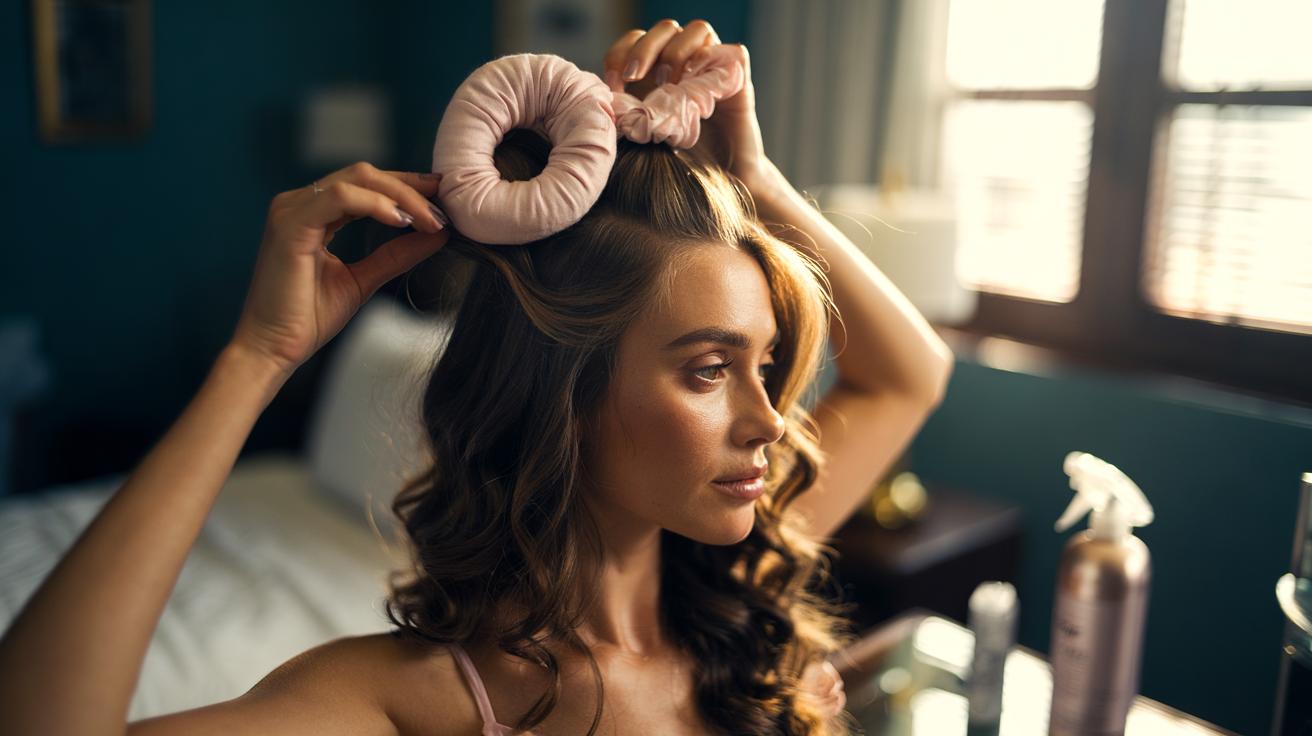
In a nutshell
- 🔄 The 5-minute sock bun creates glossy heatless curls that can last up to 48 hours by resetting hydrogen bonds with gentle, even tension on lightly damp hair.
- 🧰 Kit checklist: a clean sock or foam donut, scrunchie, light mousse or curl cream, and a mist bottle; aim for hair that’s ~70% dry to avoid dents and droop.
- 🧭 Technique: high ponytail at the crown, thread through the sock, wrap two sections in opposite directions, secure with a soft scrunchie, set for 30–60 minutes (or overnight), then unroll and finish with light texture spray.
- ⏳ Longevity: let curls “cool,” use a pea of serum on Day One, refresh with a mist on Day Two, and sleep with a silk scrunchie/pillowcase to preserve shape.
- 🧩 Customise and troubleshoot: finer hair uses more mousse and a slimmer sock; thicker hair prefers a larger core; fix dents with satin ties, prevent frizz by slow unrolling, and rewrap ends to avoid “fish hooks.”
The five-minute sock bun is the rare internet hack that stands up to real life: a quick twist that delivers glossy, heatless curls and lasts a reported 48 hours. It’s inexpensive, gentle on strands, and fits into a busy morning or post-shower routine. The principle is simple: wrap damp hair around a soft core, allow it to set, then unfurl for uniform waves with lift at the roots. This is a smart alternative to heat tools, preserving shine and reducing split ends. Whether you’re prepping for a workday or a weekend away, this method offers consistency, comfort, and a polished finish with minimal effort.
What You Need and Why It Works
The beauty of the sock bun is its simplicity. You’ll need a clean sock or a foam hair donut, a soft scrunchie or snag-free hair tie, a light-hold mousse or curl cream, and a fine mist spray bottle. The sock acts as a cushioned former, creating even tension without harsh lines. A small amount of product sets the pattern while keeping flexibility. Even tension plus slow drying equals long-lasting curl memory. This is hair science in action: as hair dries from damp under gentle pressure, hydrogen bonds reset into the curve you’ve created, delivering smooth, consistent waves.
| Item | Purpose | Pro Tip |
|---|---|---|
| Clean sock or foam donut | Soft core for wrapping | Choose a long, stretchy sock for thicker hair |
| Scrunchie or tie | Secure bun without dents | Use satin to reduce friction |
| Mousse or curl cream | Hold and definition | Walnut-sized amount for mid-lengths |
| Mist bottle | Even dampness | Aim for 70% dry, not wet |
Keeping hair only lightly damp is the secret to achieving the five-minute setup and all-day hold. Too wet, and you’ll flatten roots; too dry, and you’ll lose definition. Balance is everything.
The Sock Bun Technique, Step by Step
Start with clean, detangled hair that’s air-dried until roughly 70% dry. Work a small amount of mousse or leave-in through the mid-lengths and ends; avoid the roots to prevent greasiness. Gather hair into a high ponytail at the crown for maximum lift. Slide the ponytail through the sock’s opening and anchor the sock at the base. Split the ponytail into two sections and begin wrapping them in opposite directions around the sock, overlapping neatly as you go.
As you wrap, gently smooth each pass to keep strands aligned. When you reach the ends, tuck them under and secure the whole bun with a soft scrunchie. Use light, even tension—tight enough to set, loose enough to stay comfortable. For speed, warm the outside with your palms for a few seconds to encourage bonding. Leave the bun in for at least 30–60 minutes, or overnight for the most uniform curl pattern.
To release, remove the scrunchie and unroll slowly. Shake out with fingertips, not a brush. Finish with a whisper of texture spray for hold and movement. Touch less, last longer.
Securing Curls That Last 48 Hours
Longevity begins during the set. Make sure hair is evenly damp before wrapping; damp roots help anchor the shape. If you’re short on time, a quick burst from a cool setting on the hairdryer can speed drying without heat damage. Do not blast with high heat—it defeats the point of a heatless method. Once released, let curls “cool” in their new shape for a few minutes before styling; this settles the bonds and locks in the wave.
For Day One, apply a pea-sized amount of serum to the ends to seal in shine. For Day Two, refresh with a light mist of water or a curl refresher, scrunching upwards to revive volume. Sleep with hair loosely twisted back into the sock bun or in a silk scrunchie pineapple to maintain the pattern. Friction is the enemy—use a silk pillowcase to extend wear to the full 48 hours. Finish with a soft-hold hairspray if you face windy commutes or gym sessions.
Adjustments for Different Hair Types and Lengths
Fine or straight hair benefits from a touch more mousse and a slightly tighter wrap around a thinner sock to create definition without slipping. Thick or coarse hair prefers a larger sock to avoid excessive tension and to allow air flow; a lightweight curl cream helps control frizz. Natural waves can skip heavy products—just a hydrating leave-in will keep texture supple. If hair feels “crispy,” you’ve used too much hold product; dilute with water.
Short bobs can divide hair into two mini sock buns behind the ears; release and blend for soft bends rather than tight curls. For layered cuts, wrap shorter layers first so they don’t spring loose. Curly or coily textures may prefer a damp-to-dry set with a leave-in conditioner plus a drop of oil for sheen. If roots are flat, place the ponytail slightly forward, towards the hairline, for lift that reads like a blow-dry.
Common Mistakes and Quick Fixes
Problem: dents near the base. Cause: hard elastics. Fix: swap for a satin scrunchie and wrap the first turns looser. Problem: curls drop within hours. Cause: hair was too wet at the set. Fix: start from 70% dry and add a touch more mousse. Set time matters—aim for at least 30 minutes for a daytime prep, overnight if possible. Problem: frizz halo. Cause: rough handling on release. Fix: unroll slowly and smooth with a drop of serum on palms.
If ends look fish-hooked, you didn’t tuck fully—rewrap the last 3–4 centimetres neatly under the sock. If the crown collapses, move the bun higher or add a lightweight root spray at the ponytail before wrapping. For gym-goers, re-pin the bun post-workout while hair cools; sweat loosens bonds, but a quick reset restores the pattern without heat.
The five-minute sock bun earns its cult status because it’s fast, kind to hair, and reliably chic. With a soft core, even tension, and patient drying, you’ll shape lustrous, heatless curls that survive commutes, meetings, and late nights. Small tweaks for your hair type turn a good set into a great one. Keep product light, avoid friction, and refresh rather than rewash to extend wear. Ready to trade hot tools for a gentler routine that still looks polished—what variation of the sock bun will you try first, and how will you make it your own?
Did you like it?4.5/5 (21)