In a nutshell
- 🧪 Salicylic acid (BHA) is oil-soluble, dissolves dead-cell bonds inside pores, and reduces redness; crushed aspirin may release some salicylic acid but has unpredictable strength—labelled OTC products (typically 0.5–2%) are more reliable.
- 🍯 Honey acts as a humectant, softens debris, and offers mild antimicrobial support, helping cushion skin while acids work; it supports comfort and hydration but does not “kill” blackheads.
- 🧾 DIY vs shop-bought: the honey + aspirin paste is ultra-cheap and easy, but tested OTC salicylic acid formulas provide consistency, clearer guidance, and often soothing additives—ideal for regular use.
- ⚠️ Safety first: avoid if you’re aspirin-allergic, have NSAID-triggered asthma, are pregnant without medical advice, under 16, on blood thinners, or have eczema/rosacea; don’t layer with strong actives and always use SPF.
- 🧭 Smart use: keep application brief and targeted, patch test, rinse at any irritation, and treat DIY as occasional; for persistent or widespread blackheads, consult a GP/dermatologist.
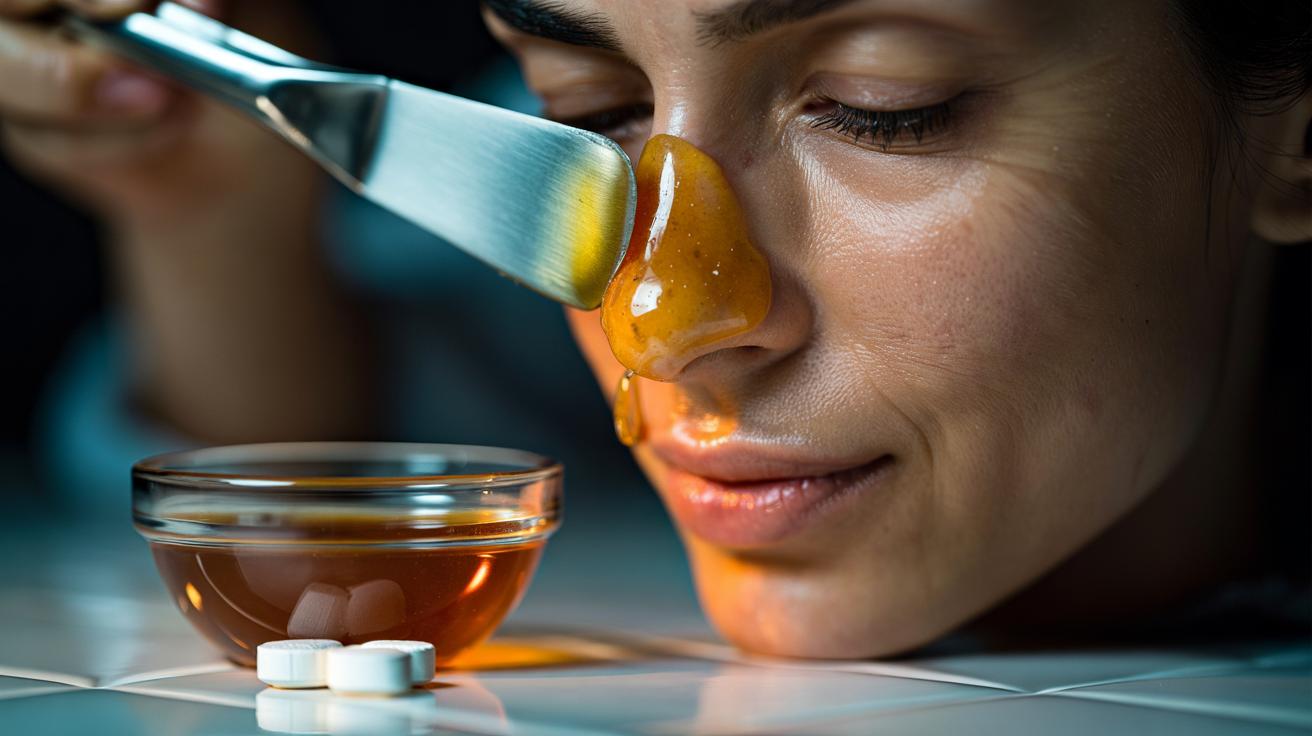
Blackheads are the stubborn, speckled reminder that pores are not just tiny dots on the nose but living gateways for oil and dead skin. A low-cost hack trending on British bathroom shelves is the honey + aspirin paste, a pantry-meets-pharmacy mash-up that promises clearer pores without the price tag of a salon facial. The science hinges on salicylic acid, the blackhead-busting beta-hydroxy acid linked to aspirin, and honey’s calming, moisture-binding touch. Used with care, this combo can dislodge the build-up that makes pores look congested, though it is not a cure-all. Here’s how it works, who it may suit, and when to give it a miss.
How Salicylic Acid Unclogs Pores
Blackheads form when excess sebum and compacted cells fill the pore, oxidising at the surface to turn dark. Salicylic acid is a beta-hydroxy acid (BHA) that is oil-soluble, meaning it slips into the pore lining to dissolve bonds between dead cells. That keratolytic action helps loosen the plug and encourages a cleaner exit for oil. It also calms redness thanks to mild anti-inflammatory activity. The result is less visible congestion and a smoother-looking T-zone, especially on combination and oily skin types prone to comedones.
Aspirin is acetylsalicylic acid and, when moistened, can shed a little salicylic acid as it breaks down. The catch is control: tablets are not formulated as skincare, so concentration can be uneven. If you do experiment, treat it as an occasional spot treatment, not a daily routine. For predictable results, UK over-the-counter products list BHA strengths (often 0.5–2%) and are tested for skin use, reducing the guesswork and irritation risk.
Why Honey Earns Its Place in the Mix
Honey brings more than sweetness. It is a natural humectant, drawing water into the upper layers of skin to soften flakes that block pores. Its naturally low pH and enzymatic production of small amounts of hydrogen peroxide lend gentle antimicrobial effects, helping to temper the environment where breakout-causing bacteria thrive. The syrupy texture also increases contact time, holding actives against the skin so they can do their work. That makes honey a useful buffer when pairing with potentially tingly acids.
Not all honeys behave the same. Dark, minimally processed varieties tend to be richer in antioxidants, while medical-grade honeys are standardised for wound use. For beauty DIY, a simple supermarket honey can suffice as the vehicle. Keep expectations realistic: honey will not “kill” blackheads; it supports comfort and hydration while salicylic acid tackles the clog. If your skin is easily congested by occlusive textures, avoid thick smears and choose a light-contact approach.
DIY Paste Versus Shop-Bought Treatments
The appeal of a DIY honey + aspirin paste is obvious: it’s cheap, quick, and uses items many households already own. Yet consistency, safety testing, and clear percentages are the strengths of store formulas. UK chemists stock cleansers, leave-on toners, and patches with declared levels of salicylic acid, often padded with soothing agents like panthenol or allantoin. For predictable purging and fewer surprises, these can be the safer everyday route, while a DIY dab is best kept occasional.
| Option | What You Get | Pros | Cons | Typical Cost (UK) |
|---|---|---|---|---|
| Honey + aspirin paste | Ad hoc salicylic action + humectant base | Very low cost; easy to make | Unclear strength; higher irritation risk; not for aspirin-sensitive users | ~£0.10–£0.30 per use |
| OTC salicylic acid product | 0.5–2% BHA in tested formula | Consistent; label guidance; often includes soothing ingredients | Higher price; requires regular use | £5–£20 per item |
Consider skin goals and tolerance. If you’re new to acids or easily sensitised, start with a shop-bought product and patch test. DIY may serve as a rare “reset” for the nose or chin rather than a routine foundation.
How to Use It Responsibly and When to Avoid
If you try a paste at home, keep contact brief and targeted—think the nose, chin, or a single clogged patch, not the whole face. Always patch test on the jawline first and rinse at the first sign of burning or persistent redness. Avoid broken or freshly shaved skin, and do not combine with other strong actives (retinoids, peels, benzoyl peroxide) the same day. Follow with a light, non-comedogenic moisturiser and daytime SPF, because acids may increase sun sensitivity even when used for minutes.
Some people should skip the hack entirely. Do not use if you have an aspirin allergy, a history of NSAID-triggered asthma, or you are pregnant without medical advice. Children and teens under 16, especially with viral illness, should avoid aspirin-based DIY. Those on blood thinners, with eczema, rosacea, or very reactive skin are better served by pharmacist-recommended, low-strength BHA or non-acid options like polyhydroxy acids. If blackheads are widespread or inflamed, speak to your GP or a dermatologist; prescription routes can be safer and more effective.
The honey and aspirin paste sits at the crossroads of thrift and chemistry: salicylic acid loosens the plug, and honey keeps skin cushioned while the pores clear. The smartest strategy is restraint—less product, shorter contact, and careful observation of your skin’s response. Think of DIY as a once-in-a-while tool, with consistent, labelled skincare doing the daily graft. If you’ve battled stubborn blackheads, what careful, evidence-backed tweaks—or professional advice—have actually made a visible difference for you, and what would you try next to keep your pores clear without upsetting your skin barrier?
Did you like it?4.6/5 (24)