In a nutshell
- 🔬 Damage mechanics: Over-processing lifts the cuticle, disrupts keratin, strips the lipid layer (18‑MEA), raises porosity and hygral fatigue, leading to brittleness and snap-prone strands.
- 🥚 How it works: Egg albumen adds a film‑forming protein layer; the yolk’s lecithin and cholesterol boost flexibility; olive oil (rich in oleic acid and squalene) reduces friction and water stress—fortifying the surface rather than repairing bonds.
- 🧴 Method: Whisk 1 whole egg with 1–2 tbsp extra virgin olive oil; apply to damp hair mid‑lengths to ends; leave 15–25 minutes; rinse with cool water and condition. Use less oil for fine hair; add a touch of honey for coarse, porous hair; never apply heat.
- ✨ Results & frequency: Expect better slip, softness, and fewer snags after one use; go weekly, then every 10–14 days. If hair feels stiff or “squeaky,” pause for hydration to avoid protein overload; remember, split ends still need trimming.
- ⚠️ Safety: Skip if you have an egg allergy; handle raw egg hygienically; avoid broken skin; patch test if sensitive; keep mixture chilled until use and discard leftovers—do not store.
The promise of a quick, kitchen-shelf rescue for frazzled hair is seductive, but not all DIY fixes are created equal. The humble pairing of olive oil and egg has longevity because it tackles two core problems of over-processed strands: depleted protein and lost lipids. Used properly, this mask can reduce friction, enhance elasticity, and help hair behave more like its pre-bleach, pre-heat self. Think of it as a strategic surface rebuild rather than a miracle bond repair. Below, we unpack how it works, the science behind the results, and the most effective way to apply it—so you can coax shine, slip, and strength back into your hair without a costly salon appointment.
Why Over-Processed Hair Loses Protein
Chemical colour, bleach, and relentless heat lift the hair’s protective cuticle and roughen the inner cortex. This disrupts the structure of keratin, your hair’s chief protein, and strips the natural fatty layer (notably 18-MEA) that normally keeps fibres smooth and water-resistant. As the cuticle scales lift, fibres tangle and snag; as protein fragments leach out, tensile strength drops. Protein depletion manifests as brittle texture, knotting at the nape, and that tell-tale “snap” during brushing. Add in the cycle of swelling and contracting when hair gets wet—known as hygral fatigue—and the damage compounds.
The net effect is porosity: hair so thirsty it swells fast, then dries into a rough, hollow-feeling state. You can’t stitch broken bonds back together with a pantry fix, but you can reinforce the surface so fibres glide rather than grate. That’s where a protein-rich, film-forming ingredient (egg) and a lipid-replenishing, slip-boosting oil (olive oil) create a pragmatic duo for at-home rehabilitation.
How an Olive Oil and Egg Mask Works
Egg brings albumen proteins and amino acids that form a thin, film-forming layer over the cuticle, temporarily filling micro-chips so strands feel sturdier. The yolk contributes lecithin, cholesterol, and vitamins that improve flexibility and shine. Olive oil supplies oleic acid and squalene, acting as an occlusive to limit water loss and reduce friction; it may lightly penetrate to plasticise the fibre’s surface. Together, they improve slip, reduce snagging, and lower swelling stress when hair gets wet. This duo does not weld broken bonds; it fortifies the surface to help damaged hair behave like healthier hair.
Used consistently, the mask helps balance the classic moisture–protein equation for processed hair: egg provides a gentle protein top-up; olive oil restores lost lipids and shields from hygral fatigue. Results are cumulative but noticeable from the first use, especially in high-porosity or highlighted hair.
| Component | Key Nutrients/Functions | Benefit to Damaged Hair | Notes |
|---|---|---|---|
| Egg (whole) | Albumen proteins, amino acids, B-vitamins | Film-forming, temporary strengthening, improved feel | Whole egg suits normal to coarse hair |
| Egg yolk | Lecithin, cholesterol, fatty acids | Flexibility, shine, reduced brittleness | Gentler for low-porosity hair |
| Olive oil | Oleic acid, squalene | Slip, occlusion, reduced hygral fatigue | Choose extra virgin for antioxidants |
Step-by-Step Method and Pro Tips
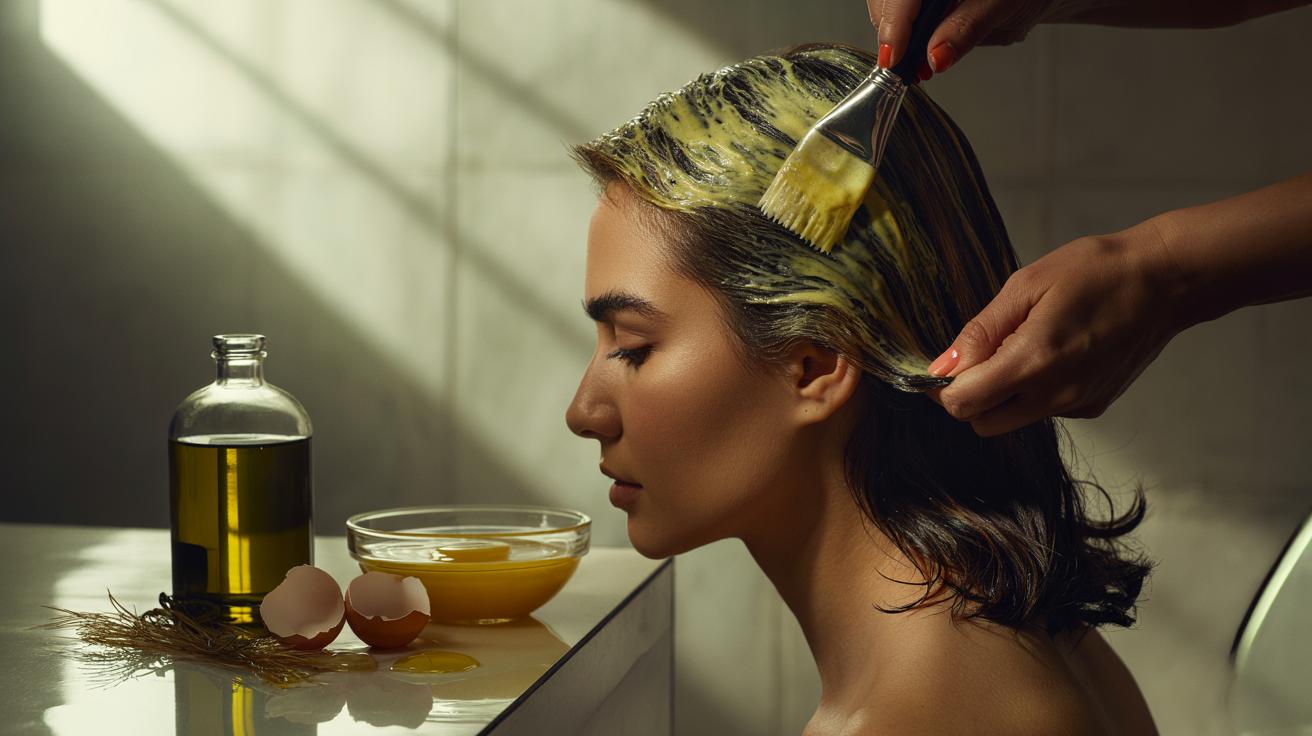
Recipe: crack 1 whole egg (or just the yolk for low-porosity hair) into a bowl, whisk until fluid, then drizzle in 1–2 tbsp extra virgin olive oil, whisking to emulsify. For shoulder-length hair, double the amounts. Lightly dampen clean hair with cool water. Section and apply from mid-lengths to ends, then the canopy and—if your scalp is dry—the top centimetre of roots. Comb gently with a wide-tooth comb to distribute. Leave on for 15–25 minutes. Rinse thoroughly with cool water, then follow with a small amount of conditioner to detangle and close the cuticle. Style as usual.
Do not apply heat while the egg is on your hair to avoid “cooking” the proteins. A final cool rinse preserves smoothness. If hair feels stiff after use, follow with a light moisturising mask the next wash. For coarse, highly porous hair, add a teaspoon of honey for humectant slip. For fine hair, keep oil to 1 tbsp to avoid weigh-down, and extend rinse time.
What to Expect: Results, Frequency, and Safety
After one session you should notice more slip, a softer hand-feel, and reduced snagging when detangling. Over several weeks, the hair’s surface looks glossier, and breakage during brushing diminishes. Use weekly for very damaged hair, then drop to every 10–14 days as texture improves. If strands start to feel rigid or squeakily hard, you’re likely edging into protein overload: switch to a hydration-focused mask for your next wash, then resume a lighter schedule. Trim existing split ends; no topical mask can fuse them shut.
Safety matters. If you have an egg allergy, skip this entirely. Handle raw egg with care, clean bowls and brushes promptly, and avoid contact with broken skin. Keep the mixture refrigerated until use, let it warm to room temperature for comfort, and discard leftovers—do not store the mask. Those with sensitive scalps may prefer to keep application off the skin. If in doubt, perform a patch test on the inner arm for 20 minutes before your first use.
In an era of expensive treatments, the olive oil and egg mask offers a grounded, low-cost way to restore lustre and manageability to over-processed hair. By replacing lost lipids and lending a temporary protein scaffold, it improves the everyday behaviour of fragile fibres while you space out salon visits. Pair the ritual with gentle cleansing, fewer hot tools, and protective styling to lock in gains. Ready to try it for yourself—what’s your hair type, and how will you tweak the recipe to suit your routine?
Did you like it?4.4/5 (25)