In a nutshell
- 🍋 Vinegar’s acidity wakes the palate, boosts salivation, heightens perceived sweetness, softens bitterness, and releases aroma—add a small splash late for instant impact.
- 🧂 Choose the right style: rice for delicacy, sherry for nutty depth, balsamic for sweet-sour gloss, white wine for clean fish sauces; keep versatile apple cider and red wine vinegar as staples.
- 🍳 Techniques that deliver: a finishing splash (½–1 tsp), a crisp-boosting spritz, pan deglazing with sherry/red wine vinegar, honey–balsamic reductions, and quick pickles with a 3:1 oil-to-acid vinaigrette baseline.
- 🥘 Practical fixes: cut richness in stews and sauces, sharpen flat flavours, and rescue oversalted soups by restoring balance—small doses, taste, then adjust.
- 📊 Know your numbers: typical 4–8% acetic acid; match vinegar intensity to dish weight, use budget balsamic for cooking, reserve aged bottles for finishing.
A quick splash of vinegar can jolt a tired recipe into life. It’s a trick chefs swear by, from chippies to Michelin. Why? Because acidity is the fastest route to clarity in flavour. One teaspoon in a stew. A spritz over grilled veg. Suddenly the dish tastes brighter, cleaner, more complex. Acid doesn’t add a new flavour so much as it sharpens everything that’s already there. In home kitchens, the bottle often sits forgotten. That’s a waste. Used well, vinegar is a precision tool: it trims heaviness, corrects seasoning, and unlocks aroma. Here’s how that tiny pour delivers instant impact.
Why Acid Wakes Up the Palate
Acid works on the senses, not just the sauce. A little acetic acid prompts salivation, which literally spreads flavour molecules across your tongue. With moisture comes vividness. Sourness doesn’t stand alone; it heightens perceived sweetness and tamps down bitterness, creating balance. That’s why a fatty ragù tastes less claggy after a brightening splash, and why roasted roots seem sweeter when finished with a tangy glaze.
There’s chemistry, too. Typical table vinegars sit around 4–8% acetic acid. At these levels, acid nudges the pH of a dish, affecting colour and texture—think of red cabbage turning vivid and proteins tightening slightly. It also frees volatile aroma compounds, so a stew becomes more fragrant the moment you stir in a teaspoon. Add acid late, and you’ll often experience a dramatic lift for minimal effort.
Crucially, vinegar is not only for sour punch. It’s a tool for contrast. Crisp roast chicken skin, buttery mash, a rich pan jus—good, but heavy. Add a dash of sherry vinegar and the flavours separate and shine. The dish feels lighter, but you’ve changed little. That’s the magic: small dose, big difference.
Choosing the Right Vinegar for the Job
Not all vinegars speak the same language. Choosing wisely keeps the acid in harmony with the dish rather than fighting it. As a rule of thumb, delicate foods welcome softer vinegars; robust dishes can handle deeper, barrel-aged styles. Match intensity with intensity, and you rarely go wrong.
| Vinegar | Acidity (%) | Flavour Notes | Best Uses |
|---|---|---|---|
| Malt | 5–6 | Toasty, grainy | Chips, fried foods, pickled onions |
| Apple Cider | 5–6 | Fruity, rounded | Slaws, pork glazes, dressings |
| Red Wine | 6–7 | Bold, tannic | Stews, lentils, roast veg |
| White Wine | 6–7 | Bright, clean | Fish, beurre blanc, light salads |
| Sherry | 7–8 | Nutty, complex | Pan sauces, gazpacho, mushrooms |
| Rice | 4–5 | Gentle, slightly sweet | Sushi rice, quick pickles, dressings |
| Balsamic | 5–6 | Sweet-sour, syrupy | Tomatoes, strawberries, reductions |
| Distilled White | 5–10 | Neutral, sharp | Cleaning, baking, strong pickles |
Think about origin and body. Rice vinegar is silky and mild, ideal for cucumber pickles or a sesame dressing that won’t bulldoze delicate greens. Sherry vinegar, aged and nutty, loves caramelised flavours—sautéed mushrooms, roasted peppers, even a wintry parsnip soup. For summery plates, balsamic (use a modest drizzle) flatters ripe tomatoes or berries, while a white wine vinegar keeps fish sauces transparent and sprightly.
Budget matters. Everyday balsamic is great for reductions and marinades; save aged bottles for finishing. If you keep only two: a versatile apple cider vinegar for salads and glazes, and a robust red wine vinegar for hearty cooking. Both deliver dependable brightness without shouting.
Techniques: Splash, Spritz, and Reduce
The simplest technique is the finishing splash. Taste your stew, soup, or pan sauce. If it seems flat, add ½–1 teaspoon of vinegar, stir, and wait ten seconds. Taste again. Stop as soon as the flavours snap into focus. It’s easier to add than to undo. For grilled or fried foods, a spritz bottle loaded with malt or cider vinegar gives crisp edges a lively lift.
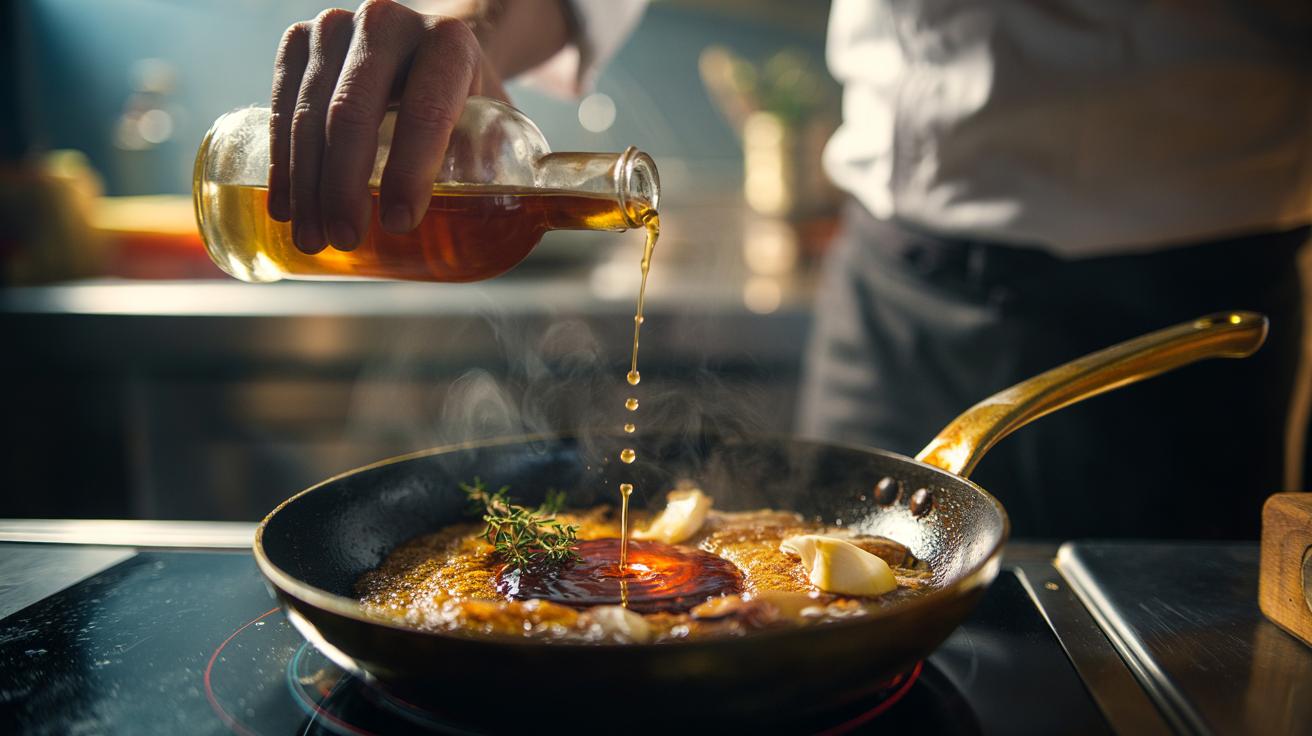
Deglazing is transformative. After searing meat or mushrooms, pour in 60–90 ml of sherry or red wine vinegar to dissolve fond, then whisk in stock and a knob of butter. You get a glossy, balanced sauce in minutes. For vegetables, try a honey–balsamic reduction: simmer to a light syrup and brush over roast carrots or beetroot. The sweet-sour gloss intensifies natural sugars without overwhelming them.
Quick pickles are weeknight alchemy. Mix equal parts rice vinegar and water, a pinch of salt and sugar, then soak sliced radishes or onions for 15–30 minutes. They provide instant crunch and brightness for tacos, grain bowls, or toasties. In salads, keep vinaigrettes around a 3:1 oil-to-acid ratio, adjusting to taste. And remember: a tiny dash of vinegar can rescue oversalted soups by restoring balance.
Vinegar is the home cook’s shortcut to clarity: inexpensive, versatile, and astonishingly effective. It doesn’t mask flaws; it corrects them, nudging flavour into focus while lending a subtle sheen to textures and aromas. Keep a couple of bottles near the hob and one on the table. Taste, splash, taste again. Balance arrives in seconds. You’ll start to crave that clean, bright finish—the one that lets ingredients speak plainly. Which bottle will you reach for tonight, and what dish are you brave enough to transform with a single, decisive splash?
Did you like it?4.6/5 (20)