In a nutshell
- 🧪 Science: mayonnaise = oil + egg + acid; lecithin acts as an emulsifier, limits gluten development, adds steam-ready water and fat, delivering long-lasting moisture and a finer, tender crumb.
- 📏 Swaps & ratios: Add 2–3 tbsp per 250 g flour, replace 1 egg with 3 tbsp, or swap up to 1/3 of fat with equal-weight mayo, adjusting liquids; best in chocolate, coffee, spice, and traybakes.
- 🍫 Flavour & texture: Neutral taste in sweet bakes; gentle acidity deepens cocoa; yields moist, sliceable crumb; mind brand salt; vegan mayonnaise can perform similarly for plant-based or egg-free needs.
- 🧰 Kitchen tips: Use ingredients room-temp, whisk mayo into wets, fold flour gently, prefer full-fat mayo; bake at standard temps; troubleshooting: gummy crumb = too much mayo/too little leavening; dry edges = lower oven slightly.
- 🧊 Keeping quality: Wrap once cooled; mayo-enriched cakes stay plush 2–3 days and freeze well, making bake-ahead celebration layers easier without sacrificing tenderness.
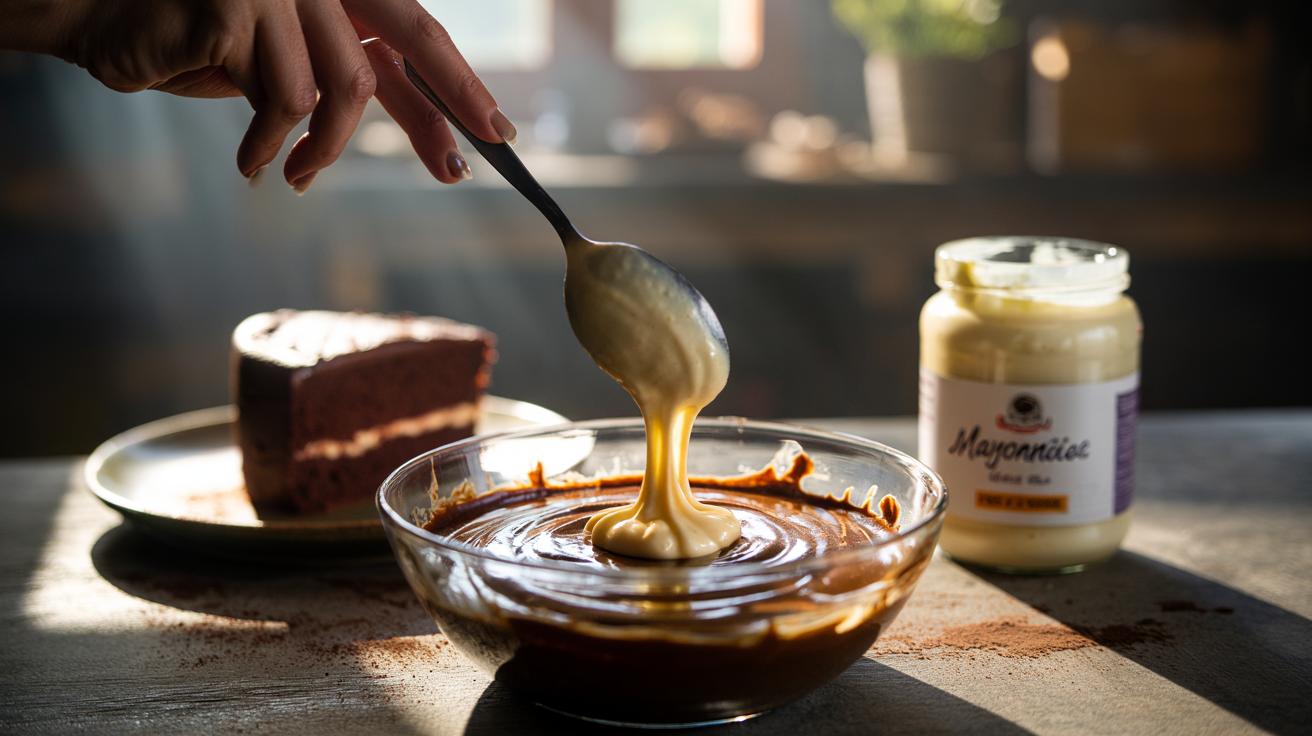
Mayonnaise in cake? It sounds like a prank from the test kitchen, yet British bakers have been using it for decades to keep chocolate sponges and traybakes irresistibly soft. The trick lies in science, not sleight of hand. A classic jar of mayonnaise contains oil, egg, and a touch of acid, all of which quietly transform the batter’s structure. It won’t shout its presence; it simply makes everything feel plush. Used properly, mayo turns a decent crumb into a tender, plush slice that stays moist for days. The result is a naturally luscious bake, less prone to drying, with a close, even crumb that slices cleanly and tastes indulgent.
How Mayonnaise Works in Cake Batter
At its core, mayonnaise is an emulsion of oil, eggs, and vinegar or lemon juice. In cake batter, that emulsion behaves like a structural upgrade. Oil coats flour particles, limiting gluten formation so the crumb stays tender. Egg yolks bring lecithin, a natural emulsifier that encourages fat and water to mingle, giving a smoother batter and a finer texture after baking. The mild acid helps weaken gluten networks slightly and, with alkaline leaveners, can nudge rise and flavour.
There’s also water in mayo, and that moisture matters. It steams gently during baking, supporting lift without toughening. Fat contributes silkiness. The emulsion prevents weeping and curdling, so the cake sets moist rather than greasy. The magic is not flavour but function: mayo’s balanced mix steadies a batter and locks in moisture. That’s why a mayo-enriched chocolate loaf feels richer, why a budget sponge holds up better on day three, and why stale edges are less of a worry.
Worried about taste? You shouldn’t be. Good mayo is neutral once mixed with sugar, flour, and cocoa. Salt and acidity fade into the background, enhancing depth rather than announcing themselves. The result is subtle: moisture that’s noticeable, flavour that is not.
Substitution Ratios and When to Use It
You can add a spoon or swap more boldly. For a safe start, mix in 2–3 tablespoons (30–45 g) of mayonnaise per 250 g flour alongside your usual fat; it’s a quiet moisture boost. For bigger changes, replace a portion of liquid fat or an egg—especially in sturdy bakes like chocolate, coffee, or spice cakes where cocoa and warm spices mask any whisper of tang. Box-mix cakes, school-tray favourites, and loaf-style sponges are prime candidates. Angel food and airy génoises, less so, because extra fat can collapse their delicate rise.
Use the guide below, then adjust liquid by feel. Batters should slide off a spatula in a slow ribbon, not clump or pour like soup.
| Swap Target | Mayonnaise Amount | Adjustments | Best For |
|---|---|---|---|
| Moisture boost (no major recipe change) | 2–3 tbsp (30–45 g) per 250 g flour | No change needed | Chocolate, banana, carrot, traybakes |
| 1 egg (in dense cakes) | 3 tbsp (about 45 g) | Reduce added liquid by 1–2 tsp | Brownies, cupcakes, snack cakes |
| Part of the oil/butter | Replace up to 1/3 of added fat with equal weight mayo | If batter loosens, cut water/milk by 15–30 ml | Layer cakes, loaf cakes |
Tip: Weigh the mayo for precision. Start conservative, bake once, then push the swap further next time if you want extra plushness.
Flavour, Texture, and Nutrition Considerations
Will your cake taste like a sandwich? No—mayonnaise does not leave a savoury flavour in sweet bakes when used in sensible amounts. The sugar, cocoa, and vanilla easily outpace its mild tang. In fact, a touch of acidity can sharpen chocolate’s bass notes and tame sweetness, making the whole slice feel more balanced. The texture is where it shines: moist but not wet, tender without crumbling, and resilient enough to slice neatly the next day.
Salt content varies by brand, so watch your pinch of salt in the recipe. If your mayo leans tangy, skip a splash of vinegar or reduce buttermilk slightly. For lighter sponges, keep the addition modest to preserve lift. Nutritionally, mayo adds fat and a little protein from egg yolks; calories are similar to using oil, but you may use less overall when swapping only part of the fat. Vegan bakers aren’t excluded—vegan mayonnaise brings plant-based emulsifiers that perform similarly, though taste-test brands for neutrality.
Allergies matter, of course. Egg-free mayo helps if eggs are the issue; choose options that clearly state egg-free on pack. Always check labels for mustard or other hidden allergens.
Practical Tips: Mixing, Brands, and Troubleshooting
Bring ingredients to room temperature. Mayo straight from the fridge can stiffen butter and curdle batters. Whisk it into your wet ingredients—sugar, eggs, milk—before adding flour. Keep mixing gentle once flour goes in to avoid developing gluten. If using cocoa, bloom it with hot water or coffee first; the mayo then merges into a glossy, stable batter. Choose a neutral, full-fat mayo for the best mouthfeel; reduced-fat versions contain extra water and thickeners, which can make textures unpredictable.
Oven-wise, nothing radical. Bake at your usual temperature—160–170°C fan tends to suit British home ovens for sponges. Check a few minutes earlier; moist batters can appear set but still need a moment more at the centre. If the crumb is gummy, you likely used too much mayo or too little leavening; pull back by a tablespoon or add 1/4 tsp extra baking powder next time. If edges dry while the middle lags, lower the oven by 10°C and extend the bake.
Storage is simple. Cool completely, then wrap. Mayo-enriched cakes keep plush for 2–3 days at room temperature, and they freeze well. For layered celebration bakes, this staying power means you can bake ahead without sacrificing tenderness on the day.
Mayonnaise doesn’t gatecrash your cake; it quietly steadies it, deepening softness, smoothing crumb, and extending that just-baked feel into tomorrow. The technique is thrifty, dependable, and wonderfully British in its practicality—use what’s in the cupboard to make something special. Whether you’re refreshing a family traybake or chasing café-style plushness at home, a spoon or two of mayonnaise can be the difference between nice and unforgettable. What flavour will you trial first: a dark, cocoa-rich loaf, a coffee walnut classic, or a spiced carrot number with a cloud of cream cheese frosting?
Did you like it?4.6/5 (27)