In a nutshell
- 🔬 Kiwi tenderises via actinidin, a protease that cleaves muscle proteins at fridge temps; enzymes, not acids, do the heavy lifting.
- ⏱️ Timing is critical: 3–7 min seafood, 5–15 min chicken breast, 10–30 min beef/pork/lamb—stop early to avoid a mushy texture.
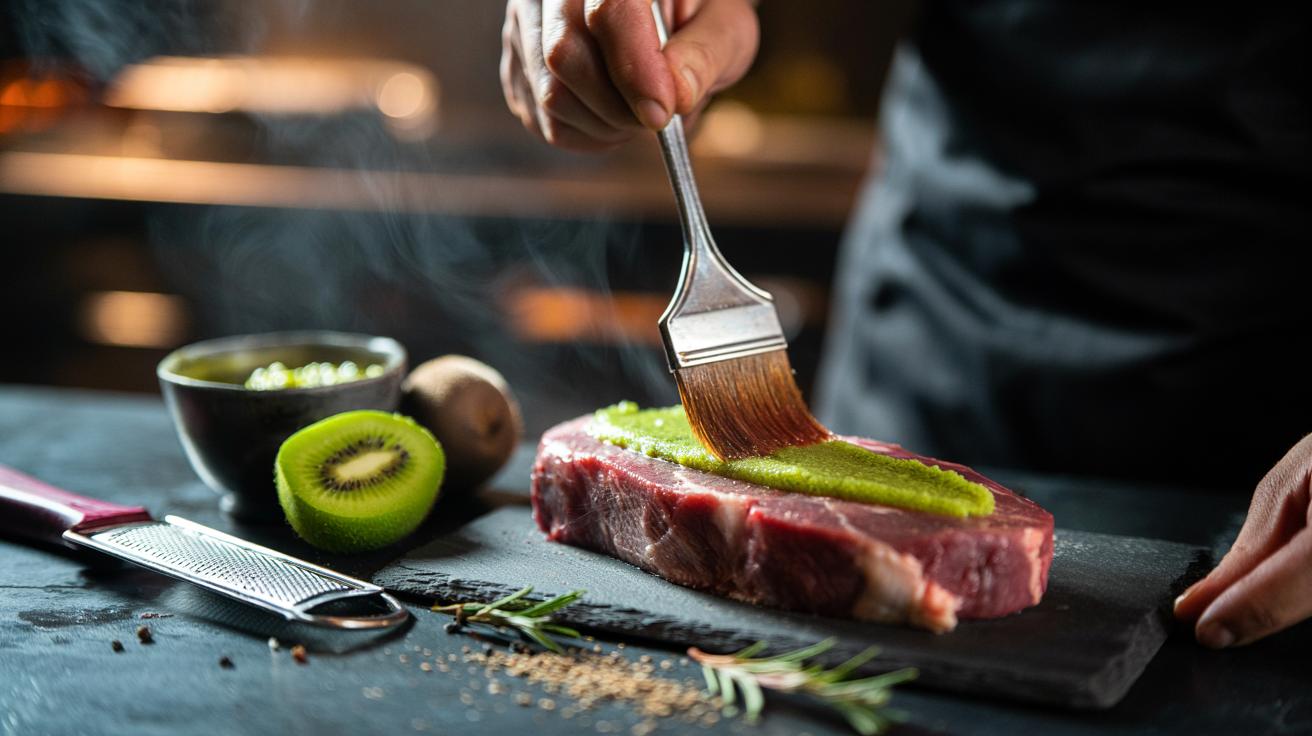
- 🥩 Best cuts: working muscles (rump, skirt, flank, chuck, shoulder); go minimal on tender cuts; choose green kiwi; apply a thin purée coating only.
- 🧼 Safety and technique: ~1 tbsp grated kiwi per 250 g meat, refrigerate, pat dry before high-heat searing, boil marinades 3+ min, and keep raw handling scrupulous.
- 🥗 Flavour and nutrition: gentle tang and sugars boost browning; versatile pairings; Vitamin C aids iron absorption—balance enzyme action with hot, fast cooking for juicy results.
Chefs have long known that a little science goes a very long way in the kitchen. Few examples are as dramatic as the effect of kiwi on meat. This small, emerald fruit contains a powerful proteolytic enzyme that can transform chewy cuts into something silk-soft in minutes. Used properly, it is a smart shortcut for weeknight speed and a secret weapon for weekend feasts. Used carelessly, it turns steaks to paste. Here’s how to get the best of it: maximum tenderness, minimal fuss, and flavours that stay bright, not bland. Timing is everything with kiwi tenderising, and understanding why it works makes all the difference.
The Science Behind Kiwi Tenderising
Kiwi owes its tenderising prowess to actinidin, a plant-derived protease that cleaves the peptide bonds in muscle proteins (myosin, actin) and weakens connective tissues. As those long chains are snipped, the meat’s structure loosens, water retention improves, and chewing becomes easier. Crucially, actinidin remains active across a broad pH range and at fridge temperatures, so it keeps working while the meat is chilling. That makes it fast and forgiving compared with some marinades that rely only on acid. Enzymes, not acids, do the heavy lifting here, though a touch of acidity can help with flavour and surface texture.
How does kiwi compare with tropical rivals? Pineapple contains bromelain, and papaya brings papain. Both are potent. Yet actinidin is unusually effective on a wider range of proteins, including those in beef, lamb, pork, and poultry. It also acts quickly, which is both a gift and a hazard. A brief 10–30 minutes can melt toughness from steaks and chops without turning fibres mushy. Longer exposure risks over-tenderisation, a cottony bite, and weeping juices. The fruit’s natural sugars encourage browning during cooking, while its high vitamin C content can limit oxidation that dulls flavour. Control the clock, and kiwi repays you with succulence.
Choosing the Right Cut and Kiwi
Not every cut wants the same treatment. Working muscles benefit most: rump, skirt, flank, chuck, pork shoulder, and lamb leg or shoulder steaks respond beautifully to a brief kiwi nap. Naturally tender cuts—fillet, ribeye, tenderloin—need only the lightest touch, if any. Poultry thrives too: chicken thigh gains juiciness and faster browning; breast becomes less prone to drying out. Fish and seafood are delicate; a mere few minutes is enough, or else the texture slips into mush. And remember: bone-in pieces often require slightly longer times for even results across varying thickness.
Which kiwi? Choose green kiwifruit for maximum enzyme activity; it carries more actinidin than golden varieties. Riper fruit is sweeter and softer but not necessarily stronger; enzyme levels are relatively stable, so pick for ease of mashing. A fine grate, light mash, or thin purée gives rapid, even contact. Chunks or slices are slower and gentler, offering a safety buffer if you’re nervous. Use only a thin coating—more kiwi doesn’t mean better results; it often just accelerates the process beyond control.
| Meat/Cut | Kiwi Form | Fridge Time | Notes |
|---|---|---|---|
| Beef steak (rump, skirt, flank) | Thin purée or fine grate | 10–30 minutes | Stop early for thin cuts to avoid mushiness |
| Pork chops | Grated | 15–25 minutes | Pat dry before searing for better crust |
| Lamb leg/shoulder steaks | Purée | 10–20 minutes | Great with rosemary, garlic, lemon zest |
| Chicken thighs | Grated | 10–20 minutes | Keep chilled; cook to 74°C internal |
| Chicken breast | Very thin purée | 5–15 minutes | Short times prevent stringy texture |
| Prawns or white fish fillets | Light smear | 3–7 minutes | Rinse gently before cooking to preserve bite |
How to Use Kiwi Safely at Home
For a reliable baseline, use about 1 tablespoon of grated kiwi per 250 g of meat. Salt the meat lightly, then coat with kiwi, no more than a thin film. Add neutral oil, crushed garlic, black pepper, and a splash of soy or cider vinegar for flavour—just enough to season, not drown. Cover and refrigerate immediately. Set a timer for the low end of the recommended window, then check texture: it should feel slightly more pliable, not watery. When in doubt, stop early; you can always rest the coated meat for a few extra minutes while you preheat the pan.
Before cooking, wipe off excess kiwi. Pat dry. High heat is your ally: cast-iron or a ripping-hot grill encourages Maillard browning and locks in juices. If you want a sauce from the marinade, boil it hard for at least 3 minutes to kill pathogens and deactivate residual enzymes. Keep everything cold until heat hits. Use separate boards for raw meat and fruit, wash hands and tools, and never reuse unboiled marinades. If you overshoot the timing and the surface turns soft, rescue it by rinsing, drying thoroughly, and quick-searing; a crisp crust restores contrast and better mouthfeel.
Taste, Texture, and Nutritional Payoff
Done right, kiwi tenderising amplifies what’s already there. The fruit’s subtle tang brightens savoury notes without shouting, while natural sugars promote a lacquered, aromatic crust. The interior remains juicy, not spongy, with fibres that part under the fork. Pairings are flexible: soy and sesame for weeknight stir-fries; thyme, lemon zest, and olive oil for Mediterranean chops; cumin, coriander, and chilli for grilled skewers. The trick is balance—enough enzyme to soften, enough heat to build flavour. For charcoal cooking, brush off kiwi well; caramelised sugars burn quickly and can taste bitter if left on the surface.
There’s a side benefit: kiwi brings a nutrition bump. Vitamin C supports iron absorption from meat, helpful if you’re cooking lean cuts. Potassium and polyphenols add to the feel-good factor, while shorter tenderising times reduce the need for heavy salt. If you’re experimenting, compare fruits: pineapple (bromelain) hits hard and fast, sometimes too much; papaya (papain) is effective but can give a slightly drier bite. Kiwi threads the needle, especially on beef and lamb. Keep records—cut, weight, time—to fine-tune your sweet spot. A notebook and a timer are the most underrated tools in this technique.
Kiwi tenderising rewards curiosity and care. A teaspoon too much or five minutes too long can tip the balance, yet controlled applications deliver restaurant-level results with supermarket fruit. Start conservatively, coat lightly, and cook hot; you’ll find your ideal window quickly. For busy cooks, it’s a practical hack that rescues tough midweek cuts and elevates grills without marinating overnight. For tinkerers, it’s an enzymatic playground. Ready to try your first kiwi test on flank steak, or will you push the boundaries with lamb skewers and a citrus glaze—what will you tenderise first, and how will you time it?
Did you like it?4.6/5 (29)