In a nutshell
- 🔬 Explains the science of staling: starch retrogradation makes bread feel dry, while heat and light steam reverse it; tightly wrapped aluminium foil restores crisp crust and tender crumb in about 10 minutes.
- 🥖 Clear method: preheat to 180°C (160°C fan), lightly moisten, wrap tightly in foil, bake 6–8 minutes, then uncover for 2–4 minutes to crisp—think the moisten–wrap–heat–uncover sequence.
- ⚙️ Tuning matters: loaf-by-loaf timings for baguettes, boules, sandwich loaves, and rolls; adjust oven settings for fan or gas, and extend the wrapped phase for previously frozen bread.
- ⚠️ Key cautions: compost mouldy bread, never use foil in a microwave, avoid over-wetting, and serve within 20 minutes since the revival is a temporary fix.
- 🌱 Smart extras: reduce food waste with this low-cost trick; add flavour upgrades like garlic rub or olive oil, and store better—no fridge, freeze instead for fresher revivals.
Yesterday’s loaf looks weary, the crust dulled and the crumb stiff. Don’t bin it. With a sheet of aluminium foil and a hot oven, you can reset texture and flavour in minutes. Heat and a whisper of moisture soften the interior while re-crisping the shell, returning that bakery crackle you thought was gone. It’s quick. It’s thrifty. It’s oddly satisfying. In about 10 minutes, stale becomes snackable again, and a simple kitchen trick saves money and reduces waste. Here’s how it works, why it works, and the small tweaks that turn a tired baguette, boule, or roll into something you actually want on the table.
Why Bread Goes Stale
Staling isn’t just drying out; it’s chemistry. Freshly baked loaves hold water within a gelatinised starch network. As hours pass, starch chains realign—a process called starch retrogradation—expelling moisture from the crumb towards the crust. The result? A leathery exterior and a crumb that feels chalky, even if total water content hasn’t changed much. That’s why a loaf can taste “dry” without being desiccated. The good news: heat disrupts these crystalline bonds and temporarily restores tenderness. You’re not resurrecting yesterday; you’re resetting the structure.
Heat alone isn’t enough. You need gentle steam around the loaf to rehydrate the outer layers while the interior warms. That’s where aluminium foil shines: it traps moisture released by the bread, creating a small, steamy microclimate. Then a brief, uncovered blast re-triggers Maillard reactions and snap. One caveat: if bread shows mould, compost it—no revival method makes it safe. Also, never use foil in a microwave; this is an oven technique. The restored texture won’t last forever, so plan to slice and serve soon after reheating.
The 10-Minute Foil Method
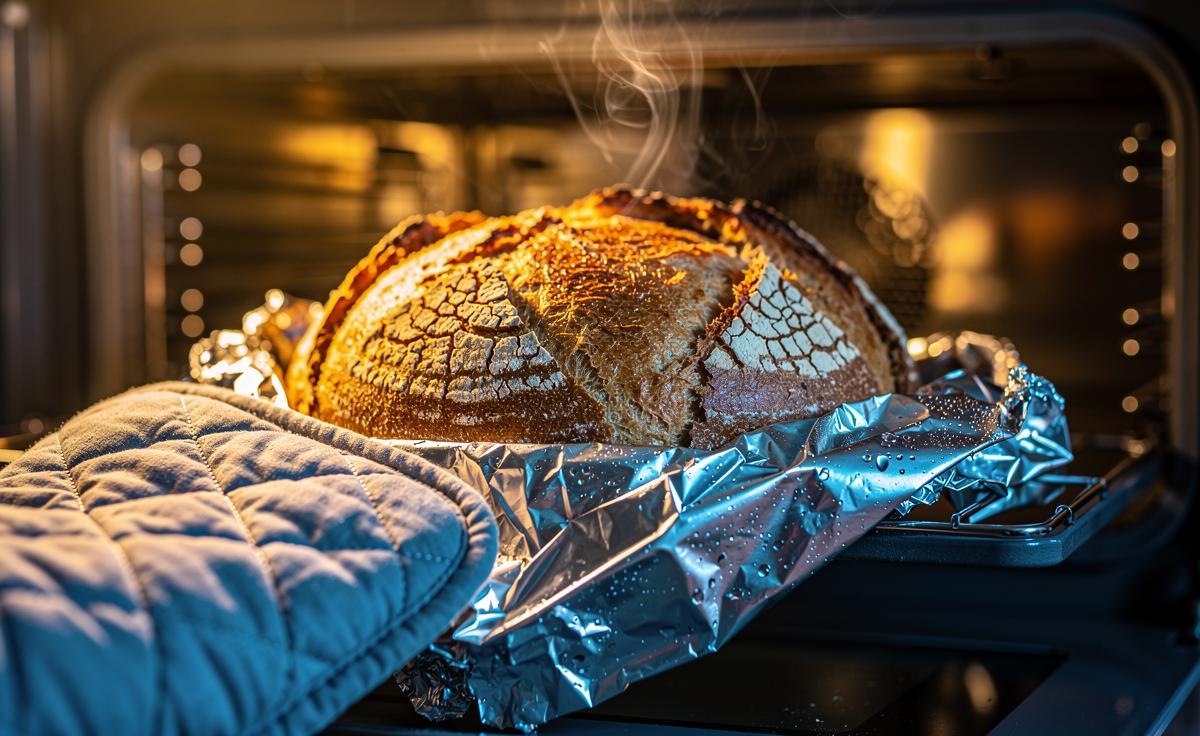
Preheat the oven to 180°C (160°C fan). For baguettes, 190°C gives extra snap. Hold the loaf under a running tap for 1–2 seconds or mist with water; you want a light sheen, not a soak. Wrap the bread tightly in aluminium foil, seam up to reduce drips. This tight wrap is crucial because it traps steam and softens the crumb. Place on a middle rack. Bake for 6–8 minutes to let heat penetrate and starches loosen. Remove the foil, return the loaf to the oven, and bake uncovered for 2–4 minutes until the crust sings.
Listen for that dry, glassy crackle when you press the shell. Rest the bread for 2 minutes so pressure equalises, then slice. Rolls will revive faster—think 5–7 minutes total—while a dense sourdough might appreciate the full 10–12. If the loaf feels hard as a brick, give it a few extra steaming minutes before uncovering. Do not over-wet the crust, or you’ll chase chewiness instead of crispness. And avoid slicing first; intact loaves trap moisture better. The pay-off is immediate: crisp crust, supple crumb, revived aroma, and a table-ready loaf made new with almost no effort.
Tuning Texture: Times, Ovens, and Loaves
Different loaves, different sweet spots. A thin-crusted baguette craves high heat and a short finish for shattering bite. A country boule prefers a gentler warm-through so the thick crust doesn’t scorch before the centre relaxes. Fan-assisted ovens move heat aggressively; drop the temperature by 20°C and check a minute early. Gas ovens can run humid—use that to your advantage. The sequence stays constant: light moisture, sealed steam, brief uncover to crisp. For sandwich bread, lower heat preserves tenderness; you want pliable slices, not shards. And if the loaf was previously frozen, thaw first or extend the wrapped phase by a couple of minutes.
| Loaf Type | Oven Temp | Foil (Steam) Phase | Uncovered Phase | Notes |
|---|---|---|---|---|
| Baguette | 190°C (170°C fan) | 5–6 min | 3–4 min | For extra snap, finish directly on a hot tray. |
| Sourdough Boule | 180°C (160°C fan) | 7–9 min | 3–4 min | Thicker crust; don’t rush the steam phase. |
| Sandwich Loaf | 170°C (150°C fan) | 6–8 min | 1–2 min | Aim for soft crust; keep the finish short. |
| Rolls | 180°C (160°C fan) | 3–4 min | 1–2 min | Revive individually; they heat very fast. |
For flavour, rub the crust with a cut clove of garlic before the final blast, or brush a whisper of olive oil for sheen. Salt flakes on the hot crust? Lovely. Remember: this fix is temporary, so serve within 20 minutes for peak texture. If you routinely have leftovers, store bread cut-side down on a board and avoid the fridge, which accelerates retrogradation. Frozen is fine; revival works beautifully from fully thawed loaves.
Reviving bread with aluminium foil is a small domestic miracle: waste reduced, quality restored, confidence renewed. The method respects the loaf, leans on science, and takes less time than brewing a pot of tea. It turns a kitchen frustration into a habit that pays off nightly. In roughly 10 minutes, you can recover crisp crust and a warm, tender crumb, and the cost is pennies. Now that you’ve got the core technique, what would you try next—garlic-rubbed baguette for soup, rosemary-brushed rolls for a roast, or a softer finish for tomorrow’s sandwiches?
Did you like it?4.7/5 (29)