In a nutshell
- 🧪 The science: crispness comes from turgor pressure; an ice water bath drives water into cells via osmosis, while cold slows respiration and softening enzymes.
- 🧊 How-to: use water just above freezing (0–4°C), trim ends, submerge fully for 5–15 minutes (carrots/celery up to 20), keep the bath cold, and weigh down floaters.
- 🌀 Aftercare: drain thoroughly, spin dry leaves, line containers with paper towel, store in the crisper; avoid oversoaking to prevent nutrient loss and waterlogging.
- 📊 Quick guide: lettuce/herbs 5–10 min, celery/carrots 10–20, radishes/fennel 5–15, peppers/cucumbers 3–8—aim for perky edges and snappy, glassy crunch.
- 🚫 Exceptions & safety: skip mushrooms, aubergine, and cooked veg; use clean water and sanitised bowls; follow the rule of thumb—shorter, colder, drier.
Salad leaves that flopped on the commute. Celery that lost its snap overnight. We’ve all opened the fridge to find veg that looks fine but feels tired. The quickest rescue? An ice water bath that jolts tissues back to life and restores that sought-after crunch. It’s not culinary wizardry, but plant biology put to work in your kitchen. A ten-minute plunge in icy water can wake up droopy greens faster than you can set the table. Here’s why it works, how to do it safely, and when to stop before “revived” turns into waterlogged.
The Science of Snap: Turgor Pressure and Osmosis
Vegetables are living tissues, even after harvest. Their firmness comes from turgor pressure: water inside cells pressing against sturdy cell walls. When veg lose moisture through transpiration or warm storage, internal pressure falls and the plant limpens. Cold water flips that trend. Through osmosis, water moves from the bath (high water activity) into the plant’s cells (lower water activity), refilling vacuoles and forcing cell walls outward. That internal ballooning is what your teeth read as crispness. Cold shock slows respiration and enzyme activity that soften texture, buying you time while water does the rehydration.
Temperature matters. Near 0–4°C, membranes become less leaky, pectin-degrading enzymes idle, and dissolved gases contract, subtly tightening tissues. The result is a short, sharp textural upgrade. Structure matters, too. Leafy greens, celery, carrots, and radishes respond brilliantly because their cell walls and pectin networks are built to flex then spring back. Cooked or bruised veg? Less luck—their cell walls are damaged, so water can’t rebuild pressure uniformly. Skip salt or sugar in the bath; both reduce the osmotic gradient and slow rehydration.
How to Ice-Bath Vegetables Safely at Home
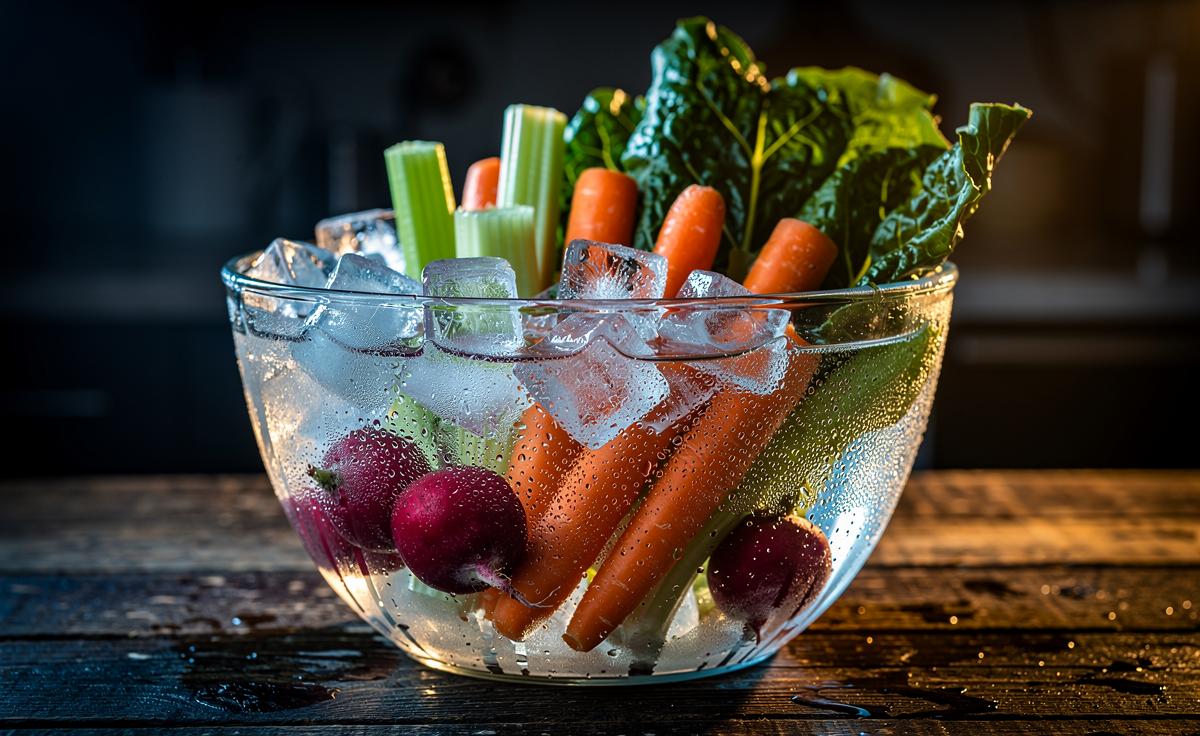
Set up a large bowl with cold tap water and a generous load of ice. You want it just above freezing, not slushy-cold to the point of damaging cells. Trim dry ends to expose fresh tissue—this speeds water uptake—and swish off grit first so it doesn’t ride into the bath. Submerge fully; weigh down floaters with a plate. Keep the bath cold from start to finish—near 0°C is the sweet spot for a fast, clean crisp. For most greens and tender veg, that’s five to fifteen minutes. Denser sticks of carrot or celery might need up to twenty.
Drain thoroughly after the bath. Excess surface water dulls texture and dilutes flavour. Use a spinner for leaves, then line a container with a paper towel to wick moisture and store in the fridge’s crisper. Stick to safe-soaking windows: too long, and you risk nutrient leaching and microbial growth if the water warms. Avoid water-loving exceptions like mushrooms or cut eggplant; they sponge up liquid and turn spongy. For tomatoes, cucumbers, and peppers, a short chill is fine, but prolonged soaks can soften skins. Clean water and a clean bowl are non‑negotiable for food safety.
Timing, Texture, and Taste: What Changes and Why
Time is your lever. Short soaks restore pressure; overlong soaks invite water into spaces it shouldn’t be, blurring edges and muting crunch. As turgor rises, fracture force increases—the tiny pop you hear when biting is many cells breaking cleanly, releasing aroma volatiles that your brain interprets as “freshness.” Temperature also corrals enzymes like polygalacturonase that unravel pectin scaffolds; cold slows them, preserving firmness while the bath works. Drain well—lingering water on the surface mutes snap and washes away flavour. Use the guide below as a starting point, then adjust to your produce’s age and cut size.
| Vegetable | Recommended Soak | Texture Goal | Notes |
|---|---|---|---|
| Lettuce, spinach, soft herbs | 5–10 minutes | Perky, crisp edges | Spin dry immediately after |
| Celery, carrot sticks | 10–20 minutes | Snappy, glassy crunch | Trim ends for faster uptake |
| Radishes, fennel slices | 5–15 minutes | Brittle bite | Ice bath also tames heat slightly |
| Bell peppers, cucumbers | 3–8 minutes | Firm and juicy | Don’t exceed 10 minutes |
Not every veg is a candidate. Zucchini, aubergine, and mushrooms take on water and go soggy. Cooked veg won’t regain structure; their cell walls are softened beyond a quick fix. For everything else, remember this rule of thumb: colder, shorter, drier after. That trio protects flavour while reviving crunch.
Ice water doesn’t make vegetables new; it restores what was there by refilling cells and pausing the softening clock. It’s fast, cheap, and easy to fold into weeknight prep—soak greens while you set out toppings, then spin and serve. A crisp salad needn’t start with pristine produce; it can start with smart technique. If you tried one tweak today—shorter soaks, colder water, better draining—which would most transform the way your vegetables taste and feel on the fork?
Did you like it?4.4/5 (22)