In a nutshell
- 🍷 Deglazing with wine instantly lifts pan residues by releasing concentrated fond, turning stuck-on Maillard flavours into a glossy, pourable sauce.
- 🔬 Wine works because the trio of alcohol, water, and acid dissolves browned proteins and aromatics; reduction intensifies taste, and a swirl of butter emulsifies for sheen and body.
- 👩🍳 Technique: After searing, remove the protein, pour off excess fat, add 60–120 ml wine to a hot pan, scrape vigorously, reduce to nappe, then season at the end for balance.
- 🍇 Choosing bottles: Cook with wine you’d drink; dry whites suit chicken/seafood/veg, light reds flatter mushrooms/duck/pork, and fortified wines add instant complexity; avoid overly sweet or heavily oaked styles.
- 🍳 Equipment and tips: Stainless steel and cast iron build better fond than non-stick; keep splashes modest, adjust with stock or lemon, and pour over resting meat to exchange flavour and juices.
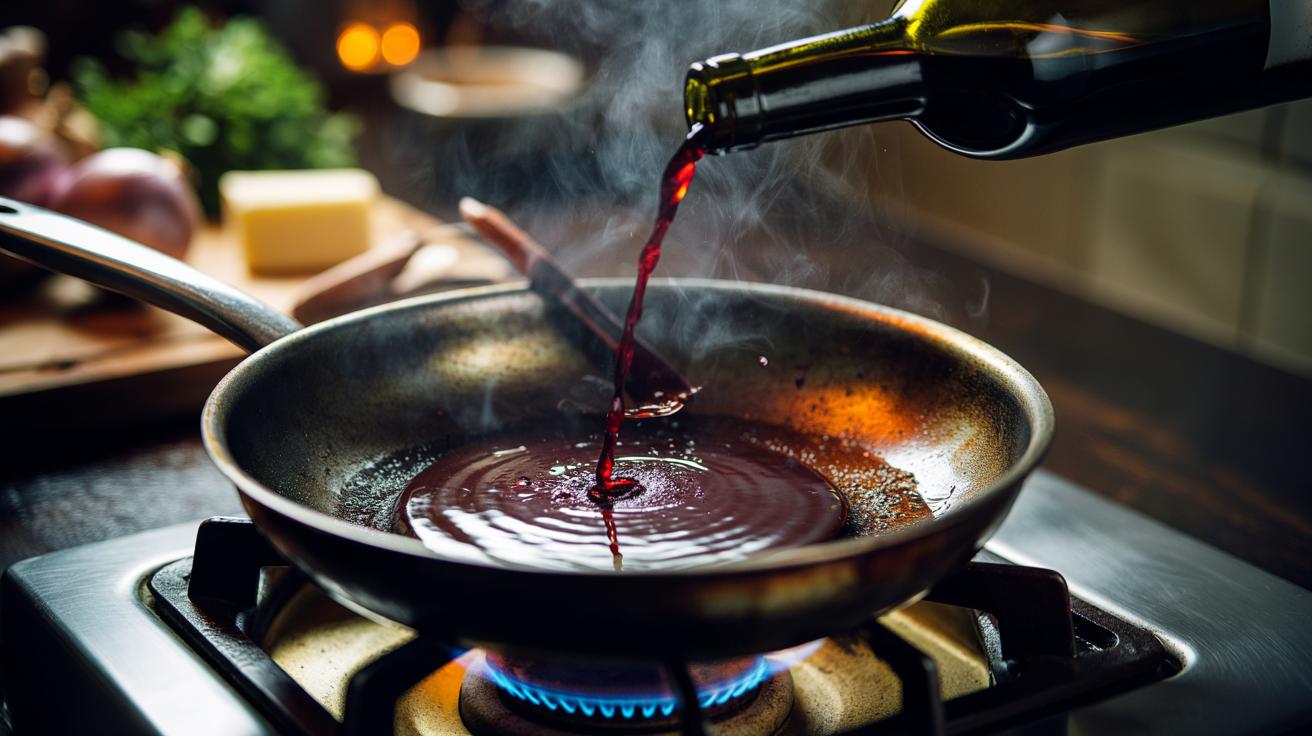
When a steak leaves its sizzling stage and the pan shows streaks of caramelised brown, that’s your moment. Deglazing with wine transforms those stubborn fond fragments into a glossy, flavour-packed sauce in seconds. Heat, wine, and swift scraping rapidly lift residues and unlock their deep, savoury notes. It’s part chemistry, part theatre, entirely achievable on a Tuesday night. The trick isn’t posh equipment but understanding why wine—with alcohol, acidity, and aroma—does the heavy lifting. A splash, a hiss, a swirl, and suddenly the skillet’s story pours onto the plate. It smells like success. It tastes like attention to detail.
Why Wine Works as a Deglazing Agent
The browned bits on the base of a hot pan—known as fond—are concentrated flavour. Wine sets them free. Alcohol is an effective solvent, loosening fat-soluble aromatic compounds created during the Maillard reaction. Water in the wine delivers steam that softens the crusty layer. Acids, especially in dry whites and lighter reds, gently dissolve stuck-on proteins. This trio—alcohol, water, acid—unlocks flavour faster than stock alone.
Once the fond is suspended, evaporation concentrates the liquid. That reduction is not just about thickness; it’s about turning intensity up while smoothing edges. A minute or two at a lively simmer can round harshness as ethanol cooks off. Meanwhile, natural fruit esters and barrel-derived notes—vanilla, spice—thread into the sauce. Tannins from red wine can add structure, particularly welcome with beef or mushrooms.
Salt and fat complete the picture. A knob of butter whisked in off the heat emulsifies the reduced juices, lending sheen and body. Think of wine as both a cleaning agent for the pan and a creative catalyst for your sauce. The result: depth, balance, and a finish that lingers.
Step-by-Step: From Fond to Glossy Sauce
Start with a hot pan. Remove the seared protein to rest. Pour off excess fat, leaving a thin film for flavour. Add aromatics if you like—shallots, crushed garlic—just a few seconds to soften. Then comes the theatrical bit: add 60–120 ml of wine to the hot surface. The pan should hiss. The moment the wine hits, scrape with a wooden spoon to lift every browned speck.
Let it bubble. Keep the heat medium-high so the liquid reduces with intent, not lazily. If the sauce races toward dryness, add a splash more wine or a spoon of stock. Aim for a glossy nappe consistency that lightly coats the back of a spoon. Taste as you go. If it’s sharp, let it reduce a touch more; if it’s bitter, lower the heat and finish with a swirl of butter or a teaspoon of cream.
Season last. Salt heightens, pepper perks, a squeeze of lemon can lift a red-wine glaze surprisingly well. For shine and silkiness, whisk in cold butter off the heat. That gentle emulsification gives professional polish. Pour over the resting meat or vegetables so they return flavour to the sauce and the sauce gives it back. That’s dinner, elevated.
Choosing the Right Wine for the Pan
Rule one: cook with wine you’d happily drink. Not expensive, just honest. Dry whites—Sauvignon Blanc, Pinot Grigio—bring bright acidity and citrus lift to fish, chicken, and greens. Lighter reds—Pinot Noir, Grenache—offer gentle fruit and soft tannin that flatter mushrooms, duck, or pork. Avoid heavily oaked or sweet wines unless you want assertive vanilla or dessert-like notes. Fortified wines—Marsala, Madeira, sherry—are pantry powerhouses for fast, complex gravies.
| Wine Type | Flavour Profile | Best With | Acidity/Tannin |
|---|---|---|---|
| Dry White (Sauvignon Blanc) | Citrus, herbaceous, crisp | Chicken, prawns, spring veg | High acid, no tannin |
| Light Red (Pinot Noir) | Cherry, earthy, subtle spice | Mushrooms, duck, pork | Medium acid, low tannin |
| Full Red (Merlot, Syrah) | Dark fruit, savoury, structured | Beef, lamb, aubergine | Medium acid, medium tannin |
| Fortified (Sherry, Madeira) | Nutty, caramel, oxidative | Pan gravies, mushrooms | Variable acid, no tannin |
Non-stick pans release less fond, so go gentle and reduce the wine a little further for flavour. Stainless steel and cast iron create generous caramelisation—ideal for deglazing. If in doubt, choose a dry bottle; sweetness concentrates quickly and can tip the balance. Let the dish guide the wine, not the other way round. And keep portions modest: a splash is usually enough to lift, concentrate, and shine.
Deglazing with wine is a small act with big consequences. It rescues flavour from the pan, concentrates it, and turns dinner into something memorable without fuss. Once you’ve felt the spoon loosen those savoury sediments and watched the sauce turn glossy, you won’t skip the step again. It’s fast, efficient, and deliciously economical. Next time you sear, will you reach for a bright white, a supple red, or a nutty fortified—and what story will your pan tell when the wine hits?
Did you like it?4.6/5 (20)