In a nutshell
- 🌶️ A single pinch of cumin blooms its volatile oils—especially cuminaldehyde—in hot fat, transforming curry aroma and depth in seconds.
- ⏱️ Master the timing: whole seeds bloom in 15–30 seconds, ground cumin in 5–10 seconds; stop before they blacken to avoid bitterness and finish with a fresh pinch off the heat.
- 🧂 Choose the right form: seeds vs ground vs shahi jeera; toast and grind fresh for maximum punch; shahi jeera is gentler and not the same as nigella; cumin pairs beautifully with coriander and dairy.
- 🛠️ Quick rescues: temper 1 tsp oil with 1/4 tsp seeds for a 20-second tadka, or dry-roast and crush to sprinkle; whisk ground cumin into yoghurt, then add lemon and salt to balance.
- 📋 Kitchen strategy: treat cumin as a flavour dimmer—build base at the start, correct mid-cook, and finish for fragrance—keeping a small pan by the hob for instant adjustments.
There’s a secret most British home cooks learn the hard way: a curry can be rescued, rounded, and made fragrant with a single spice used at the right moment. That spice is cumin. One pinch. Seconds of heat. Instant lift. Its essential oils bloom in hot fat, throwing out warm, nutty, citrus-kissed aromas that make a pot smell like supper is urgent. A flat sauce brightens, savoury edges turn silky, and depth arrives without heaviness. Understanding why cumin works, when to add it, and which form to choose will give your weekday curry the kind of confidence usually reserved for restaurant kitchens.
What Happens When Cumin Hits Hot Oil
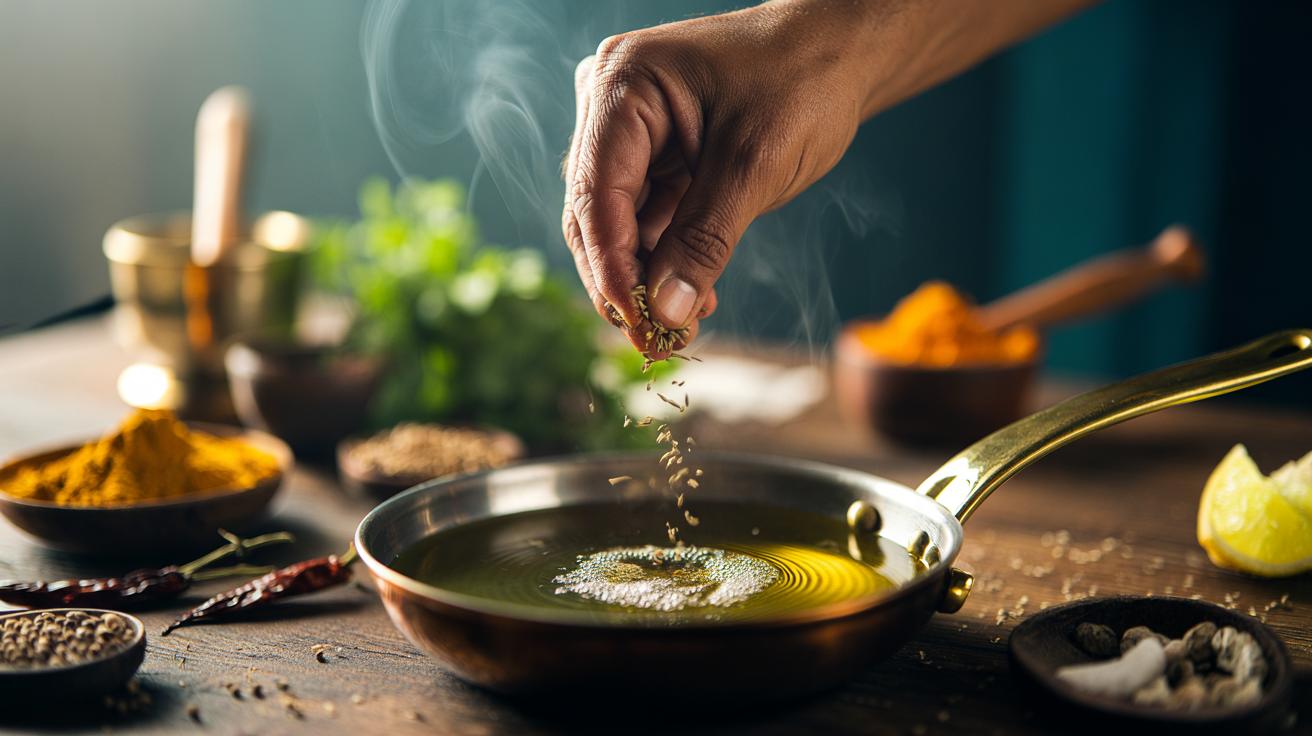
Cumin’s magic is chemical and swift. The seeds carry volatile compounds—chiefly cuminaldehyde, plus p-cymene and gamma-terpinene—that dissolve into hot oil and race into the air the moment they’re heated. That’s why the smell floods the room in seconds. In Indian kitchens this is called blooming or tempering (tadka): exposing spices to shimmering fat so their flavour becomes soluble and mobile, ready to coat onions, tomatoes, and meat. The transformation is fast: 15–30 seconds for whole seeds, 5–10 seconds for ground cumin stirred into a hot sauce. Go beyond that and bitterness creeps in, as the oils scorch.
Timing is everything. Add cumin seeds to oil that’s properly hot—just below the smoke point—so they sizzle instantly and release their perfume before they overcook. Look for a few shades of deepening colour and a lively crackle. If they blacken, you’ve gone too far; start again. In a finished curry, a final dash of freshly ground cumin stirred through off the heat adds a soft, toasty halo. Those seconds decide whether your curry sings or sulks.
Choosing and Using Cumin: Seeds, Ground, or Shahi Jeera
Whole seeds are the workhorse. They’re sturdy, easy to toast, and ideal for tempering in oil at the start of cooking. Ground cumin, by contrast, gives quick integration and colour, but its volatile oils fade in storage, so it pays to buy little and refresh often. The most aromatic option? Lightly toast seeds in a dry pan for 30–45 seconds, then grind just before use. Freshly crushed seeds will always taste bigger than month-old powder. For a weeknight pot, a pinch (about 0.25–0.5 g) can brighten four servings; 1 teaspoon brings a more pronounced warmth.
Then there’s shahi jeera (also called black cumin, distinct from nigella seeds): slimmer, darker seeds with a gentler, almost cocoa-like aroma. They’re superb in buttery pilafs and delicate sauces. Treat them like regular cumin but shave the timing—10–20 seconds in hot fat. Beware the lookalike trap: nigella (kalonji) tastes peppery and onion-like, not warm and nutty. When pairing, cumin loves coriander, chilli, and turmeric, and it flatters dairy. A late swirl of yoghurt or cream hugs cumin’s oils and smooths any edge without muting that signature toastiness.
Quick Reference: Timing, Forms, and Effects
Use this at-a-glance guide when a curry needs a lift fast. It shows how different forms of cumin behave and when to add them for the biggest impact in the shortest time. Think of it as a flavour dimmer switch you can slide in seconds.
| Form | When to Add | Impact in Seconds | Notes |
|---|---|---|---|
| Whole seeds | Into hot oil, 15–30 sec | Immediate nutty aroma; deeper base | Stop at medium-brown; black = bitter |
| Ground cumin | Stir into hot sauce, 5–10 sec | Fast integration; quick lift | Use less; potency concentrates quickly |
| Dry-roasted seeds | Crush and sprinkle at end | Instant top-note crunch | Great for lentil dals and raita |
| Shahi jeera | Delicate tempering, 10–20 sec | Soft, chocolatey warmth | Best in buttery, subtle dishes |
| Cumin–coriander mix | Finish off heat, 10–20 sec | Bright, rounded finish | Balances heat and acidity |
Reserve a pinch for the end to fine-tune. If the curry tastes dull, bloom seeds in a teaspoon of oil and pour over. If it’s thin, ground cumin adds quick body. Small adjustments, timed right, do the heavy lifting.
Fast Fixes for Flat Curries
You’re ten minutes from the table and the curry tastes… beige. Don’t panic. Heat 1 teaspoon of oil or ghee in a small pan until shimmering. Add 1/4 teaspoon cumin seeds. Let them dance for 20 seconds—no more—then tip the sizzling oil into the pot and stir. The aroma spikes and the sauce rounds out immediately. Alternatively, dry-roast 1/2 teaspoon seeds for 30 seconds, crush, and dust over the finished curry for a fragrant top note. Small heat, short time, huge difference.
For a silky finish, whisk 1/2 teaspoon ground cumin into 2 tablespoons yoghurt, then swirl through off the heat to avoid splitting. Brightness lagging? Add a squeeze of lemon and a fresh pinch of cumin together; acid lifts, cumin anchors. If salt seems flat, a modest pinch after blooming the spice makes flavours pop without tipping into brine. Pair with chopped fresh coriander to amplify cumin’s citrusy side and sharpen the final impression on the palate.
A great curry isn’t only about long simmers; it’s about precision in seconds. With cumin, you get control: richer base notes at the start, fragrant lift at the end, and rescue options in the middle when the pot needs direction. Keep a jar of seeds by the hob and a small pan ready for a 20-second temper. It’s the tiniest ritual that pays outsize dividends on any weeknight. Next time your curry tastes shy, which will you reach for first—whole seeds for sizzle, or a fresh grind for an instant finish?
Did you like it?4.6/5 (29)