In a nutshell
- 🍌 Bananas emit ethylene that triggers climacteric ripening in tomatoes, boosting respiration, lycopene formation, and aroma; enzymes ACC synthase and ACC oxidase drive a self-amplifying loop.
- 🛍️ Practical setup: a loosely folded paper bag with one ripe banana at 18–22°C, daily checks, rotation, and breathing space to prevent moisture build-up; avoid airtight plastic that invites mould.
- 🌡️ Timing and care: expect 2–6 days depending on maturity and temperature; avoid chilling injury below 10°C and enzyme stress above 29°C; watch for spoilage and never refrigerate unripe tomatoes.
- 🍎 Alternatives and selection: apples, pears, and kiwifruit are useful ethylene sources; start with mature green/breaker fruit, allow a single layer, and note variety differences (e.g., Romas ripen slower).
- ⚙️ Controlled ripening: small cabinets or a warm cupboard provide stability—consistency beats intensity; stop at peak colour and scent, or rescue overshot fruit by roasting.
You can nudge hard, pale tomatoes towards deep red sweetness with a single banana. It’s not a folk myth. It’s plant physiology at work. Bananas exhale a natural plant hormone called ethylene, and tomatoes, being climacteric fruit, respond dramatically to that signal. Put them together thoughtfully and you accelerate colour, softness, and aroma. Do it carelessly and you court mush, mould, or off-flavours. This guide explains the gas chemistry, the simplest home set‑ups, and the limits you shouldn’t cross. The trick is creating enough ethylene exposure while keeping tomatoes breathing and temperatures steady. With a few easy adjustments, your kitchen becomes a micro ripening room.
Ethylene Chemistry: Why Bananas Speed Up Tomatoes
At the centre of this story sits ethylene (C2H4), a tiny, volatile hydrocarbon that plants use as a ripening signal. Tomatoes possess ethylene receptors that switch on when concentrations rise, triggering a “climacteric” burst: respiration increases, enzymes activate, and the fruit’s internal biochemistry pivots from growth to flavour. This is not mere softening; it is a coordinated reprogramming.
Two enzymes—ACC synthase and ACC oxidase—drive a self-amplifying ethylene loop. As levels climb, chlorophyll breaks down and lycopene builds, shifting the fruit from green to red. Pectins loosen, reducing firmness. Starches convert to sugars, while volatile compounds generate that unmistakable tomato scent. Bananas are unusually strong ethylene emitters, especially when speckled brown, so they create a micro‑environment that nudges tomatoes faster along this pathway. Place tomatoes near a banana and you raise ethylene enough to flip the ripening switch.
Crucially, tomatoes must still be physiologically mature—usually picked at the “mature green” or “breaker” stage—so they carry the machinery for colour and flavour development. Under‑mature fruit will stall, regardless of ethylene. Overripe fruit overshoots, turning mealy or insipid. Right fruit, right gas, right moment: that’s the formula.
Practical Set‑Up: Bags, Boxes, and Breathing Space
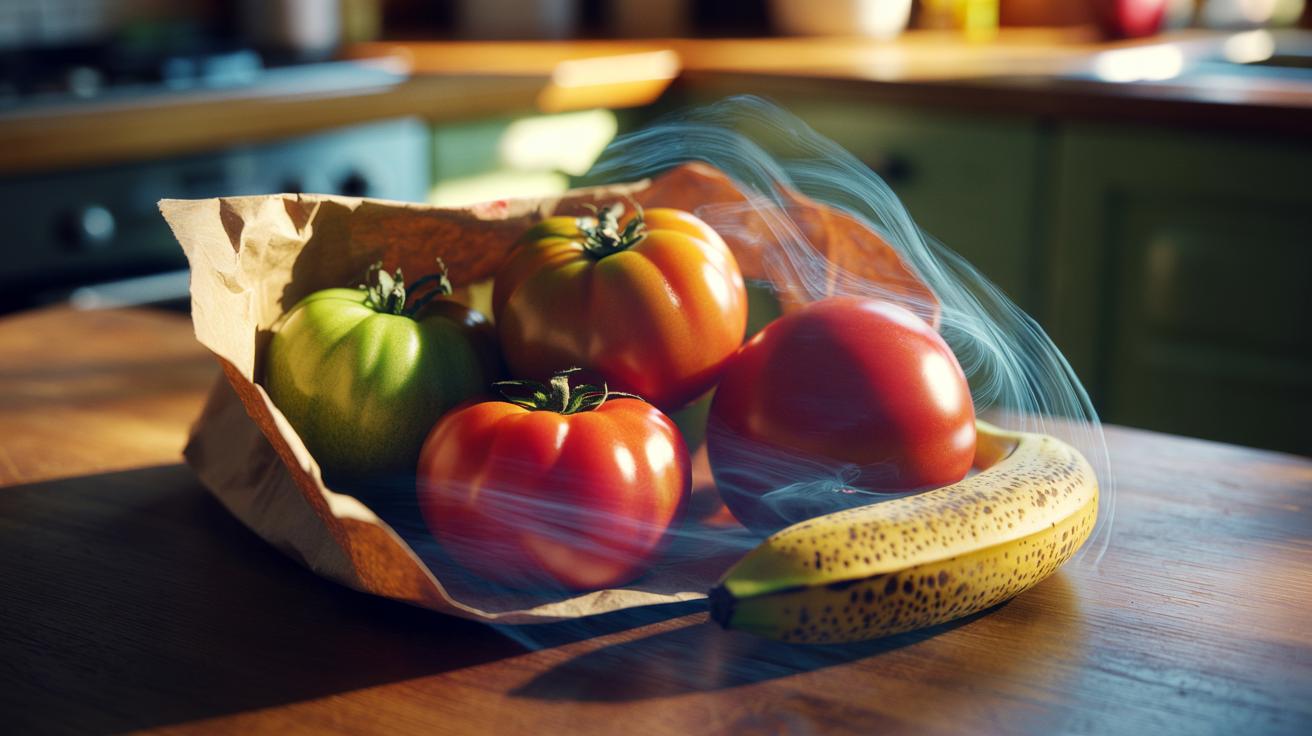
The simplest method uses a paper bag. Slip two to four tomatoes and one ripe banana inside. Fold the top loosely. That’s it. The bag traps enough ethylene to matter but still lets moisture escape so skins stay dry. Do not seal the bag airtight—stale, humid air invites mould. Keep the bundle on a shaded counter at 18–22°C. Check daily. Rotate fruit to avoid flat spots. Remove the banana once tomatoes show uniform blush to prevent overshooting into mush.
No bag to hand? A cardboard box works, lined with a tea towel to cushion fruit. Poke a few holes to keep air moving. Avoid plastic tubs unless vented generously; condensation builds fast. If tomatoes vary in maturity, group them: greener ones get the banana, blushing ones ripen solo. This staggered approach balances speed with quality. Ripening is not a race; it is a controlled glide.
A domestic trick: if your kitchen is cool, warm the space rather than the fruit. Direct sun on a windowsill overheats skins and bleaches colour. A spot near, not on, a warm appliance creates gentle stability. And remember fragrance: when tomatoes smell rich and leafy, they’re nearly there. That cue rarely lies.
Timing, Temperature, and Safety Considerations
Time varies with fruit maturity, banana ripeness, and temperature. Expect a few days to a week. Cooler rooms slow the chemistry; warmer ones speed it until quality suffers. Below 10°C, chilling injury can halt ripening and dull flavour; above 29°C, enzymes falter and texture degrades. Humidity should be moderate—enough to prevent shrivelling, not so high that droplets form on skins. Ventilation prevents off‑odours and fungal growth. Keep an eye on stems and blossom ends; they betray the first signs of trouble.
| Condition | Ethylene Source | Typical Time to Ripe | Temperature Note |
|---|---|---|---|
| Paper bag, loosely folded | 1 ripe banana | 2–4 days | 18–22°C ideal |
| Cardboard box with vents | 1 banana or 1 apple | 3–6 days | Keep shaded |
| Open bowl on counter | Nearby ripe fruit | 4–8 days | Avoid sunlight |
Food safety matters. Discard tomatoes with fuzzy growth, sour fermentation smells, or leaking skins. Surface blemishes are normal; spreading black mould is not. Wash hands, rinse fruit gently, and dry before bagging. Never refrigerate unripe tomatoes; the cold flattens aroma precursors and can induce mealiness. Cool only once fully ripe to hold peak flavour for a day or two. If you overshoot, rescue by roasting—heat coaxes back sweetness and concentrates character.
Beyond Bananas: Other Ethylene Sources and Controlled Ripening
Bananas are not alone. Apples, pears, and kiwifruit also exhale ethylene, offering flexible options when your fruit bowl varies. Apples are steady emitters with a cleaner aroma profile, useful if you want control without a headlong rush. Pairing a single apple with three or four tomatoes in a vented box yields a measured ripening arc. Match the emitter’s power to the patience you have.
Start with tomatoes that are mature green or “breaker”—a faint blush on the shoulder is ideal. Very hard, tiny, glossy fruit may be immature and unresponsive. Varieties differ, too: thick‑walled Romas can take longer than airy salad types. If you’re processing sauce, aim for a uniform deep red; for slicing, stop at vibrant red‑orange to retain bite. Consider space. Crowding bruises fruit and concentrates moisture. A single layer is best, with soft cloth underlay.
For keen gardeners, small ripening cabinets—insulated boxes with a low‑watt heat pad and passive vents—offer stability during cold spells. They’re simple to assemble and transform glut management. In flats, a cupboard above the fridge often mimics the same conditions. Consistency beats intensity: steady ethylene, steady warmth, steady airflow.
Bananas lend tomatoes a whisper, not a shove, and that’s the beauty. A little ethylene, a breathable bag, the right temperature—suddenly last week’s harvest tastes like summer again. Keep them ventilated, watch them daily, and stop the process at peak colour and scent. The method is forgiving, but it rewards attention. Next time your counter holds a mix of green, blush, and ripe, will you pair them strategically and turn your kitchen into a tiny, well‑tuned ripening room?
Did you like it?4.6/5 (22)