In a nutshell
- 🍳 Chemistry: Baking soda + acid releases CO₂ that inflates batter quickly; heat then sets proteins and starch to lock in lift.
- ⚖️ Ratios: For 150 g flour, use 1/4 tsp soda with buttermilk or 1/8 tsp with milk + lemon; if using baking powder, keep it to 1 tsp plus a pinch of soda.
- ⏱️ Timing: Add soda to dry, combine with wet just before cooking, rest briefly (3–7 minutes), then cook promptly to protect the bubbles.
- 🔥 Technique: Aim for a thick, pourable batter; medium heat, no pressing with the spatula, flip once, optionally cover for 20–30 seconds for extra lift; add mix-ins on the raw side.
- 🧪 Troubleshooting: Soapy taste = too much soda or too little acid; pale/dense = weak reaction or stale soda; fix by balancing acidity, moderating heat, and avoiding overmixing.
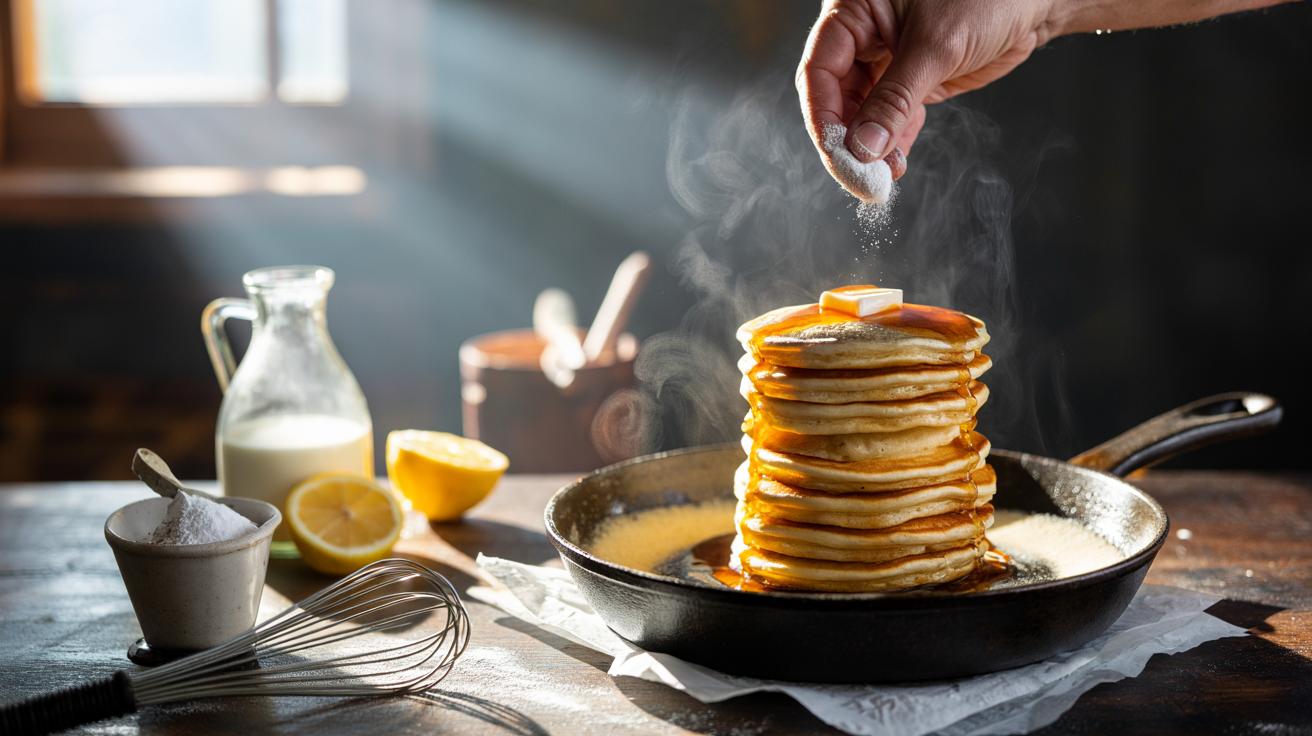
Sunday mornings have a sound. A gentle hiss as batter hits a hot pan, the quick flip, the cheerful stack. Yet the real drama is invisible. Add a whisper of baking soda, and pancakes leap from average to cloud-soft in minutes. This isn’t alchemy; it’s kitchen chemistry with a newsroom’s eye for precision. A pinch, paired with the right acid, releases bubbles that build height and tenderness without heaviness. Get the amounts right, control the heat, and watch the batter breathe. Too much soda spoils the party. Just enough turns routine into ritual. Here’s how to use that small spoon to big effect.
The Chemistry Behind That Instant Lift
At the heart of fluffy pancakes is a humble reaction: sodium bicarbonate meeting acid to produce carbon dioxide. Those tiny gas bubbles inflate the batter’s gluten network like a thousand micro-balloons, creating lift before your eyes. As heat sets proteins and gelatinises starch, the bubbles are trapped, yielding a crumb that’s light yet resilient. The key is timing: the reaction starts the moment acid meets soda, so mixed batter has a short window of peak power.
Acid sources are everywhere: buttermilk, yoghurt, soured milk, lemon juice, even brown sugar and honey (both mildly acidic). Adjust the pinch of soda to match. More acid, a hair more soda. Less acid, scale back. This keeps flavour clean and avoids a soapy tang. Bonus: soda nudges pH up, promoting quicker browning and a crisper, lacy edge. That’s why a pale, cakey pancake turns burnished and tender with a small tweak. Think balance, not brute force. Small pinch, big result.
How Much to Use and When to Add It
Measure by flour, not instinct. For every 150 g (about 1 cup) of plain flour, start with 1/4 teaspoon of baking soda if your liquid is very acidic (buttermilk or yoghurt), and 1/8 teaspoon if you’re using regular milk plus a splash of lemon. Use the least that achieves visible lift. Add soda to dry ingredients, whisk briefly, then combine with wet just before cooking. Don’t mix early and let it sit for ages; you’ll spend the bubbles before they reach the pan.
| Flour | Baking Soda | Acid Source | Rest Time | Expected Texture |
|---|---|---|---|---|
| 150 g (1 cup) | 1/4 tsp | 240 ml buttermilk | 3–5 minutes | Very fluffy, tender crumb |
| 150 g (1 cup) | 1/8 tsp | 240 ml milk + 2 tsp lemon juice | 5–7 minutes | Light, softly springy |
| 150 g (1 cup) | Pinch (scant 1/8 tsp) | 200 g yoghurt + 40 ml milk | 5 minutes | Tall, slightly custardy |
If you also use baking powder, keep soda modest: 1 teaspoon baking powder plus a pinch of soda per 150 g flour balances height and flavour. Too much soda dulls sweetness and leaves a metallic echo. Sift dry ingredients, fold wet into dry, stop when streaks just vanish. That’s your green light for the pan.
Techniques for Taller, Tender Pancakes
Technique seals the deal. Start with a thick, pourable batter that slowly ribbons off a spoon. Thin batter spreads; thicker batter rises. Heat a heavy pan to medium, not scorching. A test droplet should sizzle gently, not spit. Lightly oil, then wipe to leave a sheen. Ladle batter and leave it. Do not press with the spatula. You’ll squeeze out the gas you just worked to create.
Wait for solid signals: lazy bubbles popping at the surface, edges matte, centre slightly domed. Flip once. Cook the second side shorter to avoid dryness. For extra lift, cover the pan for 20–30 seconds after pouring; trapped steam helps structure set around the CO₂ pockets. If using berries or chocolate, scatter them onto the raw side in the pan so their weight doesn’t collapse the batter in the bowl. Warm your plates. Stack immediately. Each small step preserves the aeration that the pinch of soda created.
Troubleshooting: Common Mistakes and Quick Fixes
Soapy taste? You used too much baking soda or too little acid. Cut soda by half next time or increase acidity by a teaspoon of lemon juice per cup of milk. Pale, dense pancakes with little lift point to underpowered reactions: your acid was weak or the batter sat too long. Mix and cook swiftly; adjust the rest to a few minutes only. Freshness matters: replace soda opened more than six months ago.
Overmixed batter creates toughness by developing gluten. Stir just until no dry streaks remain; a few lumps are fine. Gummy centres with scorched outsides indicate heat too high. Drop to medium, extend cook time, and make smaller pancakes, 10–12 cm across, to cook through. If batter spreads thinly, hold back 1–2 tablespoons of milk or add a teaspoon of flour to thicken. If it sits and tightens, loosen with a splash of milk. Keep control, not chaos. Small corrections rescue a batch and keep breakfast civil.
A pinch of baking soda won’t rewrite your recipe, but it will rewrite your texture. It coaxes air into the crumb, deepens browning, and trims the time between mixing bowl and plate. Respect the chemistry. Measure modestly, pair with the right acid, and protect the bubbles from bowl to pan. The reward is height without heft, tenderness without dampness, and edges that whisper crisp. Ready to test the pinch on your next stack, or will you tweak the ratios and chase your own signature rise?
Did you like it?4.6/5 (25)