In a nutshell
- 🧪 Cold infusion science: oil dissolves fat-loving aromatics (terpenes, eugenol) via diffusion overnight; temperature and surface area accelerate transfer; manage oxygen exposure and avoid over-extraction that leads to bitterness.
- 🫒 Smart pairings: choose bases to match herbs—peppery EVOO for rosemary/thyme, neutral rapeseed or grapeseed for basil, dill, citrus; crush seeds, bruise leaves, and prioritise aromatic freshness.
- 🛡️ Safety first: fresh herbs and garlic can pose botulism risk—refrigeration is mandatory and use within 7 days; consider acidifying garlic/herbs; dried herbs are safer at room temperature; sterilise bottles and minimise airspace.
- 📝 Method that works: use about 1 part herb to 8–10 parts oil (≈10–12% by weight); infuse 8–18 hours, then fine-strain (coffee filter) and label; dried-herb oils keep 2–4 weeks chilled, fresh-herb oils about 7 days.
- 🍽️ Use and troubleshoot: if bitter, shorten contact or switch oil; clear cloudiness by re-straining; dull flavour often means old oil; finish, don’t fry—drizzle over salads, roast veg, mayo, oysters, desserts, and even cocktails.
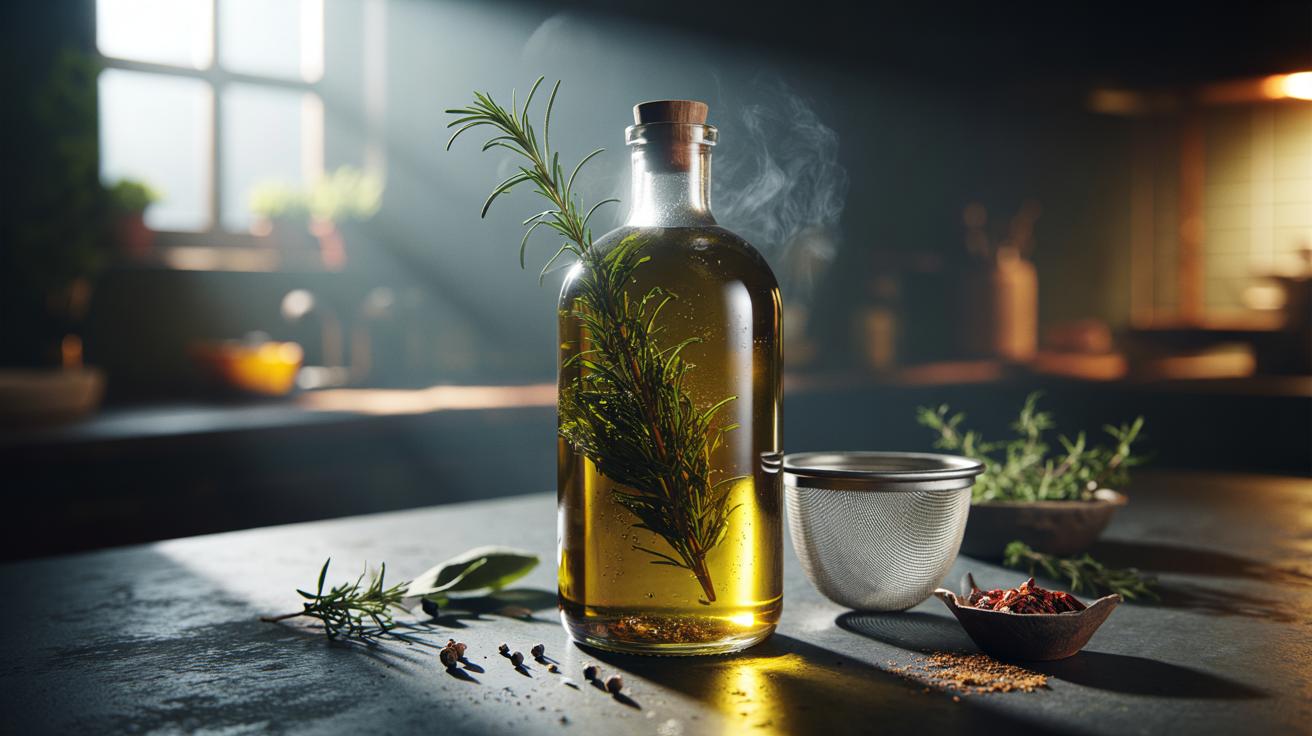
There’s theatre in waiting. Leave green sprigs in a bottle and, by morning, the kitchen smells different. This is the quiet magic of cold infusion, where oil coaxes flavour from leaves and seeds without heat or hurry. It’s gentle. It’s precise. Overnight, volatile aromatics move from plant to fat, shaping an oil that tastes like memory: a hedge after rain, a market bunch of basil, a peppery sting of rocket. Start with clean jars, good oil, and herbs you trust. The rest is patience and proportion—and an understanding of why, in the dark, those flavours seep and settle so convincingly.
How Flavours Travel: The Science of Overnight Infusion
Oil is a lipid solvent. Many of the molecules we perceive as aroma—terpenes in rosemary, eugenol in oregano, anethole in fennel—are fat-loving and dissolve into oil over time. Overnight, diffusion does the slow work. No bubbles, no sizzle, just molecules moving down tiny concentration gradients from herb cell walls into the surrounding fat. Temperature matters. Warmer rooms accelerate transfer, but so does surface area; lightly bruising leaves or cracking seeds exposes more pathways for aromatic release.
Water complicates the party. Fresh herbs carry moisture, which forms pockets in oil where spoilage can start. That’s why dried herbs give cleaner, safer extractions at room temperature, while fresh herbs demand stricter controls. Think of overnight infusion as controlled maceration: the goal is peak aroma before chlorophyll bitterness or grassy harshness creep in. Oxygen exposure shapes outcomes as well. Too much air and oils oxidise, dulling brightness; too little movement and extraction lags. A narrow, full bottle reduces airspace and speeds a clean, vivid pull of flavour without tipping into muddiness.
Finally, there’s time. Twelve to sixteen hours often hits the sweet spot for delicate herbs; tougher needles and seeds may need a day. Past that, bitter compounds and vegetal notes can dominate, especially with robust extra-virgin olive oil (EVOO) bases.
Choosing Oils and Herbs for Clean, Bright Notes
Pick your base by personality. A punchy EVOO brings pepper and fruit, gorgeous with thyme or rosemary, but it can muffle basil’s top notes. Neutral oils—rapeseed, grapeseed, sunflower—are quieter stages, letting tarragon, dill, or citrus peel perform. Match intensity to intention: a salad finishing oil can be bold; a baking oil wants restraint. Dried bay, juniper, and chilli flakes behave predictably. Fresh basil, mint, and garlic deliver sparkle but demand diligence to stay safe and crisp.
Here’s a quick pairing map to guide choices overnight.
| Herb/Spice | Flavour Notes | Best Oil Base | Overnight Guide |
|---|---|---|---|
| Rosemary (fresh) | Piney, resinous | EVOO | 12–18 hrs; strain early to avoid bitterness |
| Basil (fresh) | Sweet, aniseed lift | Rapeseed or light EVOO | 8–12 hrs; keep chilled for colour |
| Chilli flakes (dried) | Heat, fruit | Grapeseed | 12–24 hrs; intensity climbs quickly |
| Garlic (fresh) | Savoury, pungent | Sunflower | Use acidified garlic and refrigerate |
| Thyme (dried) | Herbal, lemony | EVOO | 12–16 hrs; clean, stable |
Consider seasonality and source. Garden herbs, picked dry and early, hold higher aromatic density. Shop bunches vary. Smell before you buy; if it doesn’t sing raw, it won’t sing in oil. And remember: seeds (coriander, fennel) release flavour more evenly if lightly crushed first, a small step with outsized return overnight.
Step-by-Step: Safe Overnight Infusions at Home
Start with scrupulous kit. Wash glass bottles, then sterilise in simmering water and air-dry. Use a fresh, in-date oil. For a balanced extraction, a simple ratio works: roughly 1 part herb (loosely packed, leaves only for tender herbs) to 8–10 parts oil by volume, or 10–12% by weight. Lightly bruise leaves; crack whole spices. Combine in the bottle, filling to the neck to minimise airspace.
If using dried herbs or spices, you can infuse at cool room temperature overnight. With fresh herbs or garlic, you must manage moisture and microbiology. To reduce risk from Clostridium botulinum, keep fresh-herb or garlic oils refrigerated at all times and use within 7 days. An option: briefly acidify fresh garlic or herb stems in vinegar (pH below 4.2) before patting dry and submerging in oil; this lowers risk while retaining brightness. Alternatively, blanch hardy herbs for 5–10 seconds, shock in ice, spin absolutely dry, then infuse chilled.
Cap and label the bottle—herb, oil, date, and time. Leave it somewhere dark if dry-infusing, or in the fridge if fresh. After 8–18 hours, taste. If it’s there, strain through a fine mesh lined with coffee filter to remove water pockets and plant debris. Always discard at any sign of fizzing, cloud-like strands, or off-odours. Store strained oil in the fridge for best colour and longevity; bring to room temperature before serving to unlock aroma.
Troubleshooting, Tasting, and Ways to Use Your Oil
Bitterness creeping in? You likely over-extracted polyphenols or used too much stem. Next time, shorten the window or switch to a lighter base. Cloudiness often signals residual water or particulates; strain again, then settle the bottle upright and decant the clear layer. A dull or waxy palate feel can mean the oil is old; start with fresher stock. If flavour is faint by morning, don’t panic—another four hours can transform it, especially with woody herbs like rosemary or sage.
Now the fun. Drizzle basil oil over tomatoes, fold dill oil through smashed potatoes, slick roast carrots with cumin-seed oil. Swirl chilli oil into mayonnaise for a quick sandwich upgrade. Whisper tarragon oil across oysters. Even desserts: a shy mint oil can lift macerated strawberries. Finish, don’t fry; high heat will flatten those carefully captured volatiles. For cocktails, a drop of thyme oil skates across a Martini, adding a green, resinous top note without watering down the drink.
Label shelf life realistically. Dried-herb oils, strained well, keep 2–4 weeks chilled. Fresh-herb oils are shorter—aim for 7 days. Small bottles encourage quick turnover and brighter plates. And yes, keep experimenting: split batches, change ratios, and test at intervals to learn the precise moment your palate prefers. That’s the craft.
Infusing oil overnight is a quiet ritual that rewards attention to detail: clean glass, right pairings, strict safety, and tasting at dawn. In return, you get a pantry of edible perfumes ready to finish suppers and surprise guests. Refrigeration and timely use protect both flavour and you, while mindful pairing keeps the profile pure. Start small, keep notes, adjust. What herb-and-oil combination will you try tonight, and how will you make it unmistakably your own by morning?
Did you like it?4.5/5 (26)