In a nutshell
- 🍎 Apples brown due to enzymatic browning driven by polyphenol oxidase (PPO); a mild salt solution slows oxygen contact and inhibits the enzyme.
- 🧂 Use a 0.5–1% saltwater bath (1–2 tsp per litre) in cold water; immerse slices for 2–3 minutes, then rinse briefly (10–15 seconds) and pat dry.
- ⏱️ Done right, flavour stays neutral and texture crisp; store slices airtight with a paper towel for hours at room temp or 24–48 hours chilled.
- 🔬 Versus other methods: lemon/ascorbic is effective but tangy, honey water can be sticky, plain water is short-lived—saltwater wins on speed and subtlety.
- 🥗 Pro tips: tailor salinity to variety, keep brine cold, and consider a salt + vitamin C hybrid for maximal colour protection in lunchboxes, pastries, and cheese boards.
Slice an apple and watch it blush brown. Annoying, avoidable, and oddly fascinating. The quick fix that chefs and school-lunch parents swear by is deceptively simple: a dip in saltwater. It works fast. It’s cheap. It won’t bully the fruit’s flavour when done right. Behind the trick is a neat bit of kitchen chemistry, with salt tamping down the very reaction that causes discolouration. In the space of a tea break, you can prep a bowl of crisp, pale slices that stay appetising for hours. Short soak, brief rinse, long-lasting freshness—that’s the formula, and it’s far gentler than you might think.
Why Apples Brown and How Salt Stops It
Apple flesh browns because of enzymatic browning. When a knife ruptures cells, oxygen meets natural phenolic compounds. The enzyme polyphenol oxidase (PPO) speeds a reaction that forms brown pigments called melanins. Heat can denature PPO, but that also cooks the fruit. Lemon juice can acidify the surface, yet its citrus tang is not always welcome. Salt offers a subtler intervention. In a weak brine, several things happen at once: oxygen diffusion at the cut surface falls, chloride ions interact with the enzyme’s copper centre, and a mild osmotic effect slows the chemistry. The outcome is less oxygen, slower PPO, and delayed browning.
Critically, we are not pickling. The sweet spot is a 0.5–1% salt solution: about 1–2 level teaspoons per litre of cold water, or roughly 1/2 teaspoon per 250 ml. That’s enough to inhibit browning without salting the fruit’s flavour. Use cold water to keep texture snappy, and keep the soak short. You’re treating the surface, not marinating the flesh. Done correctly, you’ll taste apple, not brine—just a cleaner, brighter slice that resists the rush to rust.
Quick, Practical Method: Saltwater Immersion in Three Steps
First, mix your brine. For lunchboxes or pastry prep, aim for 0.5% saline: 1 level teaspoon fine salt in 1 litre of cold water (or 1/2 teaspoon in 500 ml). For very sensitive varieties like Gala or McIntosh, stay at the lower end; for sturdier Bramley or Granny Smith, you can edge towards 1%. Stir until fully dissolved. Clarity matters—undissolved crystals can spot-season.
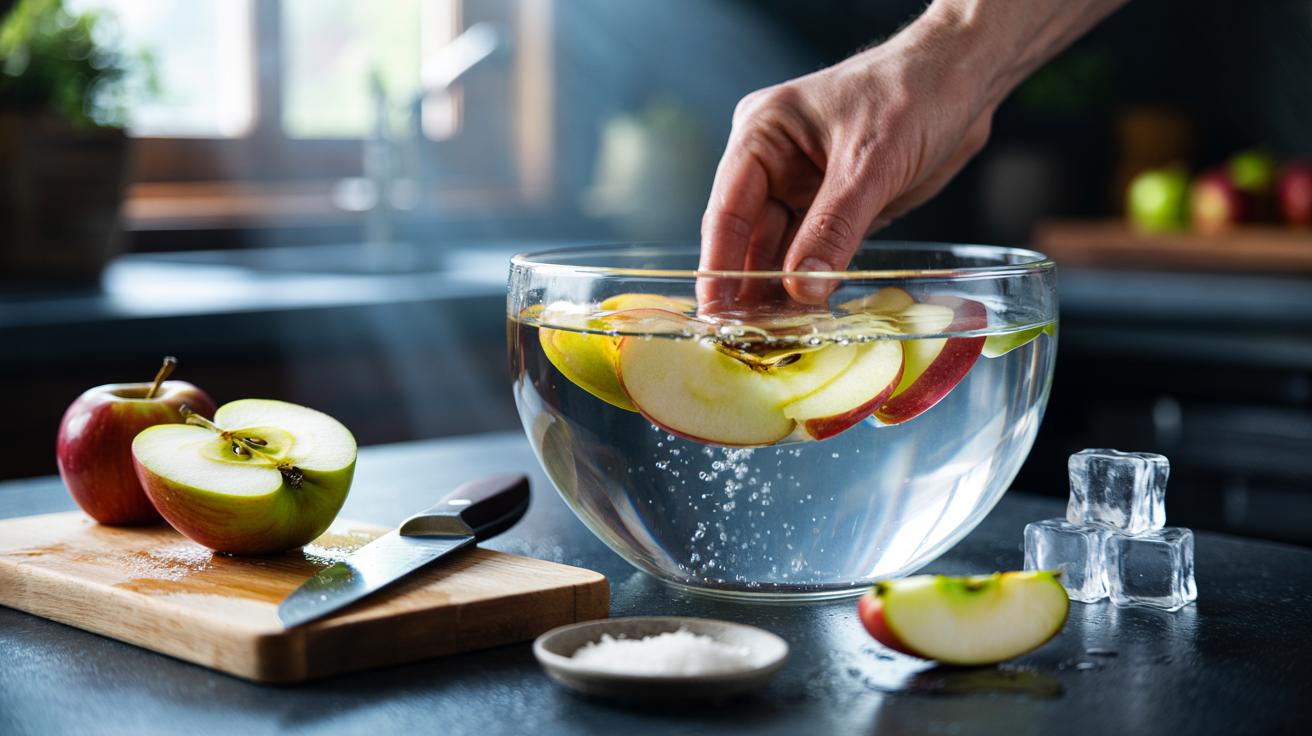
Second, immerse cut slices completely. Swirl gently to dislodge trapped bubbles so every surface sees the solution. Time is brief: 2–3 minutes is usually plenty, with up to 5 minutes for chunky wedges. You’ll see no dramatic change, and that’s the point—this is prevention, not cure. Keep the water cold to lock in crispness. If prepping big batches, work in rounds so nothing lingers.
Third, drain well and rinse quickly under cold running water—10–15 seconds does it—to remove surface salinity while leaving the protective effect intact. A short rinse won’t undo the anti-browning benefit. Pat dry, then store in an airtight box lined with a paper towel to catch moisture. Expect pristine colour for several hours at room temperature and up to 24–48 hours refrigerated, depending on variety and slice thickness.
Taste, Texture, and Safety: Getting the Balance Right
The fear is saltiness. Used at 0.5–1% and rinsed briefly, the effect on flavour is minimal to imperceptible. The brine primarily treats the surface enzymes; it doesn’t soak through. Thin slices carry a slightly higher risk of a saline nip; thicker wedges shrug it off. If you’re prepping for children, go low and rinse well. Prefer sea salt or table salt—iodised is fine, and no, it won’t tint the fruit. Cold water and short timing are your insurance against off-flavours.
Texture matters as much as colour. Cold immersion helps retain snap, while the short soak avoids any watery bite. For storage, limit oxygen exposure: press a sheet of baking parchment onto the slices or use a snug container. The method is safe for most diets, though anyone on a strict low-sodium plan should keep the rinse thorough. If pairing with pastry, you can skip the rinse and use a 0.3% solution to keep sodium negligible. For picnics, consider chilling the brine beforehand and packing slices with a small ice pack. The result? Crisp, pale, apple-forward bites that travel beautifully.
Comparing Anti-Browning Methods at a Glance
Saltwater isn’t the only option, but it’s uniquely fast and unobtrusive. Lemon works, yet leaves a citrus shadow that can clash with delicate cheeses or custards. Honey water is gentle and child-pleasing, though sticky. Plain water slows browning by diluting oxygen contact, yet its protection fades quickly. Vacuum or tight wrapping helps, but it’s fiddly when you need a quick platter. When speed, neutrality, and low cost collide, saltwater wins the weekday battle.
| Method | Mix & Time | Flavour Impact | Longevity | Best Use |
|---|---|---|---|---|
| Saltwater | 0.5–1% for 2–3 min | Neutral after quick rinse | Hours; up to 1–2 days chilled | Lunchboxes, pastry prep |
| Lemon/Ascorbic | 1–2 tbsp juice per 250 ml; 1–3 min | Citrus tang noticeable | Strong; day or more | Fruit salads, bold flavours |
| Honey Water | 1 tbsp per 250 ml; 2–3 min | Sweetness, slight stickiness | Moderate | Kids’ snacks |
| Plain Water | Cold soak; 2–5 min | None | Short-lived | Very quick plating |
| Air Exclusion | Wrap or vacuum seal | None | Good if airtight | Batch storage |
If you love the perfume of lemon but want neutrality, blend approaches: a pinch of ascorbic acid (vitamin C) with very mild brine keeps apples pristine and clean-tasting. For cheese boards, the saltwater method preserves apple character so cheddar or Stilton leads, not citrus. For pies, pale slices prevent the muddy look that can dull a lattice-top’s appeal. However you slice it, the best method is the one you’ll actually use—simple steps win busy days.
In a kitchen crowded with hacks, saltwater immersion stands out because it’s fast, reliable, and doesn’t hijack the apple’s flavour. A tiny measure of salt, a short soak, a swift rinse: that’s all it takes to outpace oxidation and plate something you’re proud to serve. Armed with the science of PPO inhibition and a few practical tweaks, you can keep snacks bright and baking prep calm. What will you try first: a brine-only bath for a neutral finish, or a hybrid dip that blends salt with vitamin C for belt-and-braces protection?
Did you like it?4.4/5 (26)