In a nutshell
- 🍲 A dash of paprika instantly deepens stews by releasing fat‑soluble pigments and aromas that boost colour, sweetness, and perceived richness.
- 🧑🍳 Key method: bloom in fat for 30–60 seconds, add most early for body, then layer late for fresh aroma; avoid scorching and don’t boil hard after finishing.
- 🌶️ Choose wisely: keep sweet paprika for brightness, smoked paprika for ember-like depth, and hot paprika for gentle heat; blend to taste and mind suggested amounts.
- 🥘 Smart pairings: think goulash, Spanish-style beans, or a British beef-and-ale stew; balance with tomato, onion, peppers, add a lick of acidity, and season salt later.
- 📦 Practicalities: prioritise freshness and storage (small tins, dark cupboard, replace ~6 months), consider mid-cook top-ups, and offer hot paprika as a table seasoning; even plan a Tempranillo or malty bitter alongside.
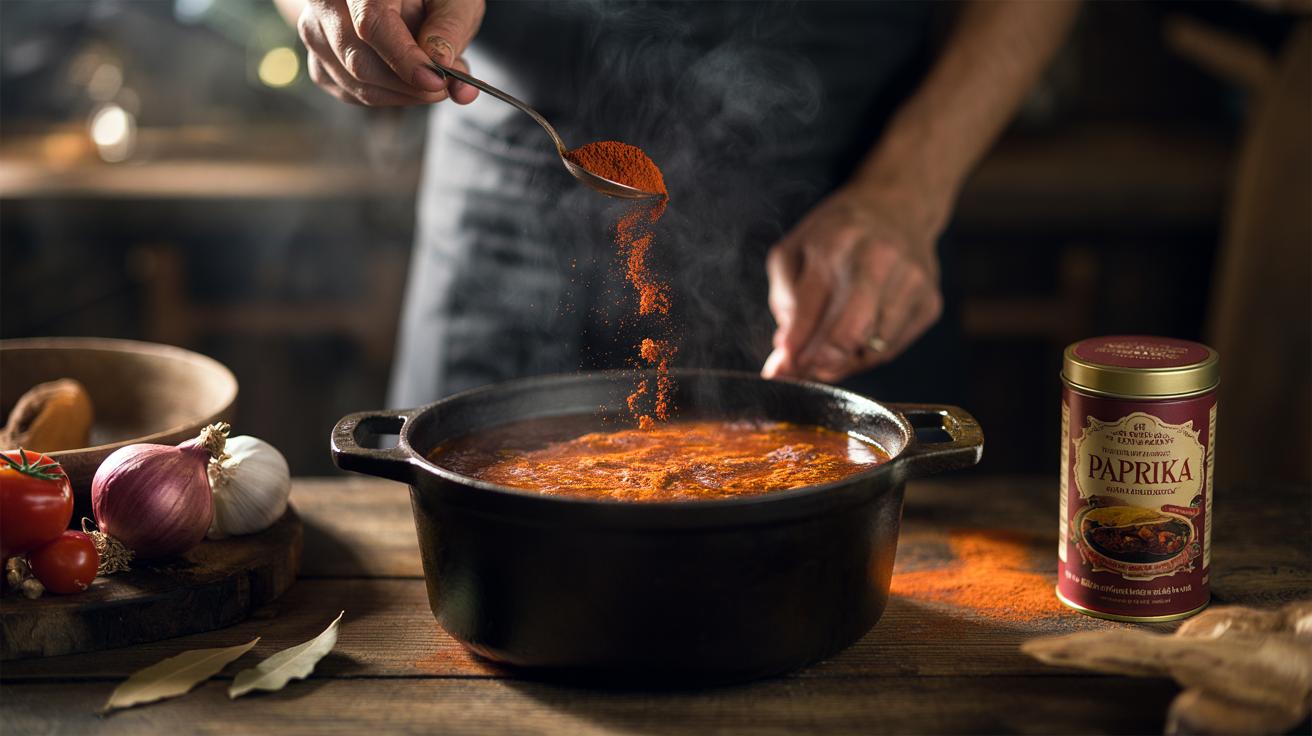
One spoonful can rescue a tired stew. A mere dash of paprika adds colour, aroma, and a subtle sweetness that rounds sharp edges and wakes sleepy base notes. It’s not just about heat. It’s about glow. In UK kitchens, where slow-cooked stews are comfort currency, this crimson powder acts like an instant edit: brightening tomatoes, deepening onions, and coaxing savouriness from humble roots. A teaspoon can change the whole pot. Used well, paprika brings body without weight, warmth without fire, and a gently smoky echo if you choose the right tin. Here’s how to deploy it with confidence—and why it works so quickly.
Why Paprika Transforms Stews So Quickly
Good paprika contains fat‑soluble pigments—chiefly carotenoids such as capsanthin—that disperse fast in hot oil. Within minutes they tint the broth, but colour is only half the story. Those pigments carry delicate aromatic compounds that bloom in fat and ride the steam to your nose, which your brain interprets as richer, deeper flavour. Fat plus spice equals lift. That’s why paprika seems to thread disparate stew components—meat, pulses, roots—into one coherent mouthful. It’s a small addition with a big sensory footprint.
There’s also a textural illusion at play. Mild paprika adds a honeyed, pepper-fruit sweetness that softens acidity from tomatoes and wine, while traces of capsaicin increase salivation, making broths feel silkier and more “saucy”. When paprika arrives early, it mingles with Maillard flavours from browned onions and meat, amplifying umami without adding salt. Add a little near the end and you refresh aroma at the surface. Use both and you get depth plus sparkle. It’s quick chemistry. It’s also forgiving.
Don’t confuse speed with shortcuts. Letting paprika bloom in a slick of oil or rendered fat for 30–60 seconds maximises payoff while protecting its fragile aromatics. Scorched paprika tastes bitter. Treated gently, it tastes like comfort.
Choosing the Right Paprika for the Pot
Not all paprika is created equal. The tin you choose shapes the stew’s accent—sunny and sweet, smoky and brooding, or tinglingly hot. Hungarian styles tend to be clean, red-fruited, and vivid; Spanish pimentón ranges from sweet to fiercely smoky, thanks to wood-drying. For British weeknight stews, keep two tins: a fresh sweet paprika for colour and fruit, and a smoked option to suggest hours of embers, even when dinner happens in 40 minutes. Freshness matters more than price. Buy small amounts, replace every six months, and store away from light.
| Type | Flavour/Heat | Best Uses | Suggested Amount per Litre |
|---|---|---|---|
| Sweet Paprika (Hungarian) | Red-fruit, mild, bright | Beef stews, chicken, veg bases | 1–2 tsp |
| Smoked Paprika (Spanish, Dulce) | Gentle smoke, sweet | Bean stews, lamb, mushroom | 1–1.5 tsp |
| Hot Paprika | Warm heat, peppery | Goulash, pork, tomato-heavy pots | 0.5–1 tsp |
| Hot Smoked Paprika | Assertive smoke, chilli heat | Chorizo-style soups, lentils | 0.25–0.75 tsp |
Blending is powerful. Try two parts sweet to one part smoked for a “fireplace without flames” effect, adding a pinch of hot if you crave tingle. Balance is the goal: you want paprika to frame the stew, not hijack it. If you can name the spice before the dish, you’ve added too much.
How and When to Add Paprika
Technique makes the dash decisive. Start by blooming paprika in fat—olive oil, goose fat, or butter—after you’ve softened onions and before you add liquid. Keep the heat low and stir constantly for up to a minute; this unlocks aroma without scorching. Follow with tomato paste or chopped tomatoes to form a protective slurry, then deglaze with stock or wine to carry the spice through the pot. Low heat, short time, big payoff. If you brown meat, do it first, then bloom paprika in the rendered fat for cohesion.
Think in layers. Add most of your paprika early for body, but reserve a half‑teaspoon for the last five minutes to refresh the top notes. For glossy finish, whisk a spoon of sweet paprika into a knob of butter or a splash of cream and swirl it in off the heat. The fat captures aromatics right at the surface, where we smell them most. Don’t let it boil hard after finishing; you’ll mute those delicate volatiles.
Cooking for heat-sensitive eaters? Rely on sweet or smoked styles and offer hot paprika as table seasoning mixed with flaky salt. For braises that simmer for hours, consider a mid‑cook top‑up. Long heat fades colour and perfume, so a late sprinkle returns the glow. Gentle correction beats heavy-handed spice dumps.
Pairings and Regional Ideas to Try
Classic anchors show why paprika thrives in stews. Hungarian goulash pairs sweet paprika with caraway, marjoram, and beef shin for a broth that’s both velvety and bright. In Spain, pimentón teams with garlic and bay to turn humble beans into a smoky supper, especially alongside chorizo or mushrooms. Borrow these cues, don’t copy slavishly. A British beef-and-ale stew leaps with a teaspoon of smoked paprika, a splash of stout, and a bay leaf. It tastes slow, even when it isn’t.
Vegetable stews love paprika too. Chickpeas with roasted peppers, tomatoes, and sweet paprika offer depth without meat; finish with lemon zest for snap. Butternut, lentils, and smoked paprika deliver bonfire notes; a dollop of yoghurt cools and carries spice. Pair paprika with tomato, onion, and peppers for a natural trio; add acidic nudges—vinegar, wine, or pickled pepper brine—to brighten the finish. Salt later than usual: paprika’s sweetness masks it, so taste twice.
Finally, protect your investment. Air, heat, and light flatten paprika. Decant into a small jar, keep it in a dark cupboard, and date the lid. Replace as you would coffee—frequently. If the powder smells dusty rather than fruity, it’s past its best. Fresh paprika is an ingredient, not a garnish colourant. Drink pairing? Try a Tempranillo or a malty bitter; both hug smoke and sweetness without bullying the stew.
In the end, paprika is a fast route to resonance: brighter colour, fuller aroma, and a silkier feel from a spice that plays well with others. It’s frugal, friendly, and—used wisely—transformative. Keep two tins, bloom in fat, and layer early and late for control. Then experiment. Try it in a fish stew, a mushroom ragù, even a leftover roast turned soup. The dash becomes your signature. What will you stir it into next, and which style—sweet, smoked, or hot—will headline your pot tonight?
Did you like it?4.3/5 (21)