In a nutshell
- 🥞 The science: a splash of vinegar reacts with baking soda to release CO₂, weaken gluten, and mimic buttermilk, creating tall, tender, airy pancakes.
- 🧪 Foolproof method: sour 240 ml milk with 1 tbsp vinegar, mix dry and wet separately, combine gently (leave small lumps), rest 5–10 minutes, then cook on medium heat and flip once.
- 🥛 Best acids: choose white distilled or apple cider vinegar (~5% acidity) for clean flavour and reliable lift; rice vinegar is mild; avoid heavy-handed use of malt vinegar; lemon juice also works.
- 🍳 Troubleshooting: flat pancakes signal tired leaveners—test for a strong fizz; adjust batter thickness, keep heat moderate, grease lightly, and cook soon after mixing for peak rise.
- 🧠 Pro tips: energise old baking powder with a touch of acid, fold in whipped egg whites for extra height, and hold finished pancakes on a wire rack to preserve fluff.
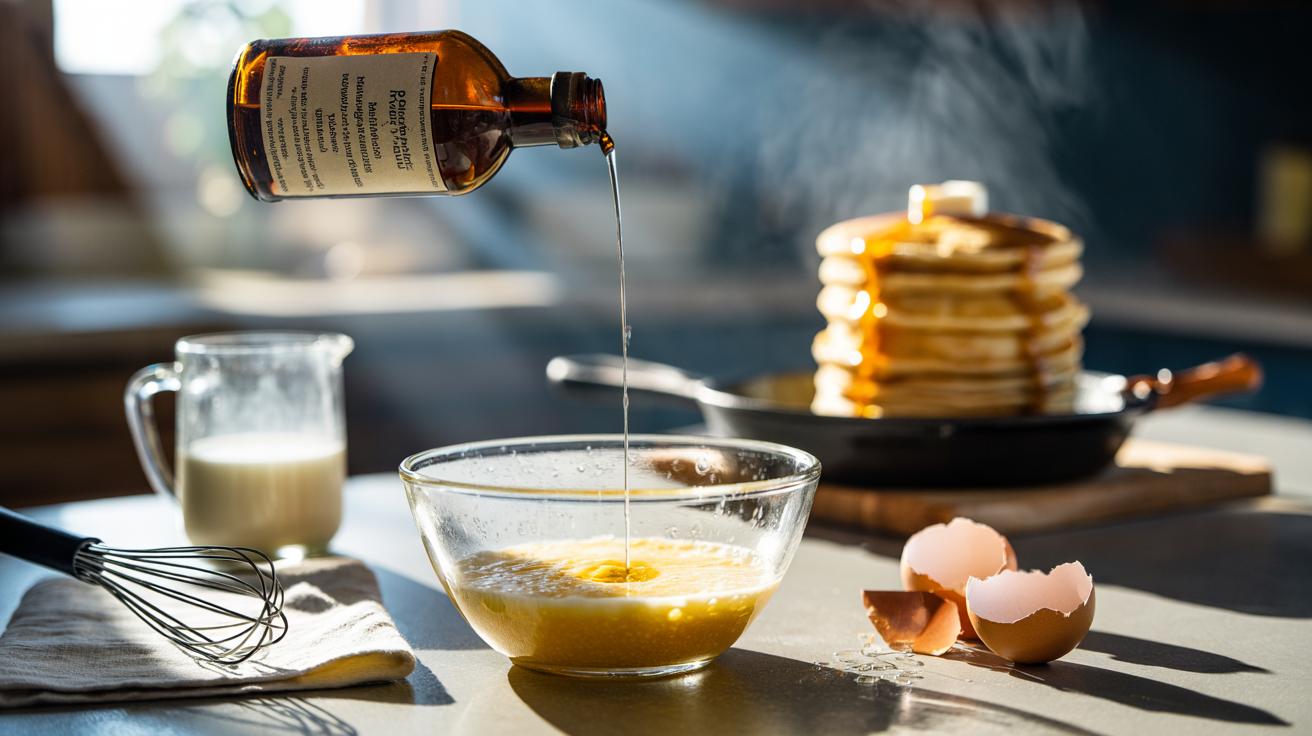
There’s a quiet culinary trick chefs and home cooks swear by, and it lives in the condiments aisle. A tiny pour of vinegar turns pancake batter from ordinary to cloud-light. Not sour. Not strange. Just airy, tender, and tall. The science is simple, the payoff huge, and the tools are already in your kitchen. With one adjustment to your usual recipe, you get faster lift, gentler crumb, and reliable rise even when baking powder is having an off day. Add acid at the right moment and the batter inflates itself. Here’s how a splash creates fluff every time—and exactly how to use it.
Why Vinegar Makes Pancakes So Fluffy
Pancake lift is a gas story. When acid meets an alkaline, bubbles form. In batter, vinegar reacts with baking soda to release carbon dioxide. Those bubbles expand quickly on a hot pan, forming the airy network that holds a lofty stack. Acid + alkaline = instant lift and tender texture. Even if you rely on baking powder, an extra nudge of acidity helps, compensating for tired leavening and stabilising bubbles as the batter warms.
Acidity also changes texture. By lowering pH, vinegar gently weakens gluten bonds, so the crumb stays soft rather than chewy. It mimics the buttermilk effect, producing that plush, cake-like interior with minimal mixing. A perk often overlooked: this same acid brightens flavour, balancing sweetness and butter richness without tasting “vinegary.”
There’s a heat bonus. Pancakes brown from sugars and milk proteins, but if the surface rises quickly, you get a deep, even colour before the centre overcooks. Fast lift prevents dense centres and keeps edges delicate. In short, a splash safeguards texture, flavour, and visual appeal in one move.
The Foolproof Vinegar Pancake Method
Start by making instant “buttermilk.” Stir 1 tablespoon of white or apple cider vinegar into 240 ml milk. Wait 5–10 minutes until slightly thickened. In another bowl, whisk 130 g plain flour, 1 tablespoon sugar, 1 teaspoon baking powder, 1/2 teaspoon baking soda, and 1/4 teaspoon fine salt. Beat 1 large egg with 2 tablespoons melted butter or neutral oil, then combine with the soured milk.
Pour wet into dry. Stir gently until just combined; streaks of flour are fine. Do not overmix; leave small lumps. Let the batter rest 5–10 minutes to allow bubbles to form and starches to hydrate. This brief pause is the difference between decent and spectacular rise. If the batter thickens too much, add a tablespoon of milk to loosen—it should pour slowly, not plop.
Preheat a lightly greased pan over medium heat. Scoop 60–80 ml per pancake. When bubbles pop and the edges look set, flip once. Cook the second side briefly. Hot, not blazing, is the sweet spot for even lift and colour. Serve immediately, or hold in a low oven on a wire rack to preserve steam-driven fluff. Result: tall stacks, tender middles, crisp fringes.
Choosing the Right Vinegar (and How Much to Use)
Most kitchens have more than one bottle on the go. The good news: several vinegars work beautifully. Aim for 5% acidity and a clean finish that won’t dominate your batter. For a classic flavour, choose white distilled vinegar; for gentle fruitiness, go apple cider vinegar. Rice vinegar is mild and pleasant. Malt vinegar, beloved on chips, can turn pancakes murky and malty—use sparingly if at all.
Use 1 tablespoon vinegar per 240 ml milk for an instant buttermilk swap. If your recipe already includes buttermilk, you can add a 1/2 teaspoon vinegar to energise tired leavening, but it’s often unnecessary. When relying on baking soda for lift, maintain roughly 1/2 teaspoon baking soda per cup of soured milk to fully react the acid without leaving a tang.
| Vinegar | Typical Acidity | Flavour Notes | Recommended Use |
|---|---|---|---|
| White Distilled | 5% | Neutral, clean | Best for classic pancakes; reliable rise |
| Apple Cider | 5% | Soft fruit, rounded | Mild tang; pairs with cinnamon or maple |
| Rice Vinegar | 4–4.5% | Delicate, slightly sweet | Great for subtle flavour, less sharpness |
| Malt Vinegar | 5–6% | Malty, assertive | Use sparingly; can darken batter |
When in doubt, pick a neutral acid and let toppings do the talking. Lemon juice also works but adds a citrus note; measure it like vinegar.
Troubleshooting and Pro Tips for Airy Pancakes
If pancakes spread thin and stay flat, check your leavening. Old baking powder or a missing baking soda partner will sabotage rise. Test baking powder in hot water and baking soda with vinegar; both should fizz vigorously. Weak fizz equals weak lift. Batter too runny? Add a spoon of flour. Too thick? Loosen with milk until it ribbons off the spoon.
Bitterness signals excess soda or over-browned fat. Keep soda to about 1/2 teaspoon per cup of soured milk and mind the heat. Grease lightly; wipe the pan between batches to prevent burnt spots. For ultra-fluffy results, separate the egg and fold in whipped whites at the end—gentle strokes only—to turbocharge volume without toughness.
Rest time matters. Five to ten minutes lets bubbles form and starch swell, but 30 minutes can over-acidify and slacken structure. Cook soon after mixing for peak lift. For consistent colour, preheat thoroughly, then maintain medium heat; a cold pan steals rise, an overheated one scorches. Storing? Keep leftovers on a wire rack, not a plate, to prevent steam collapse; reheat in a low oven to revive the airy crumb.
A splash of vinegar delivers science-backed lift, tender crumb, and balanced flavour with almost no effort. It’s cheap, fast, and forgiving—ideal on slow Sundays and frantic school mornings alike. Highlight the tang with berries, or stay classic with salted butter and maple syrup. Once you taste the difference, it’s difficult to go back. Acidity is the quiet ally of tall, cloud-like pancakes. What flavour twist will you try first—apple cider vinegar with cinnamon, or a neutral base that lets the syrup shine?
Did you like it?4.2/5 (27)