In a nutshell
- 🧪 Condensed milk curbs iciness via freezing point depression, lower water activity, and concentrated milk proteins that slow crystal growth and keep texture silky.
- 🛡️ Texture is a three-way shield: sugars bind water, proteins stabilise the matrix, and fat coats crystals; the classic no‑churn mix (whipped double cream + condensed milk) boosts total solids for smooth scoops.
- 🥄 Practical ratio: 1 × 397 g tin sweetened condensed milk to 500–600 ml double cream; whip to soft peaks, fold gently, chill, then freeze in a shallow container with a parchment lid; optional alcohol/glucose for extra softness.
- 🧊 Avoid pitfalls: reduce watery purées, keep tubs at the back of the freezer, don’t overwhip cream, and never swap in evaporated milk if you want truly fine crystals.
- 📋 Key add‑ins and tweaks: a pinch of salt for flavour balance, careful use of dry vs wet inclusions, and attention to solids balance to prevent sandiness or iciness.
Home freezers do a decent job at making ice cream cold. They’re less good at making it silky. That’s where sweetened condensed milk becomes a quiet hero. It supplies sugar, milk solids, and viscosity that keep water from forming jagged, mouth-dulling ice. In churned and no-churn recipes alike, it acts like a molecular bodyguard, protecting texture from the brutal, stop–start freeze of domestic appliances. The result: smaller crystals, softer scoops, and a scoop-shop sheen without industrial stabilisers. Here’s why it works, how to use it, and the simple tweaks that turn a tin in the cupboard into a bowl of velvet.
The Science: How Condensed Milk Stops Crystals
Ice cream fails when water gets free to organise itself into large, crunchy crystals. Condensed milk tackles that at several levels. First, its high sugar content triggers freezing point depression, a colligative effect that lowers the temperature at which a mix sets, so it freezes more slowly and unevenly. That sounds bad. It isn’t. Slower setting allows churning (or whipping) to break nascent crystals repeatedly, keeping them tiny and unnoticeable on the tongue. Second, sugars tie up water and reduce water activity, leaving less free moisture to crystallise.
Then come the milk proteins and minerals concentrated in condensed milk. Caseins and whey proteins act like microscopic roadblocks. They self-assemble around fat and air bubbles, thicken the matrix, and make it harder for ice crystals to migrate and grow. Finally, viscosity matters. A thicker base slows diffusion, the mechanism by which crystals recruit neighbours and become coarse. By raising total solids and viscosity in one step, condensed milk creates a protective environment in which ice crystals stay small, soft, and sparse.
Sugar, Proteins, and Fat: A Three-Way Shield
Think of texture as teamwork. Sugars (mainly sucrose in condensed milk) lower the freezing point and bind water. Proteins add structure, emulsify fat, and curb recrystallisation. Fat from cream provides richness and coats crystals, blunting sharp edges. Together they create a creamy network that resists cold shock and temperature swings. This is why the classic no-churn duo—whipped double cream plus condensed milk—feels improbably luxurious without a machine. The condensed milk also contributes lactose, which tastes less sweet than sucrose but boosts total solids, key to density and scoopability.
Balance matters. Too little sugar and the base goes icy; too much and it won’t set cleanly. Heavy fruit purées dilute solids and waterlog the mix, while bitter cocoa or high-percentage chocolate demand extra sugar to counter drying effects. Use condensed milk to anchor that balance: it supplies predictable sweetness and solids that hold up to add-ins. Maintain the mix’s solids in a sweet spot and you’ll get consistent, fine crystals every time.
| Component | Why It Helps | Practical Tip |
|---|---|---|
| Condensed milk | Freezing point depression; proteins; extra solids | Use 1 x 397 g tin per 500–600 ml cream |
| Cream (fat) | Richness; coats crystals; stabilises air | Whip to soft peaks before folding |
| Salt | Rounds flavour; minor freezing aid | 1/8 tsp per batch |
| Alcohol (optional) | Further lowers freezing point | 1–2 tbsp; avoid overdoing |
Practical Ratios and Technique for No-Churn Smoothness
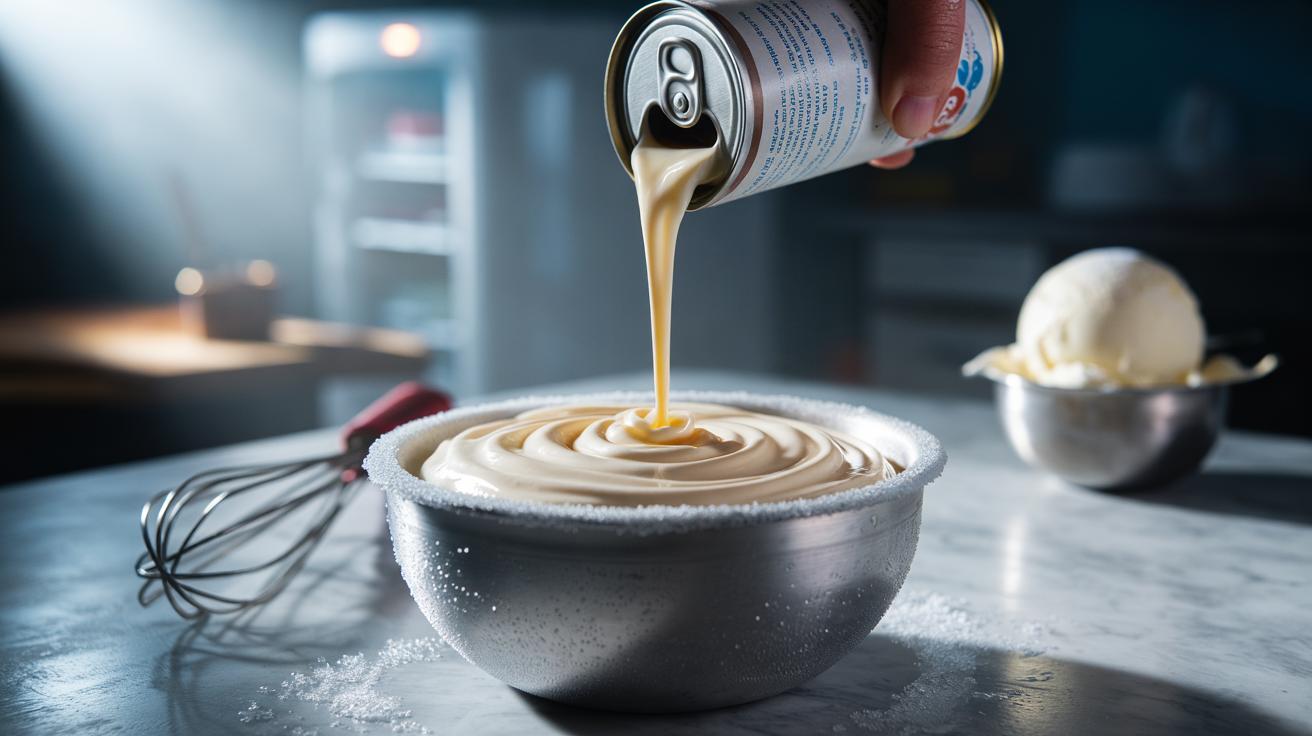
For a base that scoops cleanly, start with 1 x 397 g tin of sweetened condensed milk and 500–600 ml of cold double cream (48% fat). Add 1/8 teaspoon fine salt and 1 teaspoon vanilla. Whip the cream to soft, wavy peaks—stable but still supple. In a separate bowl, loosen the condensed milk with the vanilla and salt. Fold the two together gently: you want to keep air in the cream while dispersing sugar and proteins evenly. Fold in flavourings—citrus zest, cocoa, espresso, crushed biscuits—bearing in mind that dry ingredients thicken, fruit purée thins.
Chill the mix 30 minutes. Transfer to a shallow, lidded container for faster freezing and less crystal growth. Press baking parchment onto the surface to block evaporative ice. Freeze 4–6 hours. If using a churn, the same base benefits from the extra shear, producing even smaller crystals. Need extra softness? Add 1 tablespoon neutral spirit or 60 g glucose syrup. The target is consistent total solids: enough to bind water, not so much that the scoop feels pasty.
Common Pitfalls and How to Fix Them
Problem: iciness despite condensed milk. Likely culprits are dilution and temperature. High-water add-ins—strawberries, melon, hot coffee—overwhelm the base. Solution: reduce purées by a third on the hob, then cool; or add 1–2 tablespoons glucose or an extra 50–80 g condensed milk. If the freezer runs warm or fluctuates during door openings, crystals grow between checks. Store the tub at the back, in the coldest zone, and keep the surface covered. If you used evaporated milk by mistake, expect icier results; it lacks the sugar and solids buffer of sweetened condensed milk.
Grittiness can be lactose “sandiness” or undissolved powders. Sift cocoa, blitz sugar-heavy add-ins, and give the base 10 minutes to hydrate before freezing. A waxy feel points to overwhipped cream; it churns towards butter, squeezing out water that later crystallises. Whip less, fold more. Remember: small crystals come from a well-balanced, well-dispersed mix that freezes quickly and is stored consistently cold. With those controls, condensed milk does the heavy lifting, turning chaos into creaminess.
Condensed milk isn’t magic. It’s chemistry, deployed smartly in a home kitchen to tame ice and keep flavours front and centre. By lowering the freezing point, tying up water, and thickening the mix, it stops crystals from taking over and delivers a luscious, reliable scoop. Once you grasp the balance—solids, fat, and water—you can improvise boldly with fruits, spices, or chocolate and still land on silk. What flavour will you challenge condensed milk with next, and how will you tweak the ratios to make it your smoothest batch yet?
Did you like it?4.5/5 (27)