In a nutshell
- 🧂 Salt early: Adding salt to cold water seasons potatoes from within, supports pectin, reduces free starch, and yields fluffy, evenly seasoned mash.
- 🥔 Potato and salt choices: Use floury varieties like Maris Piper, King Edward, or Desirée; opt for fine sea salt; measure 10–12 g per litre or 1–1.5% of potato weight, tasting and adjusting if butter is salted.
- 🍳 Step-by-step method: Start in cold, salted water with a gentle simmer; drain and pan-dry; rice or mash lightly; emulsify with butter first, then warm milk/cream; avoid the food processor; finish with minimal seasoning.
- 🛠️ Troubleshooting: Fix oversalting with unsalted mash or warm dairy; remedy gluey mash with more butter and a low-oven dry; cure watery mash by steaming off moisture; reheat gently in a bain-marie—never blitz.
- 🎯 Best results: Early seasoning lets fat be embellishment, not repair, delivering deep potato flavour, cloud-light texture, and mash sturdy enough to carry gravy.
Perfect mashed potatoes don’t happen by accident. They’re engineered, deliberately, starting with a pot of cold water and a decisive pinch of salt. In British kitchens, we’ve argued about when to season for decades, yet the science is settled enough to guide a weekday supper and a Sunday roast alike. Add salt early and you season from within; add it late and you chase flavour at the surface. Texture changes too. The result? Mash that tastes of potato, not just butter and cream. The small decision to salt at the start can steer every spoonful toward balance, depth, and a billowy, confident finish.
The Science of Early Salt: What Happens in the Pot
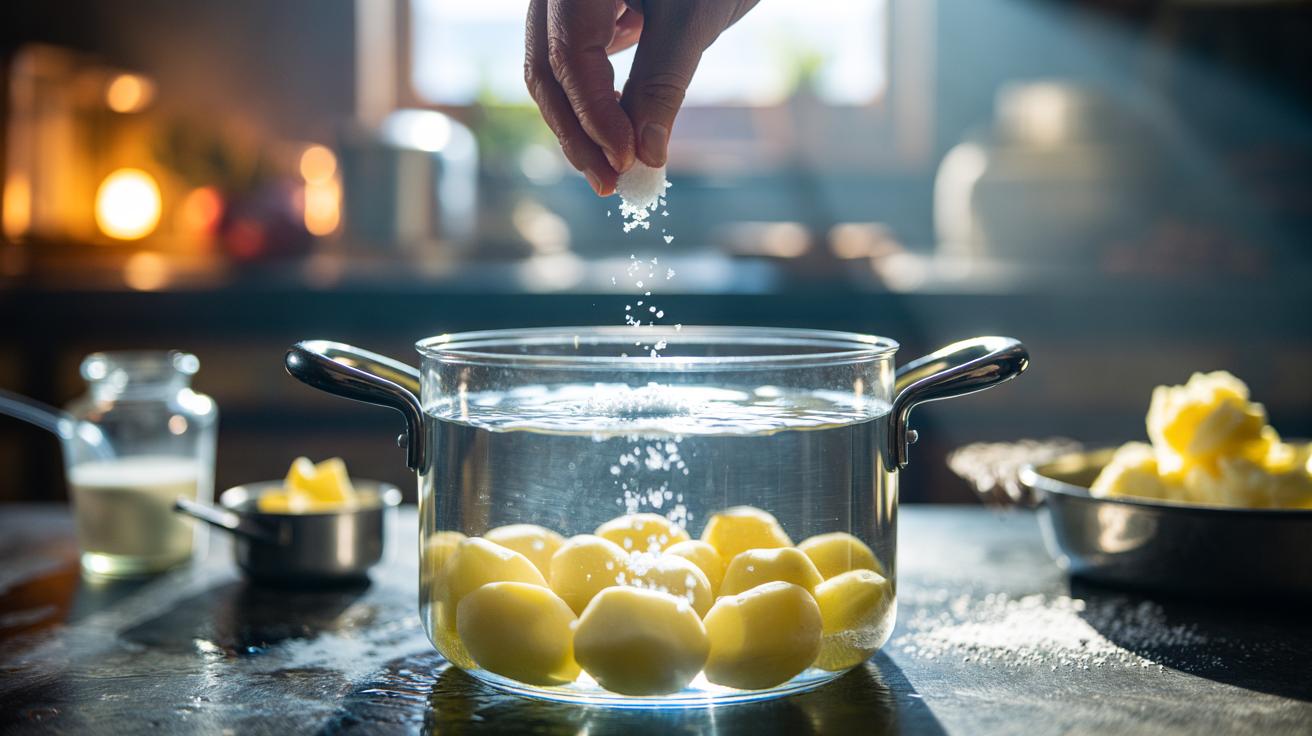
Tip in the salt as the potatoes go into cold water, not after they’re cooked. That single move changes how water and seasoning move through the cells. Sodium and chloride ions travel inward as the heat rises, seasoning the entire potato rather than just its exterior. At the same time, increased ionic strength influences pectin in the cell walls, helping potato cubes hold their shape as they soften. Fewer ragged edges means fewer burst cells and less free starch in the water—one of the culprits of gluey mash.
There’s myth to dispel. Yes, salt nudges the boiling point upwards, but at kitchen levels the effect is tiny. The real benefit is distribution. Early seasoning reaches the centre while the cells are intact; late seasoning struggles to penetrate once starches have gelled and moisture pathways have closed. That’s why late-salted mash often tastes oddly flat until you add more butter than you intended. With a properly salted boil, you can use fat for richness and sheen, not to plaster over blandness.
Salt early, keep the simmer gentle, and you’ll protect texture while building flavour from the inside out. This is structural cooking, not just seasoning at the end.
Choosing Potatoes, Salt Type, and Ratios That Work
Start with the right spud. In the UK, Maris Piper and King Edward are the classic floury choices; Desirée also performs well. Waxy varieties resist breaking down and tend to produce a denser, sometimes gummy mash. Peel evenly and cut into large chunks so they cook at the same pace. Then consider your salt: a fine sea salt dissolves quickly and doses predictably; flaky sea salt is delightful tableside but inconsistent in a pot. If you use standard table salt, reduce the quantity slightly because the crystals pack tighter.
As for how much, aim for water that is clearly seasoned but not “pasta-sea” saline. A sensible starting point is 10–12 g salt per litre of water, or about 1–1.2%. Another reliable method: 1–1.5% of the potato weight (so 10–15 g salt per 1 kg potatoes) dissolved in the cooking water. Adjust down a touch if your butter is salted. The goal is interior flavour, not brine. Taste the water before you turn on the hob; it should be pleasantly savoury.
| Timing | Action | Why It Matters | Result |
|---|---|---|---|
| Early (in cold water) | Add measured salt before heating | Even diffusion; pectin support; less surface damage | Seasoned to the core; fluffier texture |
| Late (after draining) | Stir in salt with butter | Limited penetration; encourages overmixing | Patchy flavour; risk of gumminess |
Step-by-Step Method for Silky, Fluffy Mash
Peel 1 kg floury potatoes and cut into 4–5 cm chunks. Rinse briefly to remove excess surface starch. Place in a saucepan, cover with cold water by 2–3 cm, and add your measured salt up front. Bring to a steady simmer. Not a boil that batters; a calm, confident simmer that cooks through without shredding edges.
Cook until a knife slides in with very little resistance, 15–20 minutes depending on chunk size. Drain thoroughly, then return to the warm pan over low heat for 1–2 minutes to steam off residual moisture. This drying step concentrates flavour and keeps dairy from splitting. Now pass the potatoes through a ricer or use a masher with a light hand. Do not reach for the food processor—its blades will destroy cell structure and unleash gluey starch.
Warm 150–250 ml milk or a milk-and-cream mix, and melt 80–120 g butter gently. Stir in butter first for a glossy emulsion, then add warm dairy in splashes until the mash loosens to your preferred texture. Season to taste; you’ll need less salt than usual because you salted early. Finish with white pepper or a whisper of nutmeg. Chives, if you like. Serve hot, proud, and smooth.
Common Mistakes and How to Fix Them
Oversalted? Don’t panic. Fold in a little unsalted mash—microwave a peeled potato, rice it, and blend gently—or add more warm dairy, tasting as you go. If the mash is bland, resist throwing in handfuls of salt cold. Warm a splash of milk with a pinch of salt and whisk it in, letting the heat help diffusion. Heat is your ally in carrying flavour.
Gluey texture creeps in when you overwork or when edges break down in a rolling boil. The fix is partial: add more butter to re-emulsify and spread out the liberated starch, then spoon the mash into a low oven (120°C) for 10 minutes to dry and relax. Lumpy mash? You likely skipped the ricer or used undercooked chunks. Push through a sieve or tamis if you want restaurant-smooth results.
Watery mash stems from skipping the pan-drying step or from waxy potatoes. Return the mash to a low heat, stir, and let steam escape; enrich with butter to rebuild body. Reheating for service? Use a bain-marie or a thick-bottomed pan on low, with a little hot milk stirred in. Never blitz, never boil it hard, and never forget that early salt sets you up for success.
The quiet magic of great mash is in preparation, not theatrics. Choose the right potato, add measured salt at the start, and treat texture with respect. Everything else—butter, cream, pepper—becomes embellishment, not repair. That’s how you get a bowl that’s deeply savoury, cloud-light, and steady enough to carry gravy without collapsing. Salt early and you season the memory of the meal as much as the potatoes. What will you change in your routine this week to chase the perfect spoonful—timing, tools, or the confidence to trust the simmer?
Did you like it?4.4/5 (23)