In a nutshell
- 🧊 Oil-freezing preserves flavour and nutrients: Oil limits ice-crystal damage and oxidation, protecting chlorophyll, carotenoids, vitamin K, and polyphenols while boosting fat-soluble bioavailability.
- 🥄 Simple method, reliable results: Wash, dry, optionally blanch basil/mint, chop, coat with 1–1.5 tbsp oil per ½ cup herbs, freeze in trays with a sealing layer of oil; drop cubes into pans or thaw for dressings.
- ⚠️ Food safety first: Never store herb-in-oil at room temperature; refrigerate ≤48 hours before freezing, as freezing halts Clostridium botulinum risk; use clean, dry tools and don’t refreeze thawed cubes.
- 🧯 Shelf life and storage: Enjoy peak flavour for 3–4 months (hardy herbs up to 6); label, seal tightly to avoid odours; portion 1–2 tbsp per cube and create ready-made mixes (e.g., parsley+dill, thyme+rosemary).
- 🫒 Smart oil and pairing choices: EVOO suits robust herbs; light olive or grapeseed flatter delicate ones; add zest, chilli, or spices for instant finishes across pasta, roasts, fish, eggs, and veg.
Plastic packets of limp parsley are a culinary heartbreak. There’s a better way. Preserve herbs in oil and you don’t just trap aroma—you slow the clock on decay while keeping valuable nutrients close to how nature made them. Chopped leaves suspended in olive oil or a neutral oil freeze cleanly, release fragrance on cue, and slide straight into a pan. The technique is simple, low-waste, and surprisingly scientific. By replacing water with oil around fragile plant cells, you limit ice damage and oxidation. The result: bright colour, rounded flavour, and herbs ready for weeknight speed or weekend finesse.
Why Freezing Herbs in Oil Protects Flavor and Nutrients
Water is the enemy of delicate herbs. It expands into jagged crystals in the freezer, rupturing cells and driving off aromas when thawed. Oil behaves differently. It barely expands and forms a protective coat, reducing air contact. That means less oxidation, less freezer burn, and more of the herb’s original character. You taste parsley, not “freezer.” You see emerald, not khaki.
Nutritionally, the case is compelling. Many herb pigments and phytochemicals—chlorophyll, carotenoids, vitamin K, and certain polyphenols—are fat-loving. Suspend them in oil and they’re shielded from oxygen and light, two major degraders. You also make them more bioavailable when the cube hits a hot pan or a warm dressing. Vitamin C and some volatile terpenes still decline over time, but the drop is slower than in plain-water ice cubes. Oil acts as a barrier and a carrier: it preserves, then helps your body absorb.
Step-by-Step Method: From Garden to Ice Cube Tray
1) Sort and wash quickly. Shake dry thoroughly; lingering water creates ice crystals. 2) For basil or mint, blanch 5–10 seconds in boiling water, then chill—this locks colour. Pat very dry. 3) Chop to your preferred texture. Rustic for stews; finer for dressings. 4) Mix with just enough oil to coat—about 1 to 1.5 tablespoons per tightly packed half-cup of herbs. Salt lightly only if you intend to cook with the cubes.
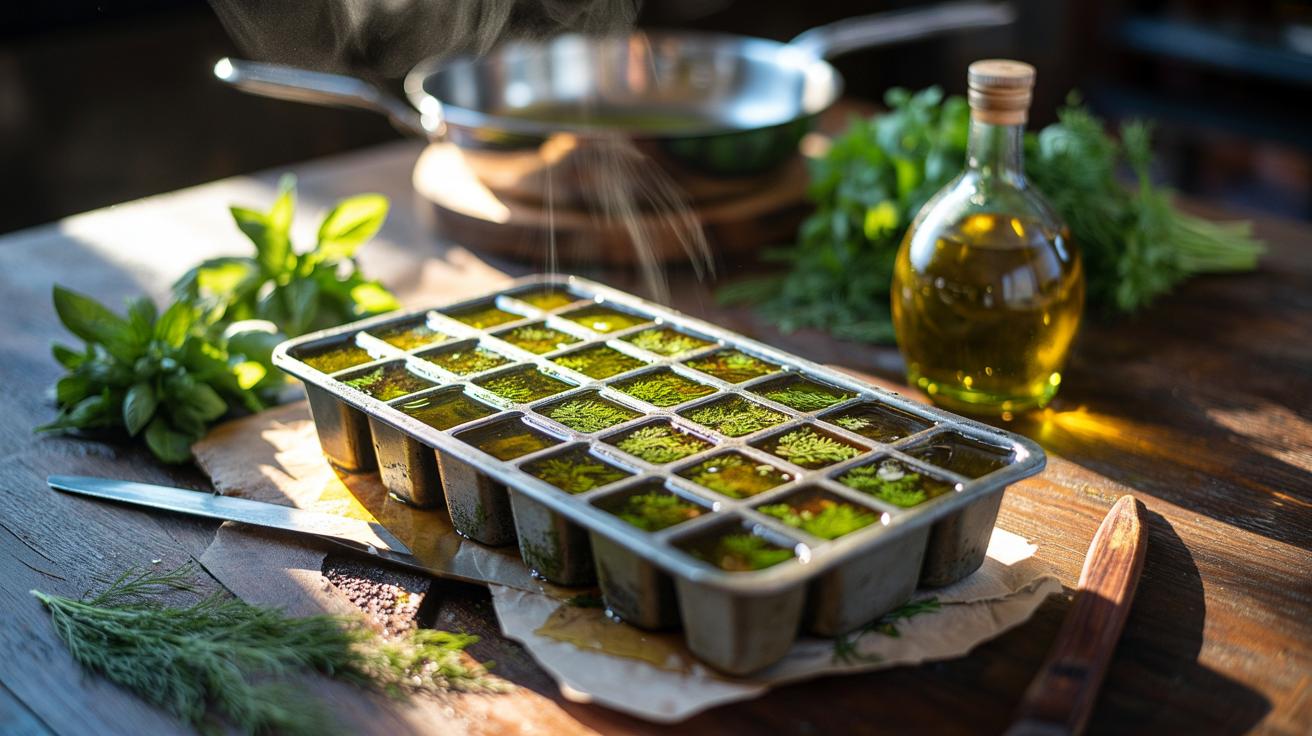
Spoon into an ice cube tray. Tap to release bubbles. Top up with a thin layer of oil to seal the surface. Freeze until solid, then pop out and store in a labeled freezer bag or airtight box. Always freeze herb-in-oil mixtures the same day you prepare them. For compound butters, follow the same steps using softened unsalted butter, then slice and freeze. To use, drop a cube into a hot pan for sauces and sautés, or thaw gently in the fridge for vinaigrettes. Avoid microwaving; you’ll cook the herbs, not just soften the oil.
Food Safety, Shelf Life, and Smart Storage
Oil plus plant matter creates an oxygen-poor environment. That’s ideal for flavour, but risky if handled carelessly. Never store garlic- or herb-in-oil at room temperature. Keep mixtures frozen solid, or refrigerate for no more than 48 hours before freezing. Freezing halts the risk of Clostridium botulinum growth; room temperature invites it. Use clean utensils, dry herbs well, and label containers with date and contents.
How long do they last? For peak flavour, aim for 3–4 months; many hold quality up to 6 months. After that, taste dulls though safety remains if kept continuously frozen. Prevent odour migration by using tight containers and a thin surface seal of oil. Once thawed, don’t refreeze; texture and aroma suffer. For quick retrieval, pack mixed “base” cubes—parsley + dill for fish, thyme + rosemary for roasts. Plan portions: a standard tray yields 1–2 tablespoons per cube, perfect for a pan sauce or pot of soup without measuring under pressure.
Choosing Oils, Herb Pairings, and Quick Uses
Oil choice sets the tone. Extra-virgin olive oil brings pepper and fruit; light olive or grapeseed stays neutral; avocado oil handles higher heat. Match intensity with the herb’s personality. Robust rosemary loves a bold oil. Tender chives prefer something subtle. Add citrus zest, chile flakes, or toasted spices to create instant “finishing” cubes. For dressings, thaw a cube in a jar, add vinegar and salt, shake, done. For grills, melt onto resting steak or charred courgettes. The goal is simple: speed without compromise.
| Herb | Best Oil | Prep Tip | Ideal Uses | Max Freezer Time |
|---|---|---|---|---|
| Basil | Extra-virgin olive oil | Brief blanch to keep green | Pasta, tomato sauces, pesto starters | 3–4 months |
| Parsley | Light olive or grapeseed | Dry very well | Pan sauces, soups, gremolata | 4–6 months |
| Coriander (Cilantro) | Grapeseed | Include tender stems | Curries, tacos, chutneys | 3–4 months |
| Dill | Light olive oil | Fine chop | Fish, yoghurt sauces, new potatoes | 3–4 months |
| Rosemary/Thyme | Extra-virgin olive oil | Strip woody stems | Roasts, marinades, breads | 4–6 months |
| Chives | Grapeseed | Scissors for clean cuts | Eggs, butter sauces | 3 months |
| Mint | Light olive oil | Quick blanch for colour | Peas, lamb, couscous | 3 months |
Done right, herb-in-oil freezing is a tiny domestic revolution: less waste, more flavour, better nutrition on any weeknight. You rescue bunches on the brink, bank seasonal abundance, and cook faster with reliably fresh-tasting results. The method is safe, simple, and endlessly adaptable. Think ahead on pairings, portion smartly, and keep your freezer organised. When a pan hisses and you drop in a green cube that perfumes the room, you’ll feel the payoff. Which herb-oil combination will you freeze first, and what dish will you let it transform?
Did you like it?4.5/5 (25)