In a nutshell
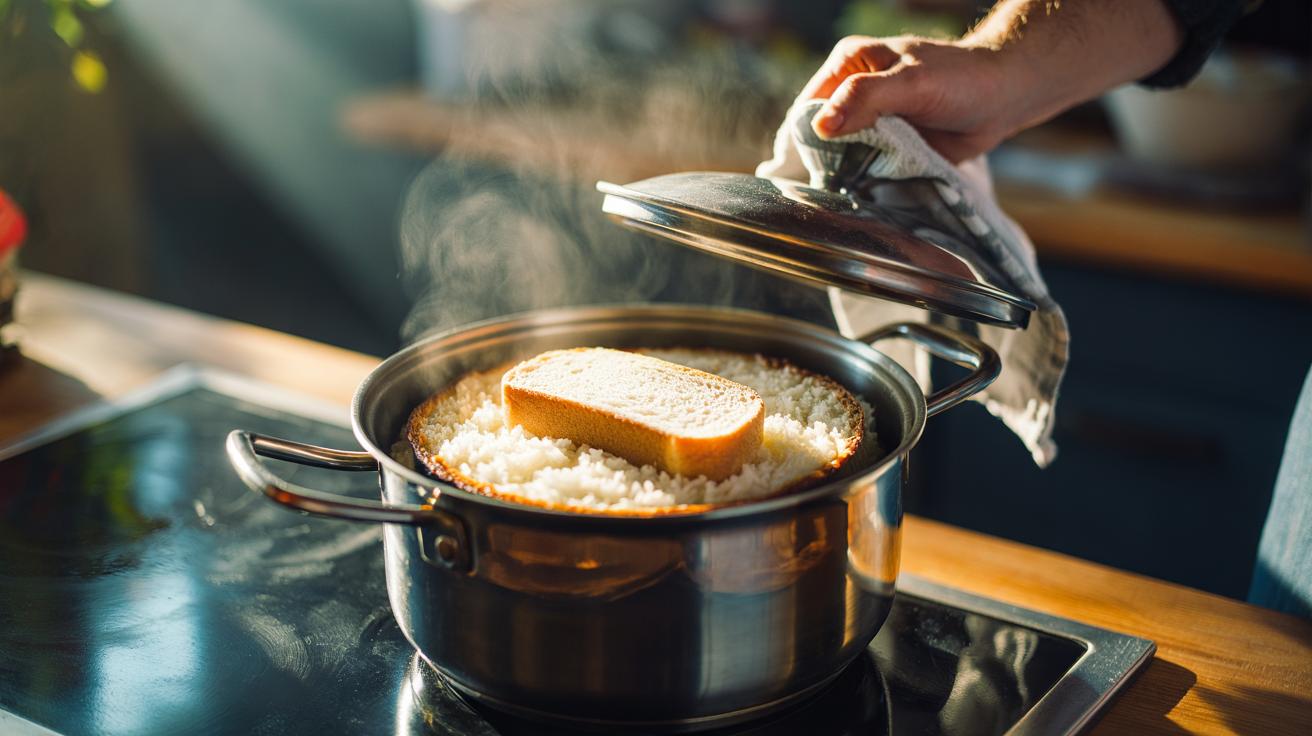
- 🍞 Use a slice of bread to absorb burnt rice odours: remove unscorched top layer, do not stir, lay bread on the rice, cover 5–10 minutes, then discard and taste.
- 🧪 Why it works: bread’s starch matrix and air pockets trap volatile compounds; it filters smell without masking flavour—effective when only the bottom is scorched.
- 🛠️ Quick fixes: try a damp tea towel rest for moisture, vinegar/lemon vapour nearby to neutralise harsh notes, and finish with aromatics like sesame oil or spring onion.
- 🔄 Smart second lives: turn lightly smoky rice into fried rice, a simple congee, or a robust salad where a hint of char adds character.
- 🛡️ Prevention: use a heavy-bottomed pan, correct water ratios, rinse rice well, set a timer, rest off heat, and clean stuck-on bits with bicarbonate of soda.
We’ve all smelt it: that tell-tale singe rising from a pot you looked away from for a minute too long. Burnt rice feels like dinner’s over before it’s begun, but there’s a surprisingly elegant save. Reach for a slice of bread. This humble pantry staple can draw out acrid odours, soften the harshness, and help you recover a meal that still has promise. Work calmly. Move quickly. Act fast: turn off the heat the moment you sense scorching. With the right steps, you can remove the worst of the smell, protect the edible grains on top, and sit down to something you’re proud to serve.
How to Save Scorched Rice in Minutes
First, keep your nerve. Do not stir. Agitating the pot drags the bitter, blackened bits through everything else. Slide the pan off the heat, tilt the lid, and let steam escape for 20–30 seconds to purge some of the volatile odours. Now gently transfer the top layer of rice—anything that looks white and fluffy—into a clean bowl. Leave the char stuck to the base. Never scrape the bottom.
Lay a fresh slice of bread (white or sourdough works best) on top of the rescued rice and cover the bowl with its lid or a plate. The bread’s porous crumb captures smell-causing compounds; the cover traps the fumes so they’re reabsorbed by the bread, not your dinner. Give it 5–10 minutes, then discard the bread. Taste. If a faint smokiness remains, fold in a spoon of butter or a splash of olive oil and a pinch of salt—fat smooths rough flavours. For stickier grains, a tablespoon of hot water and a gentle fluff with a fork can restore texture without reviving the scorch.
Why a Bread Slice Works: The Science and Limits
Burning releases volatile compounds—phenols, aldehydes, sulphur notes—that our noses detect at tiny concentrations. Bread helps because its starch matrix and air pockets invite those molecules in through capillary action, a bit like a kitchen sponge for smells. The crust contributes extra surface area; the soft crumb wicks odour. One slice can noticeably reduce the acrid top-notes without perfuming the rice, which is why it’s preferable to more aggressive fixes that overwrite the dish’s character.
There are limits. Bread can’t unburn carbohydrates that have polymerised on the pan, and it won’t erase deeply embedded bitterness if the whole pot was stirred after scorching. Think of it as a filter, not a time machine. You’ll get the best results when only the base has caught and the upper grains remain intact. Swap the bread if the smell is stubborn and rest the rice a touch longer. If the flavour still leans smoky, balance with aromatics—spring onion, sesame oil, or herbs—or redirect the rice into bolder dishes where a whisper of char reads as intentional character. Use the bread trick promptly to catch odours before they dominate.
Quick Odour Fixes and Smart Second Lives
If bread alone doesn’t finish the job, pair it with a quick kitchen hack. A warm bowl of rice benefits from a steam refresh: set a damp tea towel over the bowl, then the lid, and rest for five minutes—this concentrates moisture and lifts aromas upward. Alternatively, briefly tent the rice with a lid over a small saucer of hot water spiked with a teaspoon of vinegar or lemon juice nearby (not on the rice). The acidic vapour neutralises some harsh compounds without soaking the grains. A few strips of citrus peel or a smashed spring onion folded through at the end can supply fresh top-notes that distract without disguising.
| Fix | Best For | How to Use | Time |
|---|---|---|---|
| Bread slice | Light scorch, odour control | Lay on rice, cover, discard | 5–10 min |
| Damp tea towel rest | Dry grains, faint smell | Towel under lid, stand off heat | 5 min |
| Vinegar/lemon vapour | Persistent odour | Acidic steam nearby, not touching rice | 2–3 min |
| Aromatics | Flavour masking | Fold in herbs, sesame oil, scallions | Instant |
Still not ideal as plain rice? Pivot. Turn it into fried rice with garlic, ginger, and soy; the wok’s high heat and seasoning dominate lingering smokiness. Or rehydrate with stock to make a quick congee. Toss through roasted vegetables and a punchy dressing for a robust rice salad. When life gives you scorch, choose a recipe that welcomes intensity.
Prevention Tips for Next Time
Burnt rice is often about heat and timing. Use a heavy-bottomed pan and keep the flame modest once it reaches a steady simmer. For long-grain white rice, a typical ratio is 1 part rice to 1.5 parts water; for basmati, 1:1.25 after rinsing; for brown rice, 1:2. Rinse until the water runs mostly clear—this reduces surface starch that sticks and scorches. Set a timer and resist lifting the lid during cooking. When the water is absorbed, turn off the heat and let the pot stand, covered, for 10 minutes; this gentle rest finishes cooking via residual steam and separates grains.
On an electric hob, where heat lingers, slide the pan to a cool ring for the final rest. For gas, use a diffuser to tame hotspots. If you crave a crispy base on purpose, aim for controlled “tahdig” or “socarrat” by adding oil and managing heat, not by chance. Finally, salvage the pan with a spoon of bicarbonate of soda in hot water; soak, then deglaze gently with a wooden spoon. Good kit, calm heat, and a clear method prevent most mishaps.
Salvaging burnt rice isn’t sorcery; it’s method. A slice of bread absorbs troublesome odours, a brief rest restores texture, and a few clever tweaks reclaim flavour. In the worst cases, you pivot and repurpose, turning disappointment into a dish with swagger. Let the scorch be the start of a story, not the end of dinner. If you could keep only one trick by the cooker—bread, towel, or aromatics—which would be your go-to, and how would you spin a near-miss into a meal worth remembering?
Did you like it?4.6/5 (24)