In a nutshell
- 🥖 Use the foil-and-oven hack to revive stale bread in about 5 minutes: seal in foil to trap steam, then unwrap briefly to re-crisp the crust.
- 🔬 Staling is driven by starch retrogradation; heat plus a touch of moisture reverses it, while foil prevents drying and uneven heating.
- ⏱️ Start at 180°C (350°F): rolls/slices 4–6 min, half baguette 6–8 min, loaf chunk 7–10 min; enriched breads at 170°C for a shorter time.
- 🧰 Variations: lightly spritz very dry loaves, stack slices as a “mini loaf,” and use air fryers/toaster ovens with close monitoring; finish unwrapped for a crisp crust.
- 🧊 Storage smarts: never refrigerate; keep in a breathable container, freeze sliced for convenience, and revive from frozen with the same foil method.
There’s nothing sadder than a beautiful loaf gone leathery and dull overnight. Before you resign those slices to breadcrumbs, try a simple newsroom-tested trick that resuscitates bread fast. You need an oven and a sheet of foil. That’s it. In minutes, yesterday’s loaf can taste like it just left the bakery. The secret isn’t magic; it’s science backed by heat and a touch of moisture. If you can spare five minutes, you can bring back bounce, aroma, and that sigh-inducing crackle. Here’s how the five-minute foil fix works, why it works, and how to tailor it to your favourite loaf.
Why Bread Goes Stale
Most people blame time. The real culprit is staling, a process driven by starch retrogradation. After baking, starch molecules in the crumb relax into a soft, gel-like network. As bread cools and sits, those starches re-crystallise, squeezing out water and making the crumb firm. Moisture doesn’t vanish; it migrates from crumb to crust and into the air. That’s why the inside feels dry and the crust goes rubbery. It’s not “oldness,” it’s chemistry.
Heat reverses retrogradation temporarily. Warmth loosens the starch crystals; a little moisture helps that reversal along. Wrap the loaf in foil and you trap steam created from the bread’s own water (or a light spritz). That steam plumps the crumb while the foil shields the crust from direct heat, preventing scorching. Then, a brief unwrapped blast lets the crust crisp up again. It’s a balancing act. Too cool and nothing changes. Too hot or too long and you’re drying it out. Get it right, and the aroma floods back, the crumb springs, and the crust sings.
The Five-Minute Foil Fix
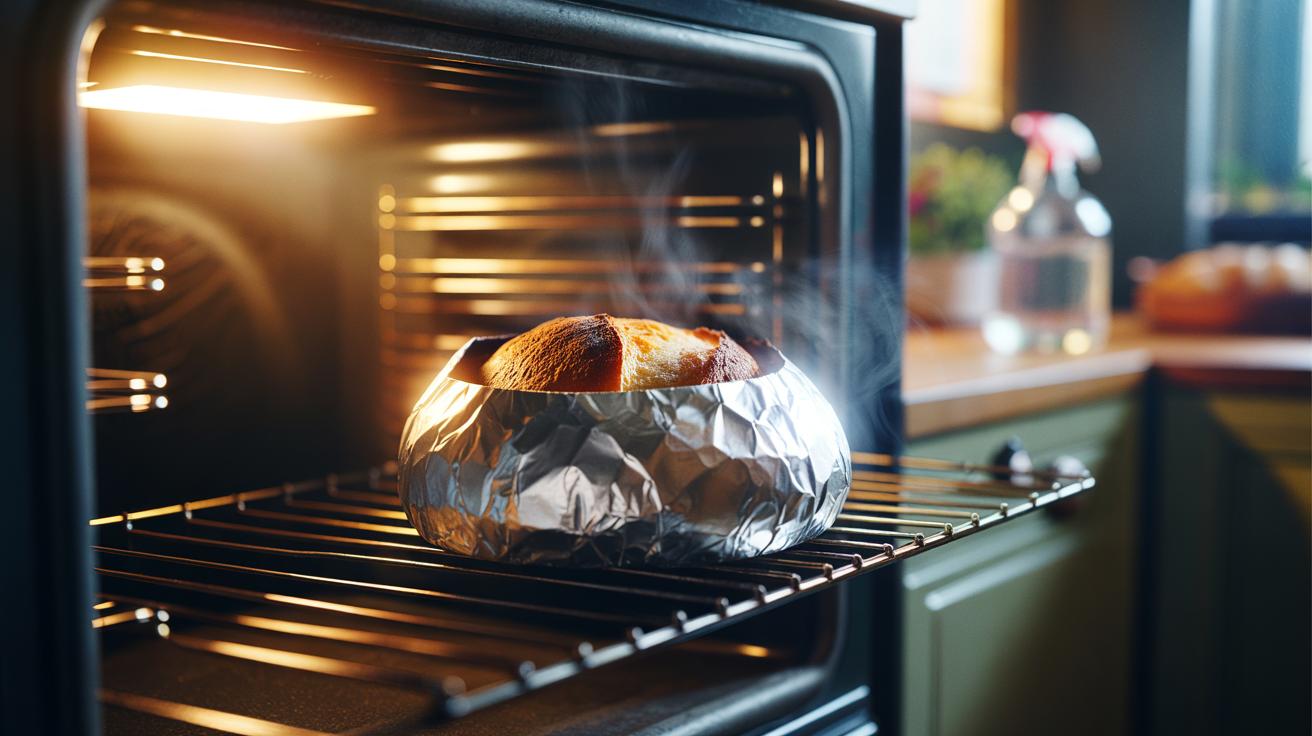
Preheat your oven to 180°C (350°F). Act while it heats: if the bread feels very dry, lightly spritz the crust with water or rub a damp hand over it. Not soaked, just a sheen. Wrap the loaf, roll, or slices snugly in foil, sealing edges to keep steam in. Place directly on the rack for even heating. For a small roll or a few slices, five minutes is usually the sweet spot. For a demi-baguette or sandwich loaf heel, expect 7–10 minutes. Do not microwave—heat without enclosure drives moisture out and toughens the crumb.
To restore a shattering crust, open the foil for the final minute or two. This vents steam and lets the surface dry and brown. Aim for audible crackle, not colour shift. Check progress early; bread goes from revived to parched quickly. Enriched breads (brioche, panettone) benefit from gentler heat and a shorter window because of sugar and fat. Sliced bread? Stack slices, wrap as a “mini loaf,” and follow the same timing. When it smells like a bakery again, you’re done. Serve warm. That moment is the peak.
Timing, Temperatures, and Variations
Not all loaves behave alike. Crust thickness, hydration, and size decide how long the rescue takes. As a rule, start conservative. You can always add a minute; you can’t uncook dryness. Air fryers and toaster ovens work too—use a similar temperature, but monitor closely because compact cavities run hot. For baguettes, steam is everything; don’t skip that spritz. For rye or sourdough boules, give a touch more time. The goal is hot-and-supple crumb, not a baked-again loaf.
| Bread Type | Oven Temp | Foil Step | Time | Notes |
|---|---|---|---|---|
| Rolls / Slices | 180°C (350°F) | Fully wrapped | 4–6 min | Open foil for 1 min to crisp |
| Baguette (half) | 180°C (350°F) | Wrapped, then unwrapped | 6–8 min | Light spritz improves crumb |
| Sandwich Loaf Chunk | 180°C (350°F) | Wrapped | 7–10 min | Unwrap last 2 min for crust |
| Brioche / Enriched | 170°C (340°F) | Wrapped | 4–6 min | Skip final crisp to avoid drying |
No foil? Use an oven-safe lidded pot as a makeshift steamer. Place the bread inside, lid on, then lid off to finish. If you only have a toaster, wrap slices loosely and reheat on a tray, but watch closely. For extreme dryness, drizzle a teaspoon of water onto the foil before sealing; it will vaporise and turbocharge revival. Keep the temperature moderate. High heat speeds browning without fixing the crumb.
Storage and Smart Prevention
Reviving is brilliant, but prevention saves effort. Keep bread at room temperature in a breathable bag or a box; it preserves crust while slowing moisture loss. Never refrigerate standard bread: the cold accelerates retrogradation and makes staling worse. Freeze what you won’t eat within two days. Slice first, then freeze flat in a bag. It thaws fast and revives perfectly with the foil method. Mould is a different story—if you see it, bin the loaf.
Timing matters after baking, too. Freshly baked bread should cool completely before storage; trapping steam in a plastic bag softens the crust and invites condensation. If your kitchen is dry, add a sheet of parchment to the bread bin to balance humidity. For crust-forward loaves, reheat whole rather than by slice to retain a uniform crumb. And remember: the reheated magic is fleeting. Retrogradation resumes as the bread cools. So plan to eat it warm, share it quickly, and enjoy that second-life crunch while it lasts.
With a sheet of foil, a preheated oven, and a splash of water, stale becomes supple, and dull becomes delicious in five minutes flat. It’s a small act against food waste and a big win for flavour and texture. From midweek rolls to Saturday sourdough, the same principle rescues them all. This isn’t a chef’s trick; it’s a home habit worth adopting. What loaf will you revive first, and how will you tweak the timing to match your oven’s quirks and your ideal level of crusty crackle?
Did you like it?4.3/5 (27)