In a nutshell
- 🧪 Yoghurt tenderises with lactic acid, calcium, and proteins that gently relax muscle fibres without the harshness of citrus or vinegar.
- 🥣 Build a balanced marinade: plain/Greek yoghurt (200–250 g), salt (1–1¼ tsp), oil, garlic/ginger, spices, and a touch of sugar; use zest for brightness without extra acid.
- ⏲️ Follow the overnight marinade method: coat thoroughly, refrigerate 8–12 hours (up to 24), turn once, and wipe excess before cooking for better browning.
- 🔥 Cook smart and safe: aim for 75°C internal temperature, boil any leftover marinade before serving, and rest the chicken to keep it juicy.
- 🍗 Results you can taste: a moist, tender exterior, improved caramelisation, and evenly distributed flavours that elevate weekday chicken to something special.
Forget hammers and dubious powders. A tub of plain yogurt—or, in British kitchens, yoghurt—is a gentle, reliable way to soften chicken while deepening flavour. Its cultured tang works slowly, drawing moisture into the meat instead of forcing it out. The result isn’t mushy or fibrous. It’s succulent. It’s forgiving. For busy cooks, the approach is wonderfully simple: stir together a quick marinade, coat your chicken, leave it in the fridge, and cook the next day. Because yoghurt’s acidity is mild, it tenderises at a measured pace, making an overnight rest ideal. Here is how and why it works, and the smart tweaks that turn a good marinade into a great one.
Why Yogurt Works on Chicken
Yoghurt’s power lies in a trio of forces: lactic acid, calcium ions, and cultured dairy proteins. Lactic acid gently lowers the marinade’s pH, nudging muscle fibres to loosen and unwind without the aggressive bite of lemon juice or vinegar. This measured acidity helps the surface of the meat relax while keeping the interior juicy. Calcium interacts with muscle proteins, aiding tenderisation in a way that is subtle yet unmistakable after an overnight rest. Meanwhile, yoghurt’s proteins cling to the chicken, forming a protective coating that reduces moisture loss during cooking.
Contrast that with sharper acids. Strong acidic baths can “cook” the surface, creating a chalky crust and trapping juices inside—fine for ceviche, disastrous for chicken. Yoghurt, by comparison, is slow and kind. It doesn’t penetrate deeply; marinades seldom do. But that’s not a drawback. The aim is a seasoned, softened exterior that encourages browning and keeps the meat moist. Used correctly, yoghurt tenderises without wrecking texture, and it carries spices evenly across every bite. The result is comfortingly tender chicken with a clean, tangy finish.
How to Build a Yogurt Marinade
Start with full-fat, plain yoghurt. Greek yoghurt clings well; thin with a tablespoon or two of water for better coverage. For 500 g chicken, use about 200–250 g yoghurt, 1 to 1¼ teaspoons fine salt, 1 tablespoon neutral oil, and your chosen aromatics: grated garlic and ginger, ground coriander, cumin, paprika, turmeric, or chilli. A half teaspoon of sugar or honey promotes browning. Salt is crucial: it seasons and helps proteins retain water during cooking. Add citrus zest rather than juice if you want brightness without extra acid. Taste the marinade—yes, before the chicken goes in—to balance salt, tang, and spice.
| Component | Why It Matters | Typical Amount (per 500 g chicken) |
|---|---|---|
| Plain/Greek yoghurt | Provides lactic acid and a protective protein coat | 200–250 g |
| Salt | Enhances flavour; helps retain moisture | 1–1¼ tsp fine salt |
| Oil | Disperses fat-soluble spices; aids browning | 1 tbsp |
| Garlic/ginger | Classic aromatic depth | 1–2 tsp each, grated |
| Spices | Flavour backbone; colour | 1–2 tsp total |
| Sweetener | Improves caramelisation | ½ tsp |
Keep the mix balanced and not overly acidic. That’s the secret sauce behind yoghurt’s gentle tenderising effect and a burnished, savoury crust.
Overnight Method: Step-by-Step
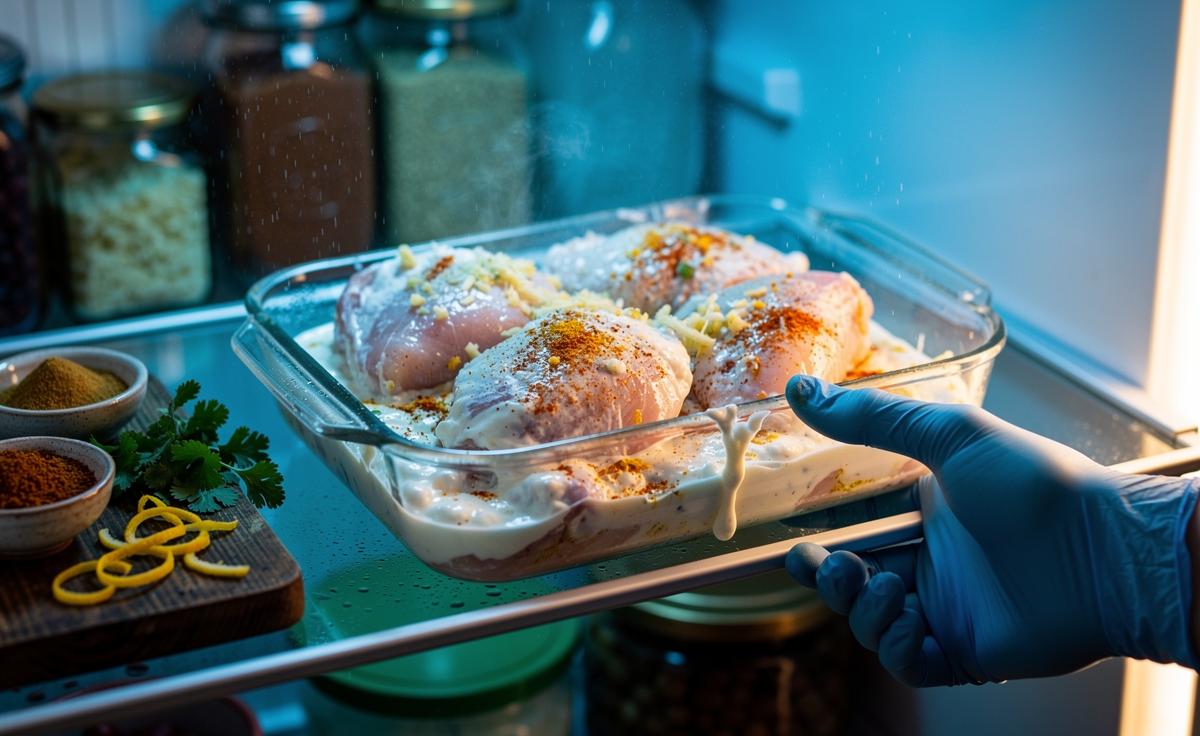
Pat the chicken dry. Lightly score thick pieces to help the marinade cling. Whisk yoghurt, salt, oil, aromatics, and spices until smooth. Add the chicken and coat thoroughly, then transfer to a zip-top bag or covered container. Refrigerate for 8–12 hours; up to 24 is fine for most cuts, but avoid days-long soaks. Turn the bag once to redistribute the marinade. When ready to cook, wipe off excess to prevent scorching, then oil the grill or pan.
Cook to an internal temperature of 75°C for safe, juicy meat. Oven-roast on a hot tray, grill over medium-high heat, pan-sear then finish in the oven, or air-fry for speed. For a sauce, simmer any leftover raw marinade at a lively boil for several minutes, or make a fresh batch. Never serve raw marinade as-is. If using skin-on pieces, season the skin directly with a pinch of salt just before cooking and keep yoghurt off the skin side for extra crispness. Rest the meat briefly after cooking to let juices redistribute, then serve with herbs and lemon zest.
From tandoori-inspired drumsticks to weekday breasts that actually taste of something, yoghurt earns its spot in the fridge as a natural tenderiser and flavour carrier. The science is simple, the method unfussy, the results repeatable. Use lactic acidity to work for you, not against you. Marinate overnight, cook hot, and let that tangy cloak help brown the outside while keeping the interior plush. Next time you plan chicken, will you reach for yoghurt, and which spice blend will you whisk into your bowl first?
Did you like it?4.4/5 (27)