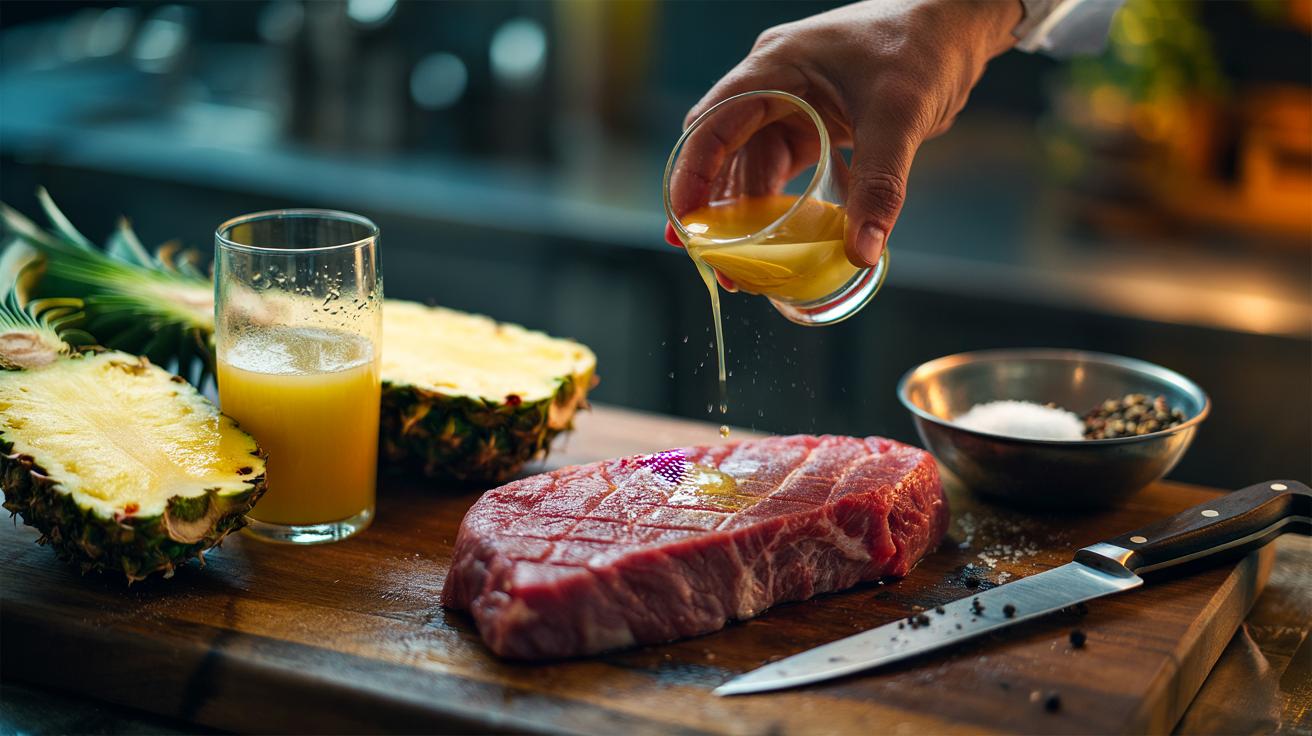
In a nutshell
- 🔬 Bromelain is a powerful protease in fresh pineapple that cleaves myofibrillar proteins and collagen, tenderising the surface of meat in minutes.
- ⏱️ Timing and dilution are crucial: use 10–25% fresh juice for control, set a timer, then rinse/wipe and dry well to avoid mush and boost the Maillard reaction.
- 🍍 Fresh vs canned: raw pineapple (fresh or frozen) retains active enzymes; canned and most pasteurised juices are enzyme-inactive, adding flavour without tenderising.
- 🥩 Best cuts and prep: flank, skirt, rump, pork chops, and chicken thighs benefit most; score or slice across the grain to aid surface action and even tenderness.
- ⚠️ Technique, safety, and flavour: marinate cold in non-reactive containers, discard or boil raw marinades, avoid injecting, and pair with soy, ginger, chilli, or thyme for balance.
Chefs have whispered it for decades, and food scientists have proved it in labs: pineapple can turn a tough steak supple in minutes. The secret is an enzyme called bromelain, naturally present in fresh fruit and juice. It doesn’t mask chewiness; it tackles the cause. Think connective tissue, tangled proteins, stubborn collagen. Pineapple unwinds them. Used well, it’s a fast lane to tenderness. Used recklessly, it can reduce a fillet to paste. Timing and dilution are everything. Below, you’ll find the science in plain English, the techniques that work in a weekday kitchen, and the guardrails that keep dinner from going mushy.
How Bromelain Breaks Down Meat Proteins
Fresh pineapple packs bromelain, a broad-spectrum protease that snips peptide bonds inside proteins. In meat, that means two targets: myofibrillar proteins that give muscle its spring, and collagen that forms tough connective tissue. Bromelain is active over a wide pH range and keeps working in the fridge, albeit more slowly. It doesn’t need hours. It needs minutes. That’s why fresh juice can soften the surface astonishingly fast. The enzyme won’t tunnel deep in a short time; it operates where it touches, so scoring or thin cuts help.
The effect is distinct from acidic marinades. Acid mainly alters charge and causes denaturation, which can feel firm or chalky. Enzymes actually cleave. Heat eventually finishes the job by melting solubilised collagen as you cook. Temperature matters: bromelain’s activity rises as it warms, but you should marinate chilled for food safety. Salt influences texture too. A light 1–2% salt in the marinade helps retain moisture by swelling proteins, countering the risk of a mushy, weeping surface. For thicker joints where enzymes cannot reach, consider scoring, butterflying, or using a jacquard tenderiser to open pathways before the pineapple goes on.
There’s a limit. Leave a steak in full-strength juice too long and the enzyme will overwork myosin and actin near the surface, causing a woolly fringe. Set a timer the moment the juice touches the meat. Then rinse or wipe, and pat very dry for a proper sear.
Choosing Cuts and Timing the Marinade
Pick cuts with chew but character: flank, skirt, rump, thin-cut short ribs, pork shoulder chops, chicken thighs. Avoid delicate fish or very lean chicken breast in full-strength juice unless you’re testing by the minute. Thickness rules timing more than cut does. Enzymes do not diffuse quickly; they manage a few millimetres in the timeframe you’ll use. So, target the surface. Crosshatch scores. Slice across the grain. Use diluted juice for control: 10–25% fresh pineapple juice whisked with salt, a touch of sugar, oil, and aromatics yields predictable results without panic.
| Cut / Thickness | Fresh Juice 10% (v/v) | Fresh Juice 100% | Notes |
|---|---|---|---|
| Beef steak, 2 cm | 30–45 min | 8–12 min | Score surface; stop early if very tender. |
| Pork chops, 2 cm | 25–40 min | 7–10 min | Pat dry thoroughly for browning. |
| Chicken thighs, boneless | 20–30 min | 5–8 min | Avoid breast in full-strength juice. |
| Beef short ribs, flanken | 45–60 min | 12–15 min | Best for thin-cut ribs. |
| Fish fillets | 5–8 min | 2–3 min | High risk of mushiness—test a corner. |
Times vary with juice potency and temperature, so test a small piece first. Stop when the surface feels a touch more yielding under a finger. Rinse briefly or wipe, then dry aggressively; sugar in the juice burns easily, and surface water kills the Maillard reaction. Salt early in the mix for juiciness, but keep acids modest—pineapple is already acidic. When in doubt, dilute and extend a little, never the reverse.
Fresh vs Canned: Getting the Enzyme Right
Here’s the crucial distinction: raw pineapple (fresh fruit, fresh or cold-pressed juice, frozen pulp) contains active bromelain. Canned pineapple and most shelf-stable juices are heat-treated; bromelain is largely inactivated. That’s why canned rings sit happily on a ham without turning it to mush. If your goal is flavour without tenderising, canned is perfect. If your goal is enzymatic tenderising in minutes, you need fresh. Check labels. “Not from concentrate” can still be pasteurised; look for “cold-pressed” or use a freshly blitzed pineapple.
Strength varies by variety and ripeness. Core and stem have plenty of enzyme; blending them boosts activity, though you’ll need to strain for a smoother marinade. Frozen raw pineapple retains enzyme activity well after thawing, making it a convenient year-round option. Never rely on canned juice to tenderise steak—it won’t. Conversely, if you’re nervous about overdoing it, mix a spoon of canned juice or water to dilute fresh juice and slow the reaction. You can also fold in oil to limit direct contact and promote even coating. The guiding principle is control: pick the product that matches the speed you want, then adjust concentration.
Technique, Safety, and Flavour Pairings
Work cold, clean, and quick. Marinate in a non-reactive bag or glass dish in the fridge, not on the counter. Keep the ratio simple: 10–25% fresh pineapple juice, 1–2% salt by meat weight, 0.5–1% sugar, plus aromatics—garlic, ginger, chilli, soy, black pepper. Oil helps spread flavours and encourages even heat contact later. Set a visible timer the moment the juice touches meat. When time’s up, discard the marinade or boil it hard for at least three minutes before using as a glaze. Pat the meat dry until almost tacky, then sear hot to lock in browning before finishing at a gentler heat.
For deeper tenderising, combine methods: a brief salt dry-brine, then a tightly timed pineapple pass. Injecting pineapple is risky; it can create pockets of mush. Better to open surface pathways with a jacquard or scoring. Pairings? Pineapple loves soy, rum, brown sugar, allspice, Scotch bonnet, and lime. In British kitchens, it also shines with thyme, cider vinegar, and mustard. Keep acidity balanced; pineapple brings its own. Finally, food safety. Use clean tongs, segregate boards, and refrigerate promptly. Don’t reuse raw marinades without boiling. A little discipline protects flavour and health alike.
Handled with care, pineapple shifts texture quickly while adding sunny, savoury-sweet complexity. The enzyme does the heavy lifting; your job is simply to manage time, temperature, and dilution so the tenderness stops exactly where you want it. That control turns a budget cut into a weeknight treat and a barbecue into theatre. Now that you know how bromelain works and how to steer it, what dish will you tenderise first—and how will you tweak juice strength and timing to make it precisely yours?
Did you like it?4.5/5 (21)