In a nutshell
- 🧪 Flour thickens via starch gelatinisation: granules swell, release amylose, and build viscosity at a gentle simmer, tightening a sauce in 30–60 seconds.
- 🍳 Choose your method: roux (1:1 fat:flour by weight) for base sauces, slurry (1:2 flour:cold water) for fast finishing, or beurre manié for last‑minute gloss and control.
- ⚖️ Reliable ratios: about 10–12 g flour per 250 ml for light body, 15–18 g for a nappe coat; or 1–1½ tbsp per cup, added gradually until the spoon trails clean.
- ⏱️ Speed drill: deglaze, reduce, whisk a smooth slurry, stream into a simmer, cook under a minute, then finish with butter or cream for shine and balance.
- 🛠️ Quick fixes and cautions: beat lumps with vigorous whisking or a sieve; thin with stock or rebuild with fresh slurry; avoid raw taste by cooking 60–90 seconds; manage acid/salt; consider gluten‑free blends or rice flour if needed.
Chefs rarely admit it, but the glossy sheen on a pub gravy or the silky cling of a pan sauce often comes from a single cupboard staple: plain flour. Used smartly, it turns splashes of stock, wine, and roasting juices into something that looks restaurant-made. The trick isn’t sorcery. It’s speed and science. Add flour the right way, and you can move a sauce from thin to nappe in under a minute, finishing right as the plates hit the pass. This guide explains how flour behaves, which method suits tonight’s dinner, and the precise ratios that deliver texture without dulling flavour or shine.
What Happens When Flour Meets Heat
Flour thickening is powered by starch gelatinisation. In plain flour, starch granules absorb liquid as the pan climbs through roughly 70–95°C. They swell, leak amylose, and create a network that traps water, increasing viscosity. That network builds quickly once a brisk simmer returns; you’ll see the sauce tighten in 30–60 seconds. Keep whisking, because shear disperses granules and stops clumping. Fat matters too. Coat flour in fat and you separate granules, reducing lumps and giving a silkier finish. A pale roux delivers maximum thickening power; a darker roux tastes nutty but thickens less because starches have toasted.
Control is everything. Add flour to a sauce that’s already hot, but mix the flour with cold water first to make a slurry, or stir it into warm fat to form a roux. Salt, alcohol, and acid can limit thickening or cause thinning if you boil hard for long periods, so simmer, don’t rage. And always cook the starch briefly; even a minute removes raw flour notes while preserving freshness. The result: body that carries flavour, not a gloopy mask.
Roux vs Slurry: Choosing Your Method
Three classic routes lead to the same destination. A roux is equal parts fat and flour by weight, cooked 1–4 minutes for a blond base or longer for brown. It’s ideal when you’re building a sauce from scratch—think velouté, cheese sauce, gumbo. A slurry blends flour with cold water (about 1:2 by volume) and is whisked into a simmering liquid near the end. It’s fast, adjustable, and perfect for pan sauces or gravy. Beurre manié is a kneaded paste of butter and flour, added in pea-sized knobs to finish and polish a sauce without fuss.
Use this pocket guide to decide in seconds:
| Method | Typical Ratio | Time to Thicken | Best For | Notes |
|---|---|---|---|---|
| Roux | 1:1 fat:flour (by weight) | 60–120 sec after liquid added | Base sauces | Cook 2+ min to remove raw taste; darker = less thickening |
| Slurry | 1 part flour : 2 parts cold water | 30–60 sec at simmer | Quick pan sauces, gravies | Fastest finish; add in stages for control |
| Beurre manié | 1:1 butter:flour (by weight) | 45–90 sec at simmer | Last-minute gloss | Also softens sharpness, adds shine |
For a light coating, use roughly 10–12 g flour per 250 ml liquid; for a nappe finish, 15–18 g. Translated: 1–1½ tbsp flour per cup (240–250 ml), adjusted to taste. Add gradually, stop when the spoon trails clean.
Timing, Ratios, and Fixes in the Real Kitchen
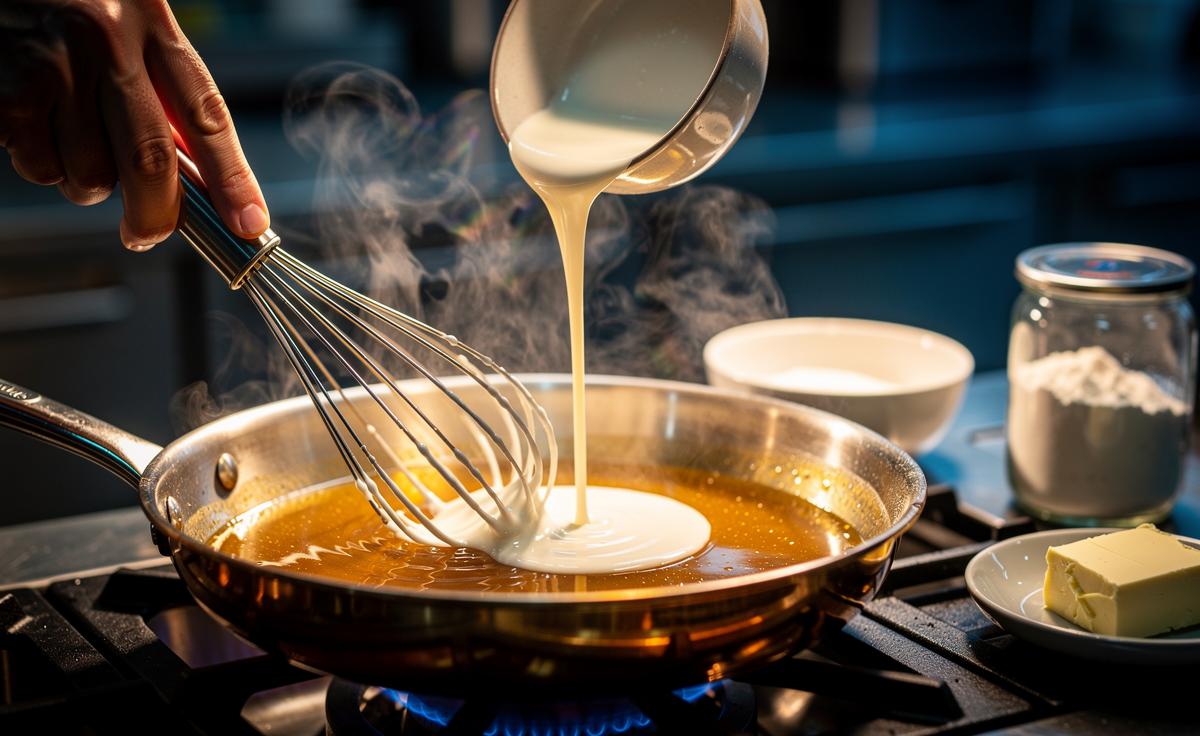
Here’s the speed drill. Deglaze the pan, add your stock, reduce briefly. Whisk a slurry—1 tbsp flour with 2 tbsp cold water—until smooth. Slide the pan to medium heat. Stream in half the slurry, whisking. Return to a lively simmer. In 30–45 seconds the sauce thickens; decide if you need the rest. Cook 60–90 seconds more to polish the flavour, then finish with a knob of butter or a splash of cream if you like. This sequence regularly turns a thin jus into restaurant-style gloss in under a minute of active thickening.
Common snags are easy to fix. Lumps? Whisk harder at the simmer or pass through a fine sieve; a quick stick blend works too. Too thin? Add a little more slurry. Too thick? Loosen with hot stock. Grainy mouthfeel usually means raw flour—cook another minute. If the sauce thins after boiling, the starch network may have broken; bring back to a simmer and add a small fresh slurry to rebuild. Watch acidity: wine- or citrus-heavy sauces need a touch more flour and a gentle simmer, not a rolling boil.
Ingredient choices matter. Plain flour is the safest bet; strong (bread) flour carries more protein and can taste doughy if undercooked. For a subtler taste, use beurre manié so the fat cloaks starch. Cooking for coeliacs? A commercial gluten-free blend or rice flour slurries in similarly, though it gels a touch clearer and can thicken faster. Season at the end; salt loosens networks and you’ll chase texture otherwise.
Flour thickening rewards attention, not heroics. Pick the method that suits your timing, hit the right ratio, and respect the simmer. The first minute after addition is where the magic happens, and the next minute is where you refine flavour and sheen. With a cold-water slurry for speed or a roux for depth, you can deliver that professional, spoon-coating texture on a Tuesday night. When you next deglaze a roasting tin, which method will you reach for—and how will you tailor it to your own stove and taste?
Did you like it?4.5/5 (26)