In a nutshell
- 🥔 Potato starch science: Heated amylose and amylopectin granules swell and gelatinise (around 65–75°C), creating a cream-like mouthfeel without fat; floury varieties like Maris Piper and King Edward thicken fastest.
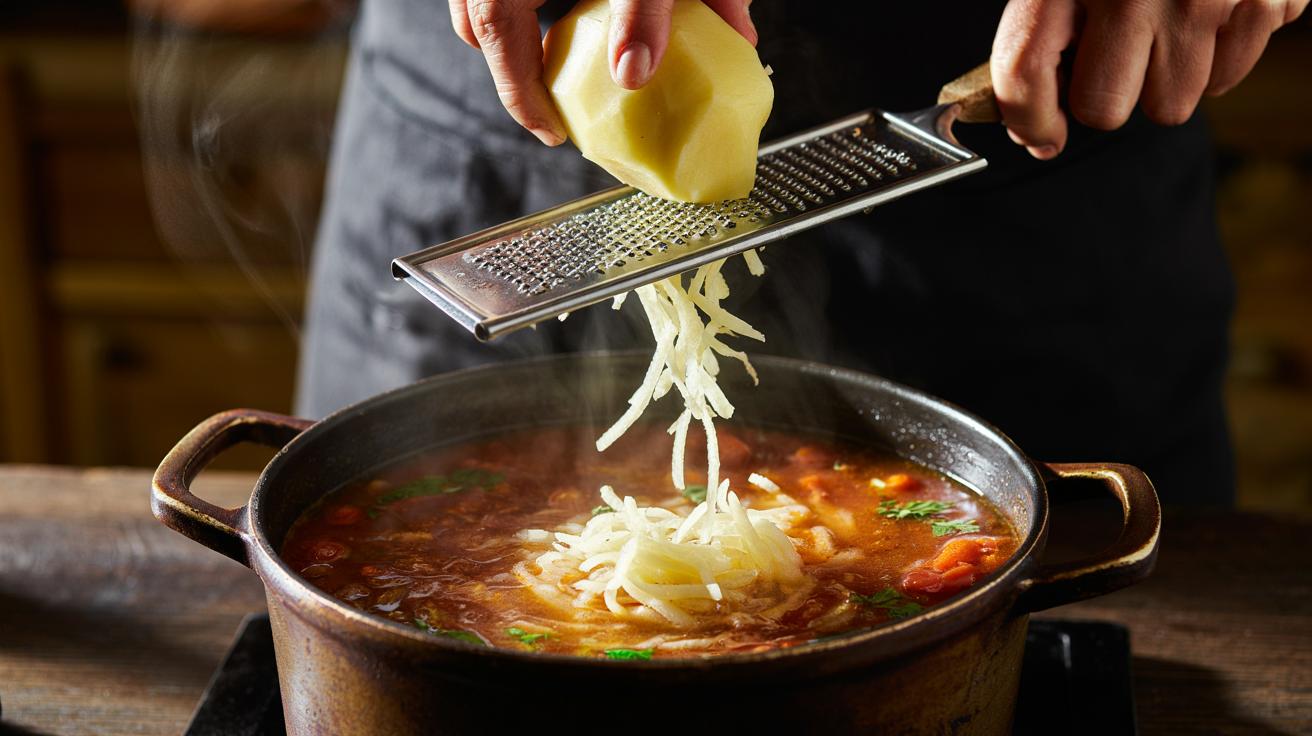
- ⚡ Fast thickening methods: Whisk in leftover mash, grate a raw potato (5–8 minutes), sprinkle potato flakes for instant rescue, or blend half the soup with cooked cubes; aim for 100–150g per litre for gentle body.
- 🔧 Technique tips: Cook potatoes tender, then blend briefly—pulse, don’t puree—to avoid gluey texture; re-simmer 1 minute to cook out raw starch, season at the end, and loosen with hot stock if over-thick.
- 🥣 Texture and flavour control: Use floury spuds for plush silk, waxy for shape; peel for smoothness or leave skins for rustic charm; a dash of acid brightens if the soup feels heavy.
- 💚 Health and budget wins: Naturally dairy-free, vegan, and gluten-free (stock permitting), slashing saturated fat and cost while turning leftovers into a luxurious, spoon-coating bowl.
There’s an old kitchen trick that turns thin, lacklustre soup into something luscious before you can find the cream jug. Use a potato. In minutes, a humble spud transforms broth into a velvet-textured bowl, adding body without dairy, expense, or fuss. It’s fast. It’s thrifty. It’s friendly to vegans and the lactose-averse. The science is sound and the method is forgiving, whether you’re rescuing a too-watery tomato soup or leaning into a silky leek and potato. Think of potato as your all-weather thickener: reliable, neutral in flavour, and ready to work at a moment’s notice. Here’s how — and why — it works so well.
Why Potato Thickens: The Science of Starch
Potatoes are rich in starch, specifically a mix of amylose and amylopectin. When heated in liquid, these starch granules swell and gelatinise, absorbing water and increasing viscosity. That’s the technical way of saying they create a cream-like mouthfeel without adding fat. As the granules burst, the released amylose forms a delicate network that suspends tiny particles in your soup, softening edges and smoothing texture. It doesn’t taste of cream, but it behaves in a similarly luxurious way.
The magic typically kicks in around the 65–75°C range; simmering finishes the job. Mash or blend and the effect amplifies, because ruptured cells release more starch. For silkiest results, cook potato until tender, then blend briefly; a few pulses will do. Overdo it and you risk a gluey finish, because excessive shear turns starch into paste. That’s why floury potatoes such as Maris Piper or King Edward deliver superior body with less blending than waxy types.
Quick Techniques for Silky Results
Choose the method that fits your timetable. Got five minutes? Stir in leftover mash. Ten minutes? Grate a raw potato directly into the pot. Already simmering a chunky soup? Blend half and return it. Each approach relies on the same principle — swelling starch — but offers different control over thickness and flavour integration.
| Method | Amount per litre | Time to thicken | Best for | Notes |
|---|---|---|---|---|
| Leftover mash whisk-in | 100–150g | 2–4 minutes | Tomato, mushroom | Instant, very smooth |
| Grated raw potato | 120g (1 medium) | 5–8 minutes | Brothy veg soups | Fine shreds cook fast |
| Potato flakes (instant mash) | 2–4 tbsp | 30–90 seconds | Emergency rescue | Stir gradually |
| Cube & blend half the soup | 200g cubes | 12–15 minutes | Hearty blends | Pulse, don’t puree |
As a rule of thumb, aim for 100–150g potato per litre of soup for gentle body; double it for a spoon-coating finish. Add the potato, simmer until tender or dissolved, then blend in short bursts and re-simmer for one minute to “cook out” any raw starch taste. Season at the end. Thickening amplifies salt perception, so what tasted balanced earlier may edge into briny after the potato works its magic. A knob of olive oil or a swirl of oat milk can polish the sheen if you want extra gloss, but you rarely need it.
Picking Varieties and Perfecting Texture
Not all spuds behave alike. Floury potatoes — think Maris Piper, King Edward, Desiree — are starch-forward and break down readily, delivering plush thickness with minimal blending. Waxy potatoes like Charlotte or Jersey Royals hold their shape; they’re great for chunks, less potent as thickeners. For speed and power, floury wins. Peel or don’t? Peel for the purest silk. Leave skins on for rustic charm and a touch more fibre.
Texture is technique. Cook cubes fully before blending. If grating raw, use the fine side; strands should vanish as they cook. Avoid over-blending: stop when the soup looks glossy and gently coats the back of a spoon. If you overshoot and it turns sticky, loosen with hot stock and a splash of vinegar or lemon to cut the heaviness. Acid won’t undo starch, but it brightens and distracts. Finally, chill and reheat gently. Starch sets as it cools, so bring back to a gentle simmer with a dash of water to restore silk.
Health, Budget, and Flavour Upsides
Here’s the bonus. Potato thickening is naturally dairy-free, vegan, and gluten-free (check your stock). You cut saturated fat dramatically compared with cream, while adding modest fibre, potassium, and vitamin C. Per 100g, potato sits at roughly 77 kcal with negligible fat, whereas 100ml of double cream brings several hundred calories and a hefty fat load. The flavour stays yours — potato is mild, so it shoulders the bodywork while tomatoes, mushrooms, leeks, or roasted squash sing.
It’s also budget brilliance. A single Maris Piper can rescue a whole litre of soup for pennies. Less waste, too: yesterday’s mash, today’s velvet broth. Reserve cream for when you want dairy’s flavour, not its texture; when the aim is silkiness alone, potato is the cleaner, cheaper route. For final finesse, finish with a pinch of smoked paprika, a thread of good olive oil, or chopped herbs. The mouthfeel says “luxury”. Your shopping list says “weekday”.
Thickening soup with potato is quick, economical, and quietly transformative. It turns a simple pot into a spoon-coating, restaurant-grade bowl with little more than heat and a blender’s brief purr. Keep a bag of floury potatoes or a tin of potato flakes in the cupboard and you’ve always got a plan B — or better yet, plan A. Ready to try it tonight: which soup will you rescue or elevate first, and which technique will you test for that perfect, dairy-free silk?
Did you like it?4.4/5 (22)