In a nutshell
- 🥔 Potatoes thicken fast thanks to amylose and amylopectin, creating a silky web of starch that adds body without dulling flavour.
- ⚖️ Choose varieties wisely: Maris Piper and King Edward (floury) for rapid richness; Charlotte (waxy) for lighter body; use instant mash flakes as an emergency fix.
- ⚡ Rapid methods: finely grate raw potato into a simmering pot, whisk in an instant mash slurry, blend leftover mash with soup, or add a precise potato starch slurry.
- 🎯 Aim for controlled texture: heat gently, season late, balance with fat (butter, oil) and brightness (lemon, vinegar); adjust thickness in small corrections.
- 🛠️ Troubleshooting: avoid over‑blending to prevent gluey soup; cook starch a touch longer if grainy; re‑thin gently when cooled; finish with a pat of butter for restaurant‑level sheen.
Home cooks often reach for flour or cream when a soup needs body, yet a humble potato offers speed, purity, and startling reliability. The starch inside swells fast, binding liquid without dulling flavour or adding dairy heaviness. It’s thrifty. It’s gluten‑free. Above all, it’s quick. With a grater, a microwave, or a stick blender, you can thicken soups in minutes and still keep the character of your vegetables, stock, and aromatics. Use just enough potato and you’ll get silk, not sludge. What follows is a clear, practical guide to picking the right spud, the best methods, and the small adjustments that make texture feel chef-level, even on a Tuesday night.
Why Potatoes Thicken So Well
Potatoes carry two main starches: amylose and amylopectin. When heated in liquid, their granules absorb water and burst, releasing starch that suspends through the soup. That web of starch turns thin broth into something velvety. It happens fast. At a gentle simmer, grated or finely diced potato begins to gel within a few minutes, often faster than a flour roux and with cleaner flavour. The key is controlled gelatinisation: heat gently, stir steadily, and stop when the spoon leaves a slow, glossy wake.
Not all potatoes behave the same. Floury, high‑starch types deliver dramatic thickening with little quantity; waxy types cling to their shape and release less starch. Rinsing raw potato removes surface starch, which you do want for sautéed chips, but not here. Keep the starch. Add the potato directly to the pot or whisk in a quick slurry if using instant mash or potato starch. A little fat helps the starch coat flavour molecules, so finish with a knob of butter or a thread of oil for a rounded mouthfeel without heaviness.
Choose the Right Potato for the Job
Selecting the variety determines how fast and how far you can push texture. In the UK, floury all‑rounders such as Maris Piper and King Edward give you rapid thickening and a cloud‑soft finish, ideal for purées and blended soups. Waxy types like Charlotte or Jersey Royals are better when you want pieces to remain intact, yet they can still lend subtle body if grated. Match starch to the style: high starch for lush creaminess, lower starch for light polish. If you keep instant mash in the cupboard, it’s a legitimate emergency tool; used sparingly, it disappears into the broth and buys time.
| Potato/Type | Starch Level | Thickening Speed | Best Use |
|---|---|---|---|
| Maris Piper (floury) | High | Very fast | Blended soups, silky purées |
| King Edward (floury) | High | Fast | Hearty veg soups, chowders |
| Charlotte (waxy) | Medium‑low | Moderate | Chunky soups needing light body |
| Instant mash flakes | High (processed) | Instant | Emergency thickening, last‑minute fixes |
Think quantity. For one litre of soup, start with about 50–80 g grated raw potato or 1–2 tbsp instant flakes, then reassess. You can always add more. You can’t easily take it away. Season near the end because starch can mute salt and spice; a final adjustment reawakens aroma and brings balance without oversalting earlier in the cook.
Rapid Methods That Save Your Supper
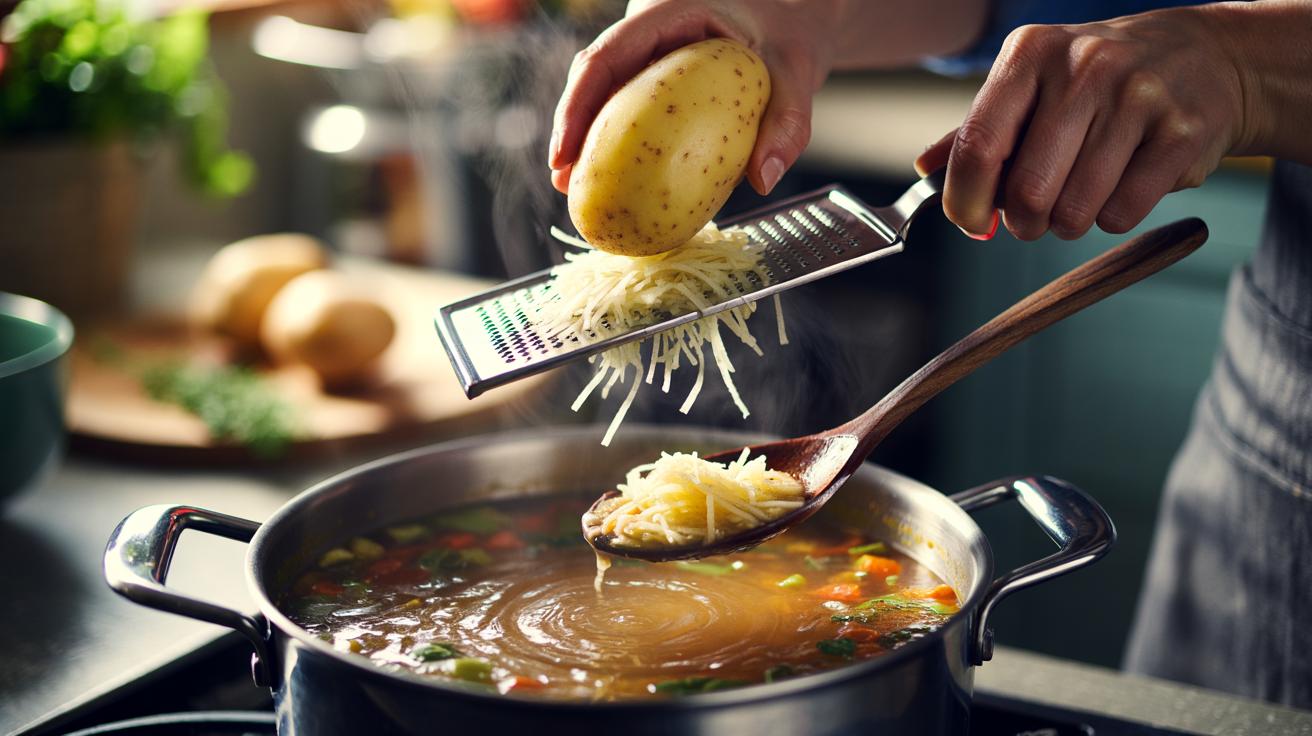
Grate a raw potato on the fine side of a box grater or a microplane. Stir the shreds into a simmering pot and cook for two to four minutes, stirring so nothing settles. The threads vanish; the broth turns satin. For ultra‑speed, whisk instant mash flakes with hot stock into a thin slurry, then stream it into the soup off the heat to avoid clumps. Stop the moment the liquid coats the back of a spoon; carryover heat will thicken it a notch further.
Leftover mash is gold. Warm a half‑cup with a ladle of soup, blitz smooth, then whisk back into the pot. It’s fast and thrifty. If you keep potato starch, make a classic slurry: one teaspoon starch to one tablespoon cold water per litre of soup, added in stages while simmering. Diced small potato also works—five‑millimetre cubes simmer in ten minutes—then blend briefly. Go easy with the stick blender: short pulses, not a prolonged blitz, to avoid a gluey texture from over‑sheared starch.
Texture, Flavour, and Nutrition in Balance
Texture isn’t just thickness; it’s flow. Aim for a gentle nappé that hugs a spoon and falls in a slow ribbon. If it heaps like paste, thin with hot stock. If it sheets off the spoon, add another teaspoon of slurry or a handful of grated potato and simmer briefly. Think in small corrections, tasting and checking the spoon each time. Add fat judiciously. A splash of cream or a knob of butter rounds edges and carries aroma. Olive oil works beautifully with tomato or roasted pepper soups, delivering gloss without dairy.
Flavour needs dimension. Potato can soften acidity; restore brightness with a squeeze of lemon or a dash of vinegar at the end. Salt late. Pepper last. Herbs, added off the heat, keep their perfume. Nutritionally, potato adds fibre, potassium, and energy without gluten, making it a friendly thickener for most diets. Freezing? Potato‑thickened soups reheat well if you warm gently; vigorous boiling can push starch past its sweet spot and turn it heavy. If that happens, thin with stock and add a fresh aromatic lift—chives, parsley, or a spoon of yoghurt.
Troubleshooting and Chef-Level Tips
Gluey soup usually comes from over‑blending. Rescue it by thinning with hot stock, then folding in a spoon of olive oil and a splash of acid to perk it up. Grainy mouthfeel? Cook the grated potato a minute longer to fully gelatinise the starch. Too thick after standing? Heat gently and re‑thin; starch networks tighten as they cool. Always switch off the heat before the final blitz to prevent over‑shearing. When using bacon, chorizo, or smoked fish, render or simmer first; potato will seize their flavoured fat and amplify savouriness.
For speed, microwave a peeled potato until tender, mash with a ladle of hot soup, then whisk in. It’s five minutes to silk. For clarity in delicate broths, favour potato starch slurry over mash to avoid cloudiness. Add grated raw potato early in a chunky vegetable soup so cubes of carrot and celery cook alongside and the starch integrates. Finish like a pro: a small pat of cold butter, beaten in off the heat, gives a restaurant‑level sheen and soft, lingering texture without extra thickness.
Potato offers control, speed, and a clean canvas, whether you want a whisper of body in a light veg broth or a chowder you can almost stand your spoon in. Start small, heat gently, taste often, and let the starch do the quiet work of turning liquid into luxury. It’s the fastest fix you already own. What soup on your hob will you rescue first, and which method are you tempted to try tonight—the quick grate, the mash whisk‑in, or the precise starch slurry?
Did you like it?4.4/5 (28)