In a nutshell
- 🌿 Epsom salt (magnesium sulfate) drives rapid green-up because magnesium sits at the heart of chlorophyll and sulfur supports enzyme activity; foliar sprays deliver fast, visible results.
- 🔎 Correct diagnosis saves time: look for interveinal chlorosis on older leaves to confirm magnesium deficiency, not uniform yellowing (nitrogen) or new-leaf yellowing (iron).
- 💧 Apply precisely: use a foliar spray at 1 tbsp per 4 litres for speed, or a soil drench at 1–2 tbsp per 4 litres monthly; spray in cool periods and reassess after 10–14 days.
- ⚖️ Keep balance: Epsom salt is not a complete fertiliser; overuse can hinder potassium and calcium uptake and raise salts—always soil test before dosing.
- 🌱 Think sustainably: target sandy, leached soils or containers, time applications after heavy rain, bolster organic matter, and keep records for repeatable, targeted use.
Gardeners chasing that instant “green-up” often swear by a humble pantry staple: Epsom salt. Sold as bath crystals, it’s actually crystalline magnesium sulfate, and when plants look washed-out or tired, it can deliver a swift visual rebound. The logic is compelling. Magnesium is the beating heart of chlorophyll, the pigment that captures light and powers photosynthesis. Sulfur supports enzymes and amino acids. Together they can fuel foliage. Results can appear quickly, especially via foliar sprays. Yet not every plant, or every soil, needs it. It is not a complete fertilizer and it cannot replace balanced nutrition. Used precisely, though, Epsom salt can be a sharp tool in the grower’s kit for fast, green growth.
The Chemistry Behind the Quick Green-Up
Epsom salt is MgSO4·7H2O, a highly soluble source of magnesium (Mg) and sulfur (S). Magnesium sits at the centre of the chlorophyll molecule, the green pigment that captures light energy. When plants are short of Mg, chloroplasts falter and leaves pale. Supply returns, and chlorophyll synthesis can ramp up in days. That’s why gardeners often notice rapid greening. Sulfur plays a quieter but vital role, helping build enzymes and the amino acids cysteine and methionine. The sulfate form dissolves fast, moves readily in soil water, and is immediately available.
Foliar feeding accelerates this effect. A fine mist delivers Mg directly to leaf tissues, bypassing any root-zone lockups and ensuring swift uptake. In cool, wet springs or in containers where nutrients leach quickly, the response can be striking. Quick green foliage after Epsom salt usually signals a prior magnesium shortfall, not a miracle tonic. Keep in mind, Mg interacts with other cations. Over-application can antagonise potassium and calcium uptake. Balance is everything. When used judiciously, however, magnesium sulfate offers a nimble, targeted fix that restores photosynthetic power without altering soil pH meaningfully.
Spotting Magnesium Deficiency Versus Other Problems
Getting the diagnosis right prevents wasted effort. Classic magnesium deficiency shows as interveinal chlorosis on older leaves first: the veins remain green while the spaces between turn yellow. Leaves may curl slightly or develop reddish-purple tints as stress grows. In contrast, nitrogen deficiency usually pales the entire leaf uniformly, and iron deficiency starts on the newest growth. Treating the wrong deficiency with Epsom salt won’t help and may worsen nutrient balance. A simple soil test or tissue analysis confirms Mg levels, while a visual check guides urgent action.
Use this quick reference to separate look-alikes and decide when Epsom salt helps:
| Symptom | Likely Cause | Will Epsom Salt Help? |
|---|---|---|
| Interveinal yellowing on older leaves | Magnesium deficiency | Yes — supplies Mg for chlorophyll |
| Uniform yellowing across plant | Nitrogen deficiency | No — needs N fertiliser |
| Yellowing of newest leaves first | Iron deficiency | No — use iron chelate |
| Blossom end rot on tomatoes | Calcium supply/transport | No — address Ca and watering |
Correct identification is the difference between a quick green revival and a lingering struggle. If your soil is sandy, acidic, or heavily leached by rain, Mg shortages are more likely. Container media, with frequent watering, also lose Mg swiftly. In clay-rich or dolomitic-limed soils, deficiency is rarer, so look elsewhere before reaching for the crystals.
How and When to Apply Epsom Salt
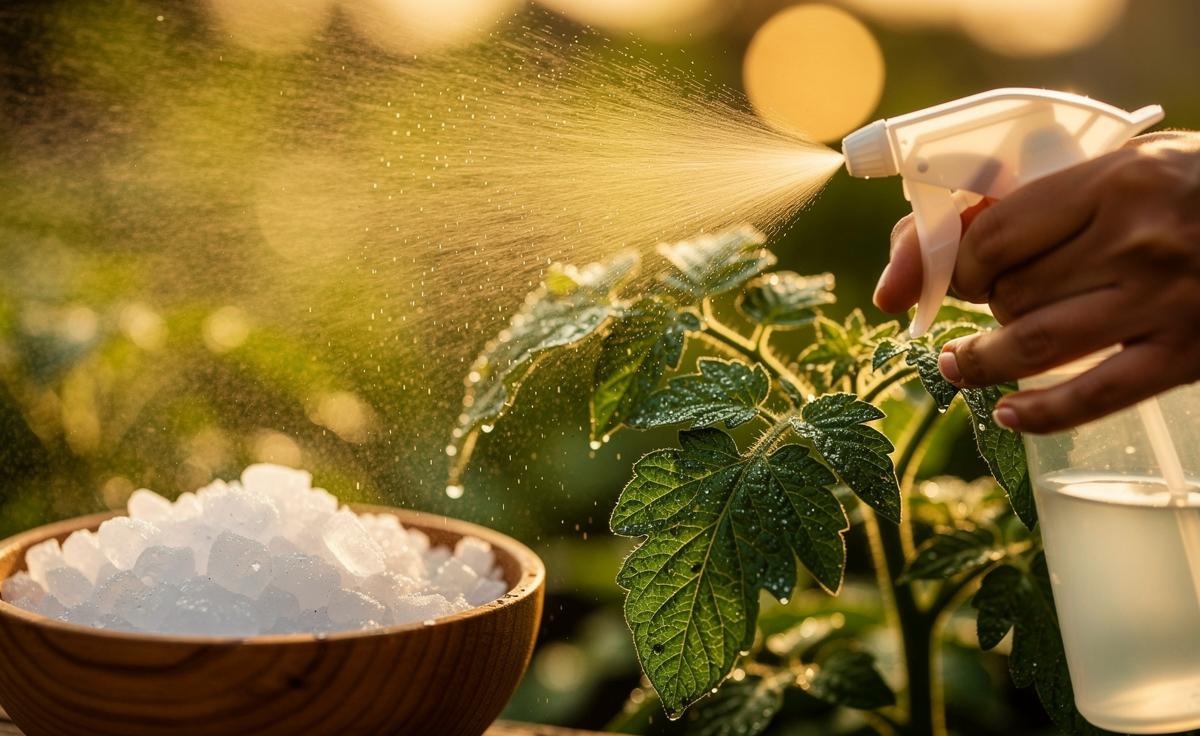
For a fast leaf response, a foliar spray is hard to beat. Dissolve 1 tablespoon (about 15 g) of Epsom salt per 4 litres of water and mist both sides of leaves in the cool of morning or evening. Repeat after 10–14 days if symptoms persist. Avoid spraying in full sun to reduce scorch risk. For a steadier supply, use a soil drench: 1–2 tablespoons per 4 litres applied to the root zone of container plants monthly during active growth. On garden beds, lightly water in 30–60 g per square metre when tests indicate low Mg.
Roses, peppers, and tomatoes often show visible improvement when Mg is short. Lawns can benefit too: add 25–50 g per square metre in spring if leaf tissue tests are low in Mg. Do not combine Epsom salt with every watering; pulses are safer than constant dosing. Watch for responses within a week on foliage; structural improvements take longer. Always record dates, rates, and results. Such notes form a personal playbook that turns one-off victories into repeatable success.
Caveats, Soil Tests, and Sustainable Use
Test before you treat. A basic soil test reports magnesium levels and the cation exchange capacity, guiding whether Epsom salt is necessary. If Mg sits in the optimum range, adding more won’t green plants; it may simply elevate soluble salts, hinder potassium uptake, and run off in heavy rain. Remember, Epsom salt contains no nitrogen, phosphorus, or potassium, so it cannot replace a balanced fertiliser. Where soil is limed with dolomitic lime, Mg is already plentiful; choose alternatives if leaves remain pale, such as nitrogen feed or iron for new-leaf chlorosis.
Think timing and water. Strong rains leach Mg from sandy soils, so post-storm foliar sprays make sense. In drought, focus on irrigation first; nutrient uptake stalls in dry root zones. For eco-care, keep applications modest and targeted, especially near waterways. Compost and organic matter help retain Mg, stretching every gram further. The most sustainable green-up comes from diagnosing the true limit to growth, then correcting only that limit. Paired with testing and good cultural practices, Epsom salt becomes a precise, low-cost ally rather than a blunt instrument.
Epsom salt can turn tired leaves into a vibrant canopy when magnesium truly is the missing link. Used as a foliar spray for speed or as a soil drench for steadier supply, it’s a nimble tool with visible payoffs. But discipline matters. It is not a cure-all and never a substitute for balanced nutrition or soil knowledge. Keep records, test periodically, and watch the plants tell their story in colour. With that mindset, your garden’s green-up will be rapid, resilient, and responsible. Which plant in your patch is signalling it wants a targeted magnesium boost next?
Did you like it?4.5/5 (30)