In a nutshell
- 🌿 Baking soda (sodium bicarbonate) helps control fungus by raising surface pH and creating mild osmotic stress, making conditions hostile to spores; it’s largely fungistatic, not a knockout fungicide.
- 🧪 Effective in early outbreaks of powdery mildew and light household moulds; trials and gardener experience show better coverage with a tiny amount of mild soap as a wetting agent.
- 🧰 Safe mixes: about 1 tsp/L water for plants (plus a drop of soap), and 1–2 tsp/L for non-porous surfaces; apply in cool hours, allow contact time, then scrub or let dry on leaves.
- ⚠️ Limits and risks: won’t fix structural damp, embedded mould, or rot; high doses can scorch leaves, and abrasive scrubbing can mar finishes—spot-test, dilute, and ventilate; medical fungal issues need professional care.
- 📋 Best used as part of an integrated strategy: improve airflow, reduce humidity (40–60%), fix leaks, prune plants, and store bicarbonate sealed; mix small batches and label sprays clearly.
Open a British cupboard and you’ll likely find a humble tub of baking soda. It freshens fridges, brightens laundry, scrubs pans. Less known, it can help control fungus. Not as a miracle cure, but as a tidy, low-cost tool in the fight against moulds and plant fungal diseases that thrive in damp corners and on stressed leaves. The science is simple yet elegant: sodium bicarbonate shifts local conditions to make life harder for spores and hyphae. Used thoughtfully, this common powder can nudge the balance away from disease without resorting to harsh chemicals. Here’s why it works, when it helps, and where it doesn’t.
Why Baking Soda Can Tame Fungi
At the heart of sodium bicarbonate is a chemical nudge. When dissolved, it gently raises surface pH, creating a microenvironment many fungi dislike. Powdery mildew, for example, prefers slightly acidic conditions on leaf cuticles. Shift that acidity and spore germination becomes less efficient. Spores struggle to swell. Germ tubes hesitate. Colonies stall. The effect is subtle but meaningful, especially early in an outbreak when pathogen pressure is still light.
There’s also osmotic pressure. A modestly concentrated bicarbonate solution changes the water balance around cells, stressing delicate fungal membranes. That stress, combined with pH change, can reduce growth and limit sporulation. Some lab studies suggest bicarbonate ions may interfere with enzyme systems that help pathogens penetrate tissues, though impacts vary by species. Crucially, baking soda is generally fungistatic, not a silver-bullet fungicide. It slows and suppresses. It rarely annihilates.
Practical translation: you can tip the odds. On plant leaves susceptible to powdery mildew, on bathroom grout prone to a thin film of mould, on a patio after a wet week. It’s a tactical measure, best paired with cultural fixes—airflow, dryness, pruning—and careful timing. When conditions favour the host, bicarbonate’s small push often proves enough.
Evidence and Everyday Uses
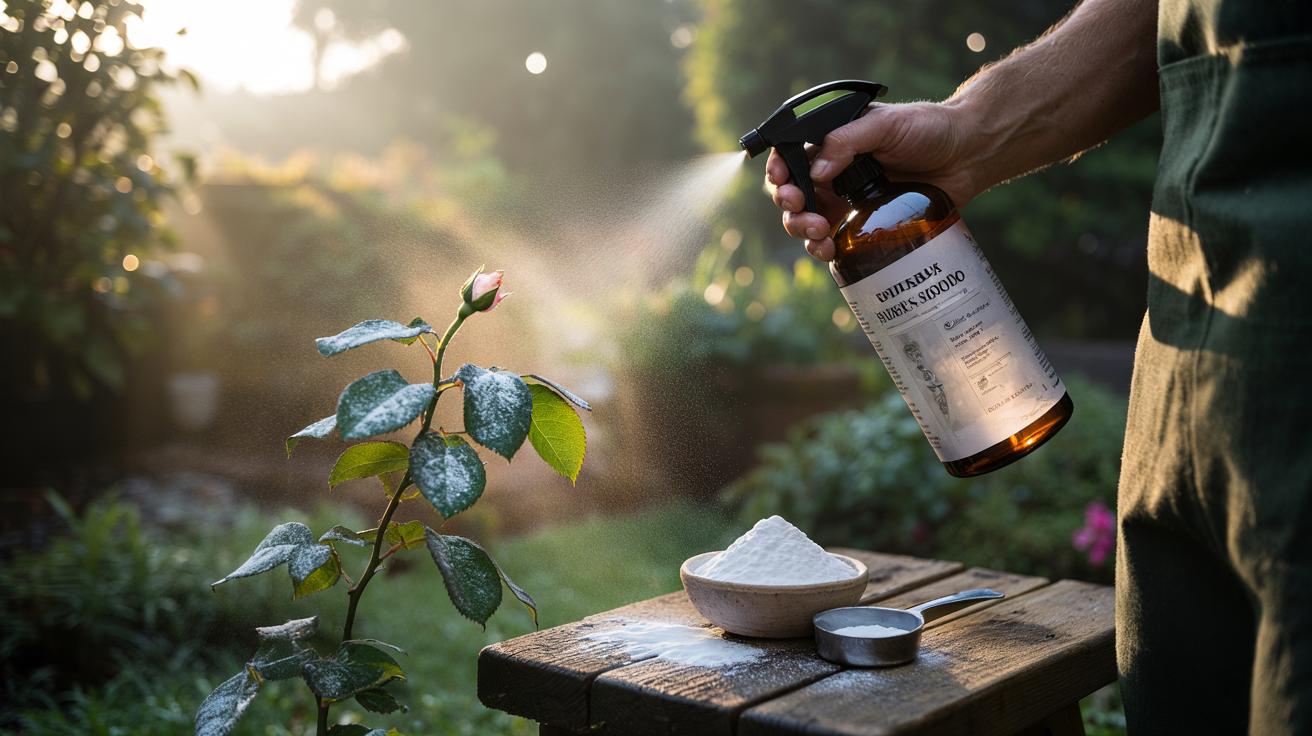
Gardeners have leaned on bicarbonate for decades, encouraged by trials in cucurbits and roses where weekly sprays cut powdery mildew severity. Plant pathologists note improved outcomes when sodium bicarbonate is paired with a wetting agent (a drop of mild soap) to help the solution spread evenly across waxy leaf surfaces. Not a cure, but a cheap tool alongside resistant varieties, spacing, and sanitation. In household settings, it’s part of a moisture-management routine rather than a standalone treatment.
On non-porous surfaces—tiles, plastics, sealed worktops—its mild alkalinity helps destabilise biofilms and loosen light mould staining, especially when given a few minutes of contact time before a scrubbing rinse. In cupboards, a dry sprinkle followed by vacuuming can address odour-causing microbial films. Always keep the target modest: thin growths, early patches, maintenance cleaning. Deep, structural mould requires moisture control and, often, professional remediation.
In food storage, a fresh box of baking soda passively absorbs odours; it does not sterilise. For textiles, paste spot-treatments can lift musty smells pending a hot wash and thorough drying. In all contexts, the quiet theme repeats: bicarbonate shifts conditions. You supply the rest—ventilation, sunlight, and persistence—so the antagonists can’t return easily.
How to Mix and Apply Safely
For plants, a common garden mix is light: around 1 teaspoon of baking soda per litre of water with a drop of mild liquid soap as a surfactant. Mist affected leaves in the cool of morning, coating tops and undersides, and repeat weekly while pressure remains. Test on a small area first; some species scorch at higher concentrations or under strong sun. For surfaces, dissolve 1–2 teaspoons in a litre of warm water, apply, allow 5–10 minutes, then scrub and rinse well.
Keep it simple. Don’t over-concentrate, and don’t mix haphazardly with other chemicals. Combining bicarbonate with strong acids like vinegar produces carbon dioxide gas and can spray liquid—messy in open bowls, risky in sealed containers. Separate tasks instead: alkalise or acidify, not both at once. Wear gloves if you have sensitive skin. Work in ventilated spaces. Product labels matter; avoid scented detergents that can irritate leaves or lungs.
| Use | Ratio | Contact Time | Frequency | Caution |
|---|---|---|---|---|
| Powdery mildew on roses | 1 tsp/L water + 1–2 drops mild soap | Dry on leaf | Weekly in outbreaks | Test leaf; avoid midday sun |
| Light bathroom mould (tiles) | 1–2 tsp/L warm water | 5–10 minutes | As needed | Scrub and rinse; dry area |
| Pantry shelf wipe | 1 tsp/L water | 2–5 minutes | Monthly | Keep food dry; avoid wood swelling |
Store sodium bicarbonate sealed and dry; moisture clumps it and reduces reliability. Label spray bottles clearly, make small batches, and discard leftovers after a day. That way, you keep solutions stable and predictable.
Limits, Risks, and When to Seek Help
The limits are real. Heavier infestations, porous materials, and damp building fabric shrug off simple alkalinity. Baking soda won’t reverse rot, fix leaks, or detoxify black mould embedded deep in plaster. On plants, repeated high doses can spot leaves or upset nutrient balance on thin cuticles. On delicate surfaces—aluminium, unfinished wood—its mild abrasiveness can mark finishes if you scrub aggressively. When in doubt, spot-test and dilute.
Health is another boundary. People with asthma or allergies may find any mould cleanup irritating; use masks and ventilation. For skin or nail issues, pharmacists in the UK advise evidence-based treatments; bicarbonate baths may soothe but are not a treatment. If you have symptoms of infection or persistent damp-related illness, seek professional advice rather than DIY experiments. In rented homes, chronic damp is a landlord issue—document and report it.
Think of bicarbonate as part of a system. Reduce indoor humidity to 40–60%, vent bathrooms, fix drips, improve airflow around susceptible plants, and clear fallen debris. Those interventions directly cut fungal opportunity. Sodium bicarbonate then acts as a light-touch control, buying time while structural fixes do the heavy lifting.
In short, baking soda helps control fungus by bending the microenvironment—raising pH, nudging osmotic stress, slowing growth—and it does so with frugal simplicity. It won’t do everything. It can do something, and that something often matters when used early, lightly, and alongside good hygiene and moisture control. See it as a scalpel, not a sledgehammer. Where could a measured bicarbonate strategy, combined with better airflow and dryness, make the biggest difference in your home or garden today?
Did you like it?4.7/5 (23)