In a nutshell
- 🐌 Copper tape repels slugs via a mild electrolytic reaction with their slime, creating a behavioural barrier that deterrs rather than kills.
- 🛠️ Installation matters: use 20–30 mm width for pots and 30–50 mm for raised beds; apply as a continuous, clean ring with overlapped ends and no gaps.
- 🪴 Best sites: containers, raised beds, and greenhouse legs/staging; for open borders, ring individual plants and protect chokepoints where slugs must cross.
- 🔁 Maintenance is key: wipe tarnish, resecure lifted edges, and prevent soil or foliage “bridges”; expect a lifespan of 1–3 seasons and UK costs around £6–£15 per 10 m.
- 🌿 Wildlife-friendly approach: it’s non-lethal and pairs well with good hygiene and nematodes (Phasmarhabditis hermaphrodita) for integrated control.
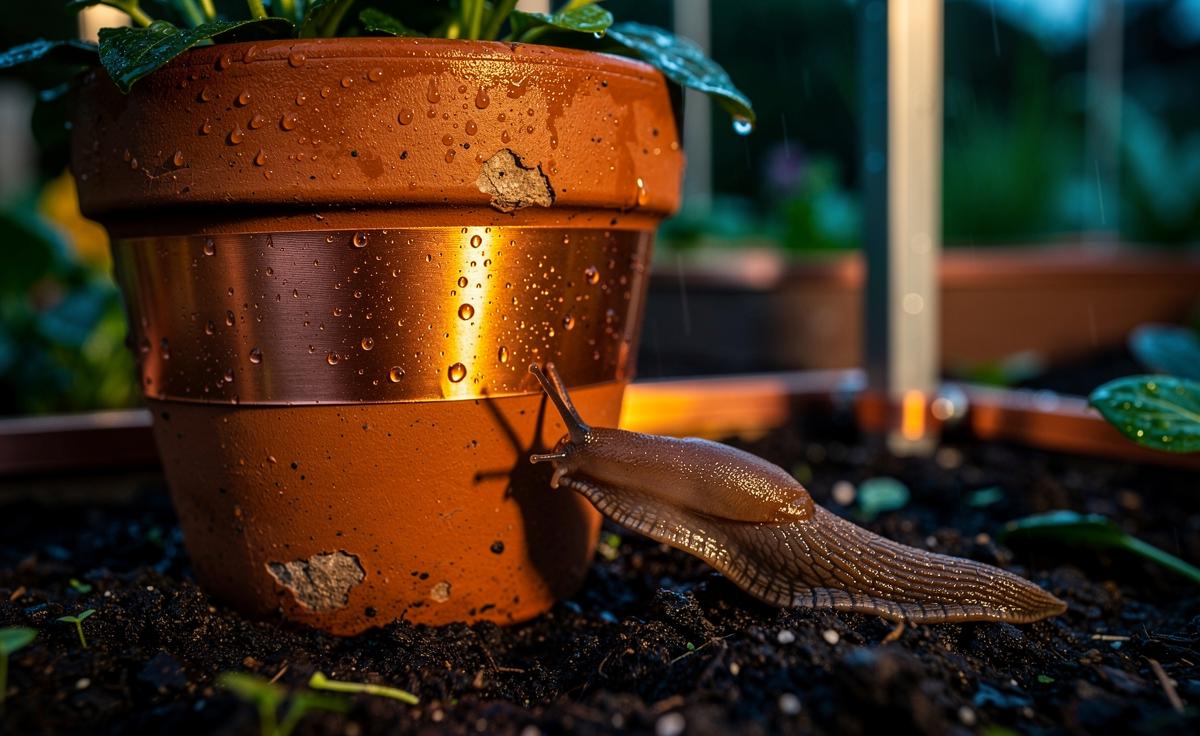
Slugs patrol British gardens with quiet efficiency, slicing overnight through lettuces, hostas, and tender seedlings. Chemical pellets are falling out of favour, wildlife-friendly gardeners want kinder answers, and that’s where copper tape enters the story. This slim metal strip forms a discreet line of defence around pots and beds, acting not as poison but as deterrent. When slugs meet copper, their own moisture does the work. They turn away. No corpses, no secondary poisoning, no blue pellets scattered after rain. It’s a barrier, not a weapon. Used properly, copper can tip the balance in your favour and keep foliage intact through spring’s vulnerable weeks.
How Copper Creates a Shock-Free Barrier Against Slugs
Garden lore talks about a “tiny electric shock.” In truth, the effect is a mild electrolytic reaction that occurs when slug slime (a conductive mucous) touches copper. That reaction is uncomfortable for the animal, so it reverses course. No zap you can hear. No sparks. Just a sensation slugs dislike enough to avoid. That is why a continuous, clean copper ring works. Any gap, and the pest will simply cross.
This is different from salt or pellets. Nothing is dehydrated, nothing ingested. The copper creates a behavioural barrier that deters rather than kills, which is good news for hedgehogs, thrushes, and amphibians that shape a garden’s natural balance. It’s targeted, visible, and adjustable. If a barrier fails, you can see where and fix it.
There are limits. Heavy rain can spatter soil onto the tape, forming a “bridge” the slug uses to sidestep the reaction. Tarnish also reduces effectiveness. Keep the metal exposed and free from grime. When the tape stays clean and unbroken, results are immediate: seedlings survive, leaves remain whole, and night raids fall away.
Choosing and Installing Copper Tape in Gardens and Pots
Not all copper tape is equal. Width matters. Adhesive backing matters. Durability matters when temperatures swing from sleet to scorching sun. Aim for a minimum width of 20–30 mm on small pots; for raised beds and rough timber, 30–50 mm provides a surer stop. Thicker foil resists tearing around corners. For masonry, choose high-tack adhesive or back the tape with exterior-grade glue. Never stretch the tape while applying; it will lift later and create a breach.
| Attribute | Recommendation |
|---|---|
| Tape width | 20–30 mm for pots; 30–50 mm for beds |
| Surface prep | Clean, dry, smooth; sand rough timber lightly |
| Lifespan | 1–3 seasons, depending on tarnish and wear |
| Cost (UK) | £6–£15 per 10 m, quality dependent |
| Care | Wipe monthly; resecure lifted edges immediately |
Wrap containers with a single, continuous band and overlap the end by at least 2 cm. On raised beds, mount the tape high enough that splashed soil doesn’t instantly bridge it. Trim foliage so leaves don’t flop over the barrier, forming a leafy gangplank. Seal every join and corner. If you’re protecting a greenhouse bench, run tape around each leg so slugs can’t climb in from the ground.
Where Barriers Work Best: Beds, Containers, and Greenhouses
Containers are the copper tape’s sweet spot. Pots, planters, and troughs present compact perimeters, easy to seal, easy to inspect. Results can be dramatic. Hostas in glazed pots suddenly look like catalogue plants. Lettuce troughs stay intact long enough to harvest. On raised beds, copper also performs well, provided timber is smooth and leaf litter is kept off the rails.
Greenhouse and cold-frame staging offer another win. Slugs often move up legs or braces. A copper band around each support blocks that climb route. Water butts and compost caddies can be ringed the same way if you find slugs nesting inside. Focus on the chokepoints—the exact places slugs must cross to reach tender growth.
Open borders are trickier. The perimeter is long, edges are irregular, and soil splash is constant. Instead of encircling entire beds, copper-ring individual plants or vulnerable clumps. Seed trays and cloche frames respond well too. Think island strategy: create protected enclaves within a wider garden, then reduce pressure elsewhere with hand-picking or biological controls.
Maintenance, Ethics, and Integrated Control
Copper tape is not a fit-and-forget tool. Air oxidises it; rain deposits fines; algae creeps in. Wipe monthly with a cloth; for stubborn tarnish, a light pass with vinegar and water restores brightness. Re-press lifted edges, replace torn strips, and check for soil smears after storms. One missed gap undoes the work of the whole ring. A quick inspection on damp evenings pays back in saved leaves.
Ethically, copper sits well with wildlife-friendly gardening. It’s non-lethal, poses negligible risk to pets, and doesn’t contaminate soil like persistent chemicals. Still, be mindful near amphibian highways; provide alternate wet refuges so newts and frogs don’t repeatedly test the tape. Combine the barrier with good hygiene: lift boards that shelter slugs, water in the morning, and thin dense groundcovers where pests hide.
Integrated control strengthens results. Use torch-and-pot hunts after rain. For heavy infestations, consider the UK-available nematode treatment Phasmarhabditis hermaphrodita to reduce the background slug population. Wool pellets, sharp grit, and beer traps have mixed evidence—but deployed inside copper-protected zones, they add friction. This layered approach means fewer holes, less faff, and more harvest.
Copper tape won’t turn a garden into a fortress, but it creates decisive pressure where you need it: the last few centimetres before leaf meets slug. It’s visible, testable, and adjustable, which makes it easy to learn from and improve week by week. Keep it clean, keep it continuous, and keep it high enough to avoid bridges. Then watch the night raids fade. Ready to ring-fence your most vulnerable plants and see how far a slender band of metal can take you this season?
Did you like it?4.4/5 (25)