In a nutshell
- 🧅 Onion aroma repels aphids by masking host plant cues; sulfur-rich Allium volatiles disrupt aphid olfaction and muddle alarm signals like E-β-farnesene.
- 🧪 DIY fixes: make an onion spray (1 onion : 1 L water + a drop of soap), brew onion skin tea for gentle maintenance, or use chopped trimmings as mulch; patch test and apply at dawn/dusk.
- 🌿 Companion planting: edge beds with spring onions or chives and layer scents with mint, rosemary, and lavender to confuse pests; leave space from legumes and avoid root competition.
- ⚠️ Precautions: onion is a repellent, not a killer—combine with mechanical removal, avoid midday sun and open blooms, keep mixes fresh, and rinse edibles before eating.
- 🐞 Integrated pest management: encourage ladybirds, hoverflies, and lacewings; rotate with garlic/chive infusions, escalate to insecticidal soap if needed, then return to onions for maintenance.
Aphids arrive quietly, multiply fast, and drain the life out of tender shoots. Gardeners often reach for heavy sprays, yet there’s a simpler cue from the kitchen: the pungent power of the onion. It’s not folklore alone. The plant’s distinctive sulfur notes can scramble the scent map aphids use to find hosts. Cheap. Accessible. Safe for most beds. Onion aroma is a practical, immediate deterrent you can deploy within minutes. In this piece, we unpack why the bulb’s chemistry spooks sap-suckers, how to prepare effective mixes at home, and what pitfalls to avoid so your roses, brassicas, and herbs bounce back without collateral damage.
How Onion Aroma Disrupts Aphids
To an aphid, a garden is a world of smells. They navigate using plumes of volatile organic compounds that plants release under stress or growth. Onions, part of the Allium family, flood the air with sulfur-rich molecules—think thiosulfinates and related breakdown products—that don’t just stink to us; they conflict with aphid olfaction. By masking host signals, onion scent makes it harder for aphids to locate suitable leaves. The result is quick behavioral change: fewer landings, restless probing, and a tendency to abandon the plant. This is repellent action, not poison, which is why it’s safer for edible plots.
There’s more at play than “bad smell.” Aphids communicate danger via an alarm pheromone (notably E-β-farnesene), and intense Allium volatiles can create a kind of sensory noise. Think static on a radio. Strong, unfamiliar scent profiles disrupt settling cues and may shorten feeding bouts, limiting virus transmission risk. Timing matters. Applying onion aroma as colonies form has outsized impact; once leaves curl and honeydew accumulates, repellents must be paired with physical removal. Used early and consistently, onion scent can break the cycle before populations explode.
Expect two effects: a near-instant drop in new arrivals and, over days, observable movement away from treated plants. That twin action—prevention and pressure—is why onions earn a place in integrated garden routines.
Practical Onion Remedies for the Garden
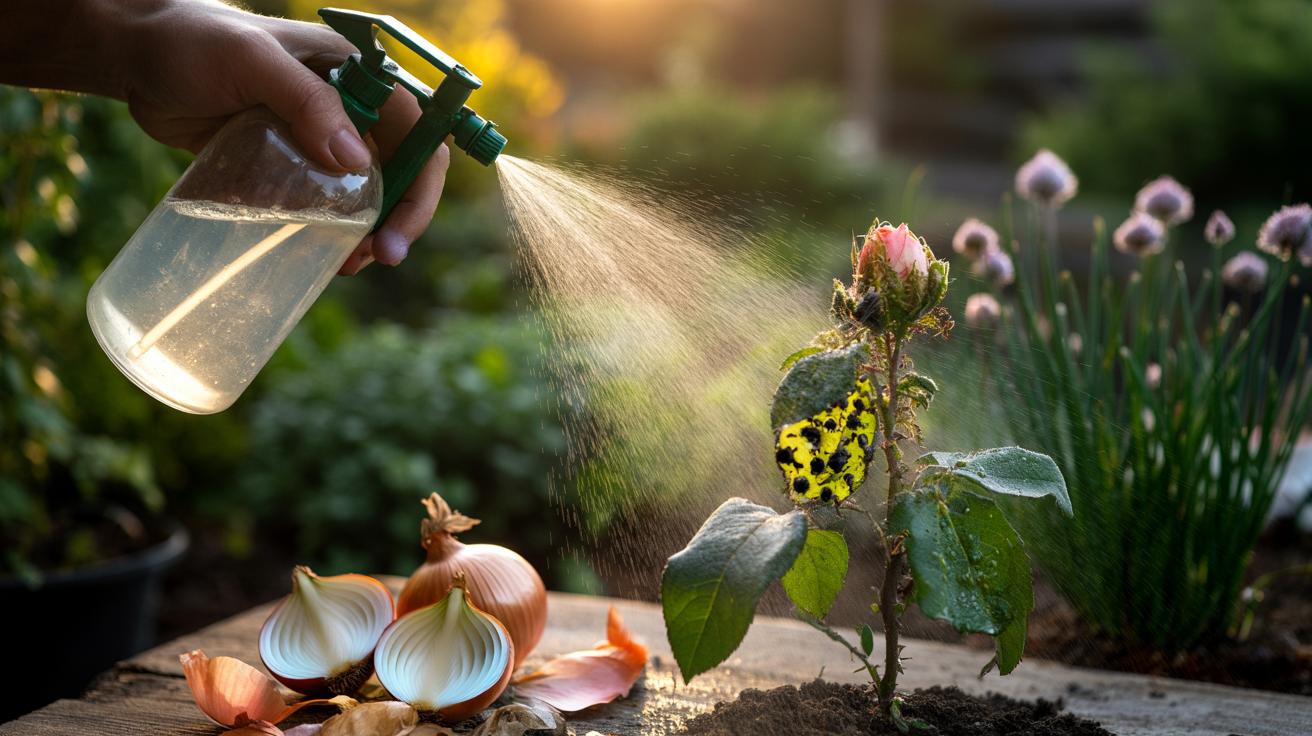
Start simple. For a fast onion spray, blitz one large onion with 1 litre of water, steep 6–12 hours, then strain. Add a drop of mild, fragrance-free soap for adhesion. Mist leaf undersides every three days at dawn or dusk. If you prefer gentler notes, simmer a handful of onion skins in 1 litre of water for 15 minutes; cool and use as a lighter foliar rinse. Always test on a small patch first to rule out leaf scorch. For sustained background aroma, tuck chopped onion trimmings or skins as a thin mulch ring around susceptible stems, refreshing weekly.
Combine tactics for stubborn hotspots. Rinse colonies with a strong water jet, then apply onion spray to deter resettling. Rotate with garlic or chive infusions to keep the scent landscape unpredictable. Precision counts: focus on tender tips and new growth where aphids cluster. Avoid spraying flowers to protect pollinators. With containers, move pots to a shaded spot after treatment to reduce stress. An onion-based routine is most effective when you stay on schedule during peak aphid weeks.
| Method | Recipe/Ratio | When to Use | Pros | Cautions |
|---|---|---|---|---|
| Onion Spray | 1 onion : 1 L water + 1 drop soap | Early infestations; after rinsing colonies | Fast, targeted, inexpensive | Patch test; avoid midday sun |
| Onion Skin Tea | Handful skins simmered in 1 L water | Maintenance between sprays | Mild, low odor on plants | Reapply often for effect |
| Mulch/Trimmings | Thin ring around stems | Ongoing deterrence | Zero equipment, continuous release | Refresh weekly; deter pests, not eliminate |
Companion Planting: Onions as Pest Bodyguards
Strategic placement turns onions into quiet sentries. Plant spring onions or chives along the front of beds, edging roses, nasturtiums, or brassicas—aphid favourites. The narrow leaves leak faint sulfur notes whenever brushed by wind or rain, building a barrier scent without constant spraying. Companion strips can reduce aphid pressure while taking up minimal space. For balcony growers, a pot of chives flanking a stressed tomato can help deter winged colonisers after pruning. Rotate positions season by season to prevent soil fatigue and keep scent distribution fresh.
Mixing signals is the trick. Pair Alliums with aromatic allies such as mint (contained), rosemary, or lavender to create layered volatiles that confuse host-finding. Intercrop short onions between longer-season crops to avoid root competition. While evidence on yield boosts varies, the reduction in pest settling is consistently reported by kitchen gardeners and supported by small trials. Be mindful of bed design: onions prefer free-draining soil and steady light; cram too many around heavy feeders and you’ll invite nutrient skirmishes.
A note on neighbors. Some growers report that dense onion planting close to beans or peas may stunt legumes, especially in lean soils. Leave breathing space or use chives, which are gentler companions. Companion planting works best as a mosaic—diverse scents, varied heights, and staggered bloom times—so aphids never get a clear runway.
Precautions, Limits, and Smart Integrations
Onion scent is a repellent, not a silver bullet. It won’t wipe out a thriving, honeydew-dripping colony by itself. Combine with mechanical controls (finger-squish clusters, prune heavily infested tips), then deploy the spray to discourage return. Avoid overconcentration; too-strong brews can burn tender foliage, especially in heat. Never spray under harsh midday sun. Early morning or evening applications minimise stress and evaporation. Keep mixtures fresh; microbial growth in long-stored concoctions can harm leaves. If you garden for pollinators, steer clear of open blooms and focus on foliage where aphids feed.
Think bigger than one bottle. Encourage ladybirds, hoverflies, and lacewings with diverse planting and shallow water dishes; onion aroma won’t deter them the way synthetic insecticides might. Monitor weekly with a quick underside leaf check. If infestations spike despite treatments, step up to insecticidal soap or horticultural oil, then return to onions for maintenance. Wash edibles before eating, though onion mixes are kitchen-safe. For households sensitive to smells, use skin tea or chive borders—they’re subtler yet effective. Integrated pest management thrives on rotation, observation, and gentle, repeated nudges—onion fits perfectly into that rhythm.
Repelling aphids with onions brings science and simplicity together: sulfur volatiles that scramble insect senses, easy recipes you can brew tonight, and companion planting that works quietly all season. It’s not magic. It’s smart scent design for your beds, borders, and balconies. Adopt it early, pair it with physical removal and beneficial insects, and watch pressure ease without drenching your garden in harsh chemicals. Small, steady actions beat crisis spraying every time. What plants in your patch will you protect first with a sharp, tear-tinged line of onion defense—and how will you blend it with your current routine?
Did you like it?4.5/5 (22)