In a nutshell
- 🌿 Magnesium sits at the heart of chlorophyll, boosting photosynthesis, enzyme activity, phosphorus transport, and essential-oil production—driving faster, denser basil leaf growth.
- 💧 Apply Epsom salt safely: containers 1–2 tsp/gal every 4–6 weeks; beds 1 tbsp/gal or per sq ft monthly; foliar rescue 1 tbsp/gal at dawn every 3–4 weeks; always dissolve fully and alternate with plain water.
- 🔍 Spot deficiency early: older leaves show interveinal chlorosis, reduced branching, and faded aroma; confirm basics first—consistent moisture, pH 6.0–7.0, adequate N—then correct with a light Mg program.
- ⚠️ Avoid overuse: excess magnesium can block calcium and potassium, cause salt buildup, and weaken growth; flush containers, reduce rates, and test soil—skip if mixes have dolomitic lime or your water is hard.
- 🧪 Evidence and alternatives: biggest gains appear in containers, sandy soils, or after heavy K feeding; consider dolomitic lime (when raising pH) or complete feeds with Mg/S; pair supplementation with strong light and regular pruning.
Gardeners swear by a pinch of Epsom salt for lusher herbs, and basil is often first in line for the treatment. The science behind that folk wisdom is straightforward: Epsom salt supplies readily available magnesium and sulfur, two elements that basil converts into flavor, aroma, and green vigor. When magnesium runs short, basil sulks—leaves pale, growth stalls, harvests shrink. When it’s steady, photosynthesis hums and fresh foliage keeps coming. The trick, as with any tonic, lies in timing and dose. Used wisely, magnesium sulfate can nudge your plants from adequate to abundant, especially in containers and sandy soils that leach nutrients quickly.
Why Magnesium Matters in Basil’s Physiology
Magnesium sits at the heart of chlorophyll, the pigment that turns sunlight into sugars. Without enough Mg, a basil plant cannot push energy into new leaves, no matter how perfect the light or watering regime. The result is a classic pattern: older leaves fade between veins while the veins stay green, a symptom called interveinal chlorosis. New growth emerges smaller and fewer. Yield flatlines. Fix the magnesium bottleneck, and the plant can allocate energy back into rapid leaf production.
There’s more. Magnesium also stabilizes ribosomes and activates enzymes that move phosphorus around the plant. That movement fuels the synthesis of essential oils responsible for basil’s fragrance and flavor. It keeps membranes functioning, which matters when temperatures swing or when containers dry faster than expected. In short, magnesium is a quiet coordinator. It doesn’t shout like nitrogen, yet it orchestrates processes that make leaf layers pile up week after week.
Epsom salt—chemically magnesium sulfate (MgSO4·7H2O)—delivers magnesium in a form basil can absorb via roots or leaves. The sulfate partner isn’t a hitchhiker either; sulfur supports amino acids and aromas. On mixes low in dolomitic lime, or in sandy beds rinsed by summer storms, a small magnesium top-up can be the difference between spindly and sumptuous.
How to Use Epsom Salt Safely in Pots and Beds
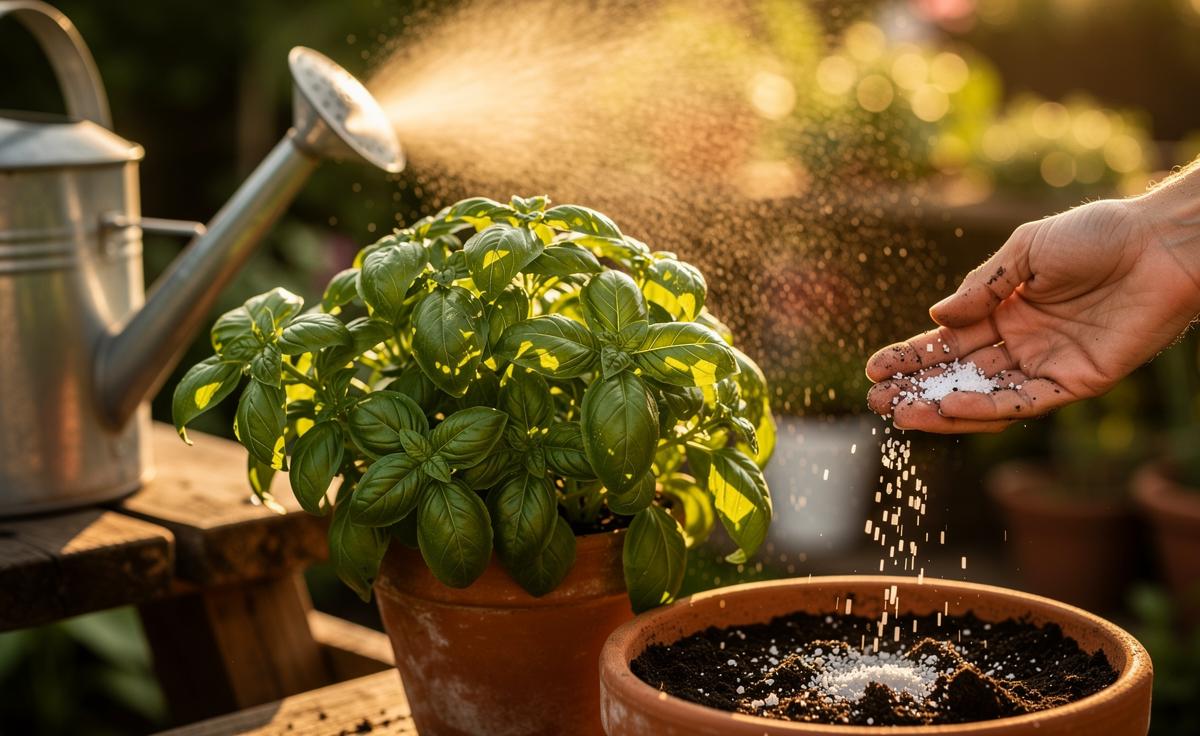
Always start small and adjust to plant response. In containers, where nutrients flush out quickly, a light, regular dose works best: dissolve 1–2 teaspoons of Epsom salt per gallon (4.5 L) of water and drench the soil every 4–6 weeks during active growth. For garden beds, sprinkle 1 tablespoon per square foot, then water in, or use a watering-can solution at 1 tablespoon per gallon, applied monthly in lean, sandy soils. Foliar sprays can jump-start recovery: 1 tablespoon per gallon, misted on both sides of leaves at dawn, no more than every 3–4 weeks.
Keep the program simple. Water first if soil is dry. Dissolve crystals fully to avoid leaf spotting or uneven distribution. Don’t stack doses with every irrigation; treat it like a supplement, not a fertilizer base. Pair magnesium with balanced feeding—nitrogen, phosphorus, and potassium—so basil can convert sunlight and minerals into dense canopies.
| Situation | Rate | Frequency | Notes |
|---|---|---|---|
| Seedlings/starts | 1/2 tsp per gallon | Every 4–6 weeks | Only after first true leaves |
| Containers | 1–2 tsp per gallon | Every 4–6 weeks | Alternate with plain water |
| Garden beds | 1 tbsp per gallon or per sq ft | Monthly in sandy soils | Water deeply after application |
| Foliar rescue | 1 tbsp per gallon | Every 3–4 weeks | Spray at dawn; avoid heat |
Important: If your potting mix already contains dolomitic lime or your tap water is hard, reduce or skip Epsom salt—excess magnesium can accumulate. Watch the leaves and keep notes; basil tells you quickly when the balance is right.
Spotting Deficiency and Avoiding Overuse
Magnesium deficiency announces itself subtly at first. Older basil leaves look washed-out between veins, then yellow, while new tips stay relatively green. Stems may elongate, but the plant seems reluctant to branch. Aroma fades. If you see this, a foliar spray can provide a rapid, visible response within days. Correcting early protects the harvest window before flowering pressures the plant.
Overuse is the flip side. Too much magnesium can antagonize calcium and potassium uptake, prompting leaf tip burn, weak stems, or dull, soft growth. In containers, heavy dosing also risks salt buildup that stresses roots and invites wilting after watering. The fix is simple: scale back, flush the pot with plain water, and resume a lighter schedule. In beds, space applications further apart, especially if rainfall is scarce. When in doubt, test: a basic soil report will flag high Mg levels or imbalanced ratios.
Environmental factors confuse the picture. Cold nights slow chlorophyll turnover; high pH ties up magnesium; severe drought mimics deficiency by limiting transport. Address the basics first—consistent moisture, pH around 6.0–7.0, adequate nitrogen—then fine-tune with Epsom salt. Thoughtful sequencing prevents chasing symptoms and delivers steadier, leafier growth.
Evidence, Caveats, and Alternatives
Horticultural trials show that magnesium supplementation restores chlorophyll and boosts photosynthetic efficiency where soils test low in Mg or where high potassium fertilization crowds it out. Basil is a fast-cycling, leafy herb; it responds quickly when a limiting micronutrient is relieved. Yet blanket recommendations miss the nuance: in many garden loams enriched with compost, magnesium is sufficient, and extra Epsom salt adds little beyond placebo. The greatest gains appear in containers, sandy beds, or after heavy K inputs that skew nutrient ratios.
If you prefer alternatives, rotate in dolomitic lime when you also need to raise pH, or use a complete liquid feed that includes Mg and S in modest amounts. Compost alone won’t reliably supply magnesium, but quality potting mixes often contain it. Leaf color meters and simple at-home soil kits can guide you; professional tests offer clearer ratios of calcium, magnesium, and potassium, which influence each other’s uptake. Balance, not brute force, is what turns a basil pot into a cutting machine.
Finally, remember that light and pruning multiply the benefits of nutrition. Full sun for at least six hours, regular pinching above the second or third node, and prompt removal of flower spikes keep demand high and direct resources to leaves. Feed the engine with magnesium, but tune the whole machine—airflow, watering discipline, spacing—so that every application of Epsom salt translates into fragrant, market-worthy bunches.
Basil rewards precision. A measured dose of Epsom salt can restore color, accelerate photosynthesis, and prime plants for repeated harvests—especially in mixes that leach quickly or soils that test low in magnesium. Keep applications light, observe the foliage, and let soil conditions guide your schedule. Used as a supplement, not a crutch, magnesium becomes a quiet catalyst for lush growth. With your next sowing or midseason rescue, what signals will you watch first—the leaf veins, the growth rate, or the aroma rising from a handful of freshly cut shoots?
Did you like it?4.5/5 (22)