In a nutshell
- 🌸 Epsom salt (magnesium sulfate) can enhance blooms by supplying magnesium for chlorophyll and sugar transport to buds, and sulfur for amino acids, scent, and disease resilience—especially where soils or containers are deficient.
- 🔬 Identify need first: look for interveinal chlorosis on older leaves, weaker stems, and fewer buds; soil testing confirms deficiency so dosing is targeted, not guesswork.
- 💧 Apply precisely: beds at 1 tbsp/4 L as a soil drench monthly, foliar feeding at 1 tbsp/9 L in cool hours, and containers at 1 tsp/L every 3–4 weeks—water beforehand and observe plant response.
- ⚠️ Bust myths and manage risk: it does not cure blossom end rot; excess magnesium can antagonise potassium and calcium, raise salts in pots, and leach outdoors—use modest, need-based doses.
- 🛠️ Think system-wide: treat Epsom salt as a supplement, not a complete feed; pair with adequate potash, balanced fertiliser, smart irrigation, and pH-aware choices like dolomitic lime only where appropriate.
Gardeners reach for Epsom salt when blooms stall, buds drop, or foliage looks tired. It’s cheap. It’s widely available. And when used correctly, it can nudge flowering plants into a more confident performance. The secret is simple: Epsom salt is magnesium sulfate, a mineral duo that fuels photosynthesis and protein building, both vital to flower production. Not a cure‑all, yet powerful in the right context. Think of it as a targeted supplement, not a standalone fertiliser. Used judiciously, especially where soils are short of magnesium, it can intensify colour, increase bud set, and steady growth during peak bloom.
What Epsom Salt Is and Why It Matters
Epsom salt is crystalline magnesium sulfate heptahydrate (MgSO4·7H2O). Two nutrients, one package. Magnesium sits at the centre of chlorophyll molecules, the green engine that captures light and turns it into sugars. Sulfate delivers sulfur, essential for amino acids and enzymes that keep a plant’s metabolism humming. When flowering loads increase, so does the demand for these nutrients. If the soil can’t keep up, buds may be fewer, smaller, or late.
In UK gardens, many clay and loam soils hold adequate magnesium. Sandy or highly acidic soils, and intensively potted summer displays, often do not. Symptoms of magnesium shortfall show as interveinal chlorosis on older leaves—yellowing between green veins—sometimes with weak stems and reduced bud set. Always test your soil before dosing with magnesium. Where a deficiency exists, a quick, soluble source like Epsom salt can be a pragmatic fix while longer‑term amendments take effect. It dissolves readily, works through roots or foliar sprays, and doesn’t add nitrogen or phosphorus that might skew a carefully balanced feeding regime.
Epsom salt supplements nutrients; it is not a complete fertiliser. That distinction matters, particularly for flowering plants that also need robust levels of potassium, balanced nitrogen, and trace elements to sustain a heavy flush of blooms.
Magnesium and Sulfur: The Flowering Engine
Magnesium’s most visible job is in chlorophyll, but its influence runs deeper. It activates enzymes that move sugars from leaves to developing buds, a crucial pipeline for petals, scent compounds, and nectar. When magnesium is scarce, plants struggle to relocate carbohydrates efficiently; leaves hoard sugars, while bud formation lags. The result: fewer flowers, weaker colour, and a shorter display. Restore magnesium, and the source‑to‑sink flow improves, feeding bloom sites precisely when they need it.
Sulfur arrives as sulfate, the plant‑ready form. It supports synthesis of sulfur‑containing amino acids and coenzymes, which underpin growth, disease resilience, and fragrance. In many UK soils, sulfur levels have dipped since the clean‑air era reduced atmospheric deposition. Container mixes, flushed by frequent watering, can also run lean. A modest addition of Epsom salt shores up this biochemical machinery without pushing leafy, nitrogen‑driven growth at the expense of flowers.
There’s a sensory dividend too. Healthier chlorophyll means better energy capture; improved protein assembly means sturdier petals and longer vase life for cut blooms. Roses, peppers, tomatoes, and bedding like petunias often respond where deficiencies exist. When nutrition is the bottleneck, Epsom salt can be the key that frees the system. When it isn’t, you won’t see miracles—just salt you didn’t need.
How and When to Apply for Best Blooms
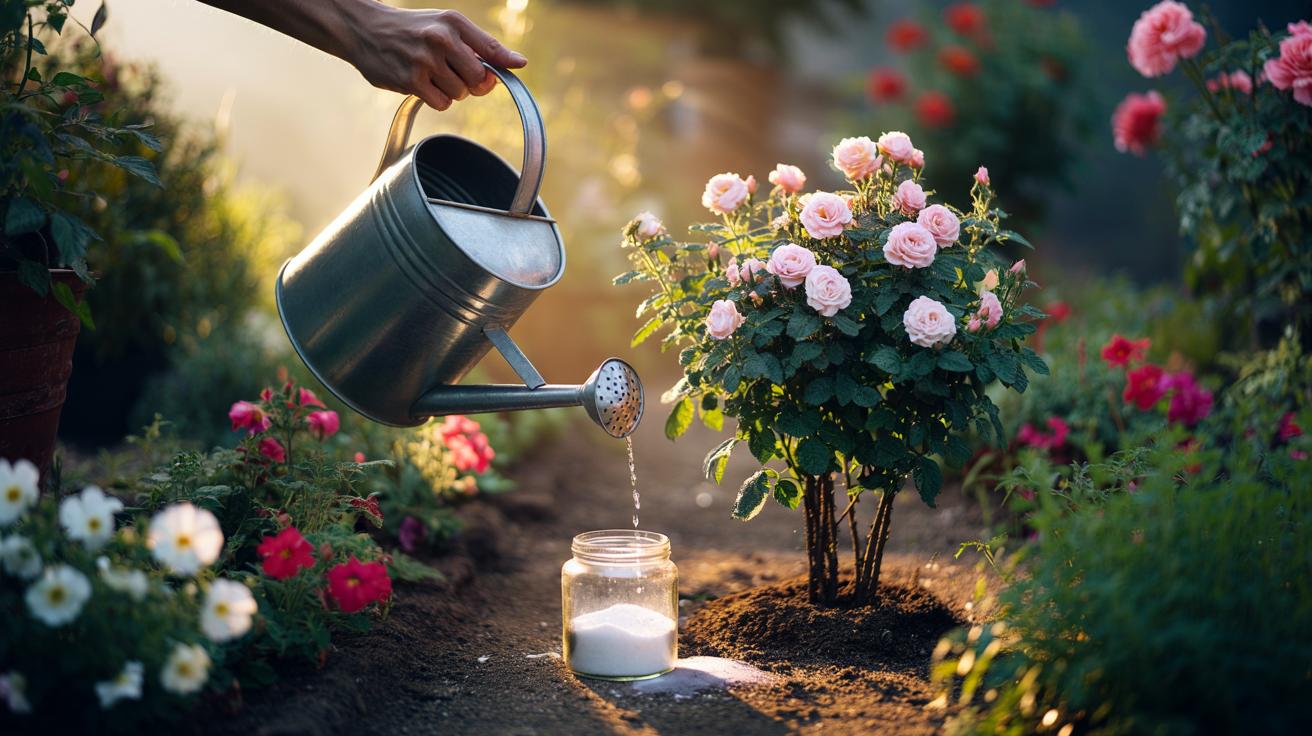
Start with a soil or media test to check magnesium status. If low, apply in small, regular doses during active growth and pre‑bloom. For beds, dissolve 1 tablespoon per 4 litres of water and drench around the drip line, monthly in season. For foliar feeding, use a lighter mix—about 1 tablespoon per 9 litres—sprayed on an overcast morning so leaves absorb rather than scorch. Containers, which leach quickly, may benefit from 1 teaspoon per litre in a watering can every 3–4 weeks. Always water beforehand if the substrate is dry.
Match timing to crop rhythm. Roses appreciate a boost as shoots lengthen in spring and after the first flush to support repeat bloom. Tomatoes and peppers respond around first truss set. Bedding plants prefer little and often. Avoid late‑autumn applications outdoors; plants can’t use the nutrients, and winter rain may wash them away. Observe leaves and buds. If colour deepens and bud count rises without tip burn, you’re in the sweet spot. Stop immediately if you see leaf scorch or a greyish salt crust on compost.
| Plant | Tell‑Tale Sign | Indicative Rate |
|---|---|---|
| Roses | Yellowing between veins on older leaves; fewer buds | 1 tbsp/4 L as soil drench monthly in season |
| Tomatoes/Peppers | Dull foliage; slow bud set on lower trusses | 1 tbsp/9 L foliar at first bloom, then 4–6 weeks later |
| Containers (petunias, geraniums) | Pale leaves after heavy watering; weak flowering | 1 tsp/L in watering can every 3–4 weeks |
Common Myths, Risks, and Realistic Expectations
Let’s puncture a myth: Epsom salt does not cure blossom end rot. That disorder stems from calcium shortfalls and irregular watering; adding magnesium can even worsen calcium uptake by competition at the root interface. Another misconception is that more Epsom salt equals more flowers. Excess magnesium can antagonise potassium and calcium, undermining exactly the turgor and petal strength you’re chasing. In containers, oversupply accumulates, raising electrical conductivity and stressing roots. Outdoors, it can leach, wasting money and nudging nutrients into waterways.
Be pragmatic. Use Epsom salt to correct a documented deficiency or where plant response clearly indicates one. Pair it with balanced feeding—adequate potash for bloom quality, modest nitrogen for steady growth, and micronutrients for resilience. In calcareous or magnesium‑rich soils, it’s rarely helpful; choose other levers such as irrigation timing, pruning, or cultivar selection. UK gardeners on hard water may already receive magnesium via limescale; in that case, a soil test is doubly important. For persistent problems, consider a slow‑release source like dolomitic lime in acidic beds, but only where pH permits.
The rule is simple: diagnose, dose lightly, observe, adjust. Targeted nutrition beats blanket treatments every time. Let plant tissues and bloom performance be your guide, not folklore or the size of the scoop.
Used with intent, Epsom salt can sharpen colour, strengthen stems, and support a generous flush of flowers, particularly where magnesium and sulfur are limiting. The key is precision: small amounts, right moments, clear goals, and careful observation. Blend it into a wider toolkit that includes soil testing, balanced fertilisers, mulch, and smart watering. That’s how you turn promise into petals that last. With your garden’s next bloom cycle approaching, where might a measured magnesium nudge make the most difference—and how will you test whether it truly pays off?
Did you like it?4.6/5 (23)