In a nutshell
- 🌱 Coffee grounds act as organic matter, improving soil structure, water retention, and feeding beneficial microbes; their available nitrogen is modest, and spent grounds are typically near neutral pH.
- ☕ Best practice is compost first: roughly 1 part grounds to 3 parts browns; as mulch, use a thin layer (<5 mm), or mix into potting media at up to 10% by volume to avoid caking.
- 🌸 Plants that respond well include blueberries, rhododendrons, camellias, azaleas, plus roses and heavy feeders like brassicas; apply lightly and consistently for steady benefits.
- ⚠️ Avoid thick, wet mats that block air; keep grounds away from seedlings and drought-adapted plants like succulents; manage pets exposure, and remember: little, mixed, and often beats one heavy dump.
- 🧪 Key specs: about 2% N, C:N around 20:1, pH ~6.5–6.8; composted grounds offer more available nutrients and are ideal for top-dressing and vermicomposting.
Britain runs on coffee, and our gardens can too. Every morning’s cafetière or espresso puck hides a small gift for the soil: organic matter, gentle nutrients, and a buffet for beneficial microbes. Used correctly, leftover grounds help sandy beds hold moisture, keep clay from clumping, and feed the life that makes roots hum with energy. They are not a magic potion. They are a steady, circular resource that keeps waste out of the bin and value in your borders. The trick is knowing when grounds nurture and when they smother. Here’s how to turn yesterday’s brew into today’s healthy, resilient soil.
What Coffee Grounds Add to Soil
Used coffee grounds deliver slow-release nitrogen (around 2% by dry weight) and modest traces of potassium, phosphorus, magnesium, and iron. That chemistry matters, but the real magic is physical. Grounds act as organic matter, improving crumb structure, aeration, and water-holding capacity while feeding bacteria and fungi that cycle nutrients. Worms drag the particles down; aggregates form; roots breathe. Contrary to a persistent myth, spent grounds are typically near neutral pH once brewed. They will not instantly acidify your beds. Any acidity tenders perceive often comes from the brew, not the spent grits. Think of grounds as a soil conditioner with a light nutritional bonus rather than a standalone fertiliser.
| Material | Total N (% dry) | C:N Ratio | Approx. pH | Best Use |
|---|---|---|---|---|
| Fresh Used Grounds | ~2.0 | ~20:1 | ~6.5–6.8 | Thin mulch; mix into compost; scratch lightly into beds |
| Composted Grounds | ~2.0–2.5 (more available) | ~12–15:1 | ~6.7 | Top-dress vegetables; blend into potting mixes up to 10% |
| Diluted Brewed Coffee | Traces | — | ~5.0–6.0 | Occasional soil drench for acid lovers at 1:3–1:4 dilution |
One caution: very fine particles can seal the surface if piled on thickly, limiting airflow and causing hydrophobic crusting. Spread thinly, mix well, or compost first. Do that, and you gain structure, life, and a steady nitrogen trickle that leafy plants appreciate.
Smart Ways to Apply Coffee Grounds
Compost them. That’s the safest, most flexible route. Aim for roughly one part coffee grounds to three parts carbon-rich “browns” (dry leaves, shredded cardboard). This balances the carbon-to-nitrogen ratio and keeps a pile from turning slimy. Grounds heat a heap nicely, speeding decomposition and boosting microbial diversity. In finished compost, their nitrogen is more available and any lingering caffeine or phenolics are mostly broken down. Black gold becomes richer still.
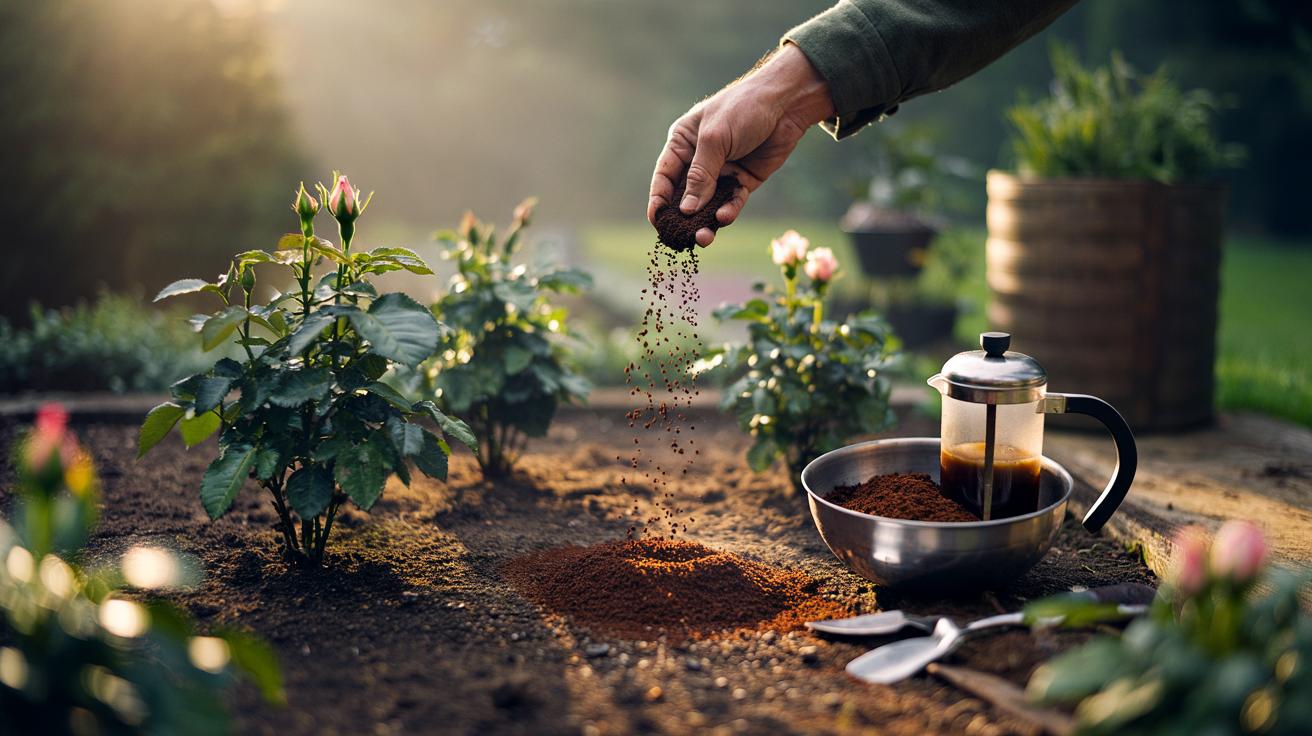
As a mulch, keep it thin. Think a dusting, not a duvet. A layer under 5 mm, scattered and then raked in, suppresses small weeds and feeds the soil without caking. Blend with bark fines or leaf mould to prevent mats. For containers, scratch in one to two tablespoons per 30 cm pot once a month and water well, or incorporate pre-composted grounds at up to 10% by volume when repotting. If you see white fuzz, relax: that’s usually saprophytic fungi doing useful work.
Worms love a coffee break, too. In vermicomposting bins, add thin, frequent handfuls and plenty of bedding. For lawns, sieve and top-dress lightly (about 1–2 kg per 10 m²) after aeration, then brush in. Never dump thick, wet mats; they starve roots of air. Quality over quantity wins every time.
Plants That Thrive—and Those That Don’t
Start with acid-leaning shrubs. Blueberries, rhododendrons, camellias, and azaleas appreciate the organic matter and trace minerals, especially when grounds are composted first or mixed with pine needle mulch. Roses respond to the steady nitrogen tickle; so do heavy feeders like brassicas, courgettes, and pumpkins once grounds are well incorporated. Leafy greens often show richer colour under a regime of thin, regular applications. Hydrangea flower colour won’t flip overnight with coffee alone, but improved soil biology can support more predictable results from your chosen amendments.
Go carefully with seedlings. Young roots are sensitive to any phytochemicals and to oxygen shortages at the surface. Keep coffee away from seed trays and freshly germinated plants. Root crops prefer a friable, open texture; if you’re working on carrots or parsnips, blend grounds into compost first rather than mulching the row. Succulents and cacti dislike persistent moisture and dense fines; they’re poor candidates for direct application.
Tomatoes divide opinion. Trials suggest heavy, fresh applications can slow growth; light, composted doses are generally fine. Watch and adjust. And one non-botanical warning: pets. Dogs are sometimes tempted by the smell, yet caffeine is harmful. Store buckets securely and bury or compost promptly. The rule of thumb stands: little, mixed, and often beats a single enthusiastic dump.
Leftover coffee grounds are not a silver bullet, but used wisely they’re a superb ally for healthier, more resilient soil. Feed the microbes, improve the structure, and let plants draw on a slow, steady trickle of nutrients while you cut kitchen waste. Think integration, not saturation. With a light hand and a compost bin, you’ll see richer tilth, happier roots, and fewer trips to the garden centre. What experiment will you try first: a thin mulch under the roses, a shot in the wormery, or a carefully balanced compost blend that powers next season’s veg?
Did you like it?4.5/5 (28)