In a nutshell
- 🌸 Epsom salt (magnesium sulfate) supplies magnesium and sulfur, boosting chlorophyll production, sugar transport, and pigment pathways (anthocyanins, carotenoids) for fuller petals and deeper colour.
- 🧴 Use as soil drench, foliar spray, or light top-dress; small, regular doses outperform heavy applications (e.g., 1 tbsp per 4–5 L), and always pair with a balanced fertiliser.
- 🌱 Best responses in sandy beds and containers where Mg leaches; showy results on roses, dahlias, petunias, lilies. Note: hydrangea hue depends on pH/aluminium, not magnesium.
- 🧪 Confirm need with a soil test and visual cues like interveinal chlorosis on older leaves; trial a bed or a few pots, then observe and adjust.
- ⚠️ Avoid overuse: excess Mg can antagonise calcium and potassium, raise salinity, and waste via leaching; don’t stack with dolomitic lime—space applications and retest.
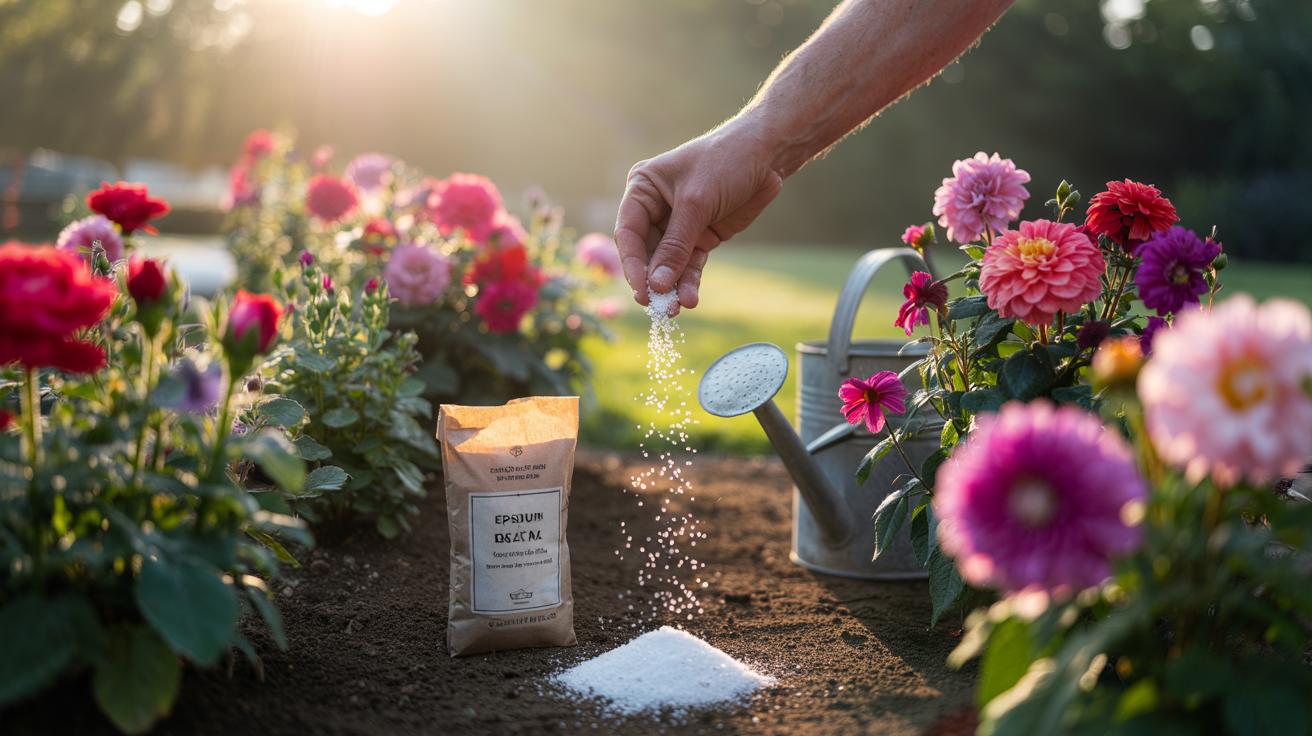
Gardeners swear by simple tricks that turn ordinary borders into show-stopping displays. One of the most talked-about is Epsom salt, the familiar household mineral known to chemists as magnesium sulfate. Used judiciously, it can encourage lusher foliage and, crucially, more generous, more vivid blooms. The promise is straightforward: better nutrition equals better flowers. Yet the magic lies in plant physiology, not folklore. Magnesium sits at the heart of chlorophyll, powering photosynthesis, while sulfur supports amino acids and fragrance compounds. When plants convert more sunlight into energy, they can channel resources into petal size, pigment synthesis, and flowering stamina. Here’s how, when, and why this mineral can make a visible difference in your flower beds.
Why Epsom Salt Boosts Petal Size and Colour
At its core, Epsom salt supplies two essentials: magnesium (Mg) and sulfur (S). Magnesium forms the central atom of chlorophyll; without it, leaves pale and photosynthesis falters. When plants make more energy, they can invest more in buds, petals, and pigments. That energy fuels pathways producing anthocyanins (reds, purples, blues) and carotenoids (yellows, oranges), deepening colour saturation. Sulfur, meanwhile, aids in enzyme reactions and in the formation of certain fragrance and defence compounds that keep tissues resilient.
Magnesium also influences phloem loading, helping sugars move from leaves to developing flowers. In practical terms, that means fuller petals, improved turgor, and less mid-bloom fade. Garden favourites such as roses, dahlias, petunias, and lilies often show the most dramatic response, especially in sandy or container media where Mg leaches quickly. Expect richer hues and steadier blooming where magnesium was previously marginal. One caveat: colour changes in hydrangeas are governed by pH and aluminium availability, not magnesium, so Epsom salt won’t turn pink blooms blue. What it can do is sustain vigorous leaves and steady flower set, the platform for any show of colour.
How to Use It: Dilution, Timing, and Methods
Getting the dose right matters. Small, regular applications outperform occasional heavy handouts. You can apply Epsom salt as a soil drench, a foliar spray, or a gentle top-dress. Always dissolve crystals fully in warm water before applying, and water afterwards if broadcasting granules onto soil. Pair it with balanced fertilisers rather than replacing them; magnesium is a supporting player, not the entire diet.
| Plant Type | When to Apply | Dilution/Rate | Notes |
|---|---|---|---|
| Roses (in-ground) | At leaf-out, pre-bud, mid-season | 1 tbsp per plant in 4–5 L water | Soil drench around dripline |
| Annual bedding (e.g., petunia) | Every 4–6 weeks | 1 tbsp per 4–5 L as foliar spray | Spray in cool hours; avoid flowers |
| Containers/hanging baskets | Monthly during peak growth | 1 tsp per 2 L watering can | Leaches faster in pots |
| Bulbs and tubers | Pre-plant and after flowering | 10–20 g per m² lightly worked in | Do not disturb roots in growth |
Watch for response over one or two cycles: greener leaves, firmer petals, more stable colour under strong sun. Foliar feeding can perk up plants quickly when a deficiency is suspected; soil drenches build reserves more steadily. If leaves already look deep green and growth is robust, do not escalate the dose. Excess magnesium can antagonise calcium and potassium uptake, undermining bloom quality. The rule is simple: start low, observe, adjust.
Evidence, Soil Tests, and Common Pitfalls
Not every border needs Epsom salt. Trials routinely show the biggest gains on magnesium-deficient soils—often light, sandy plots, peat-heavy potting mixes, or beds repeatedly fertilised with high-potassium feeds that nudge Mg out of balance. Classic deficiency signs include interveinal chlorosis on older leaves (yellowing between veins while veins remain green) and a general loss of gloss. Confirm with a soil test before committing to a programme. In the UK, many county soils sit comfortably for magnesium; in those, extra Mg rarely lifts blooms and can even depress other nutrients.
The pitfalls are predictable. Over-application lifts salinity and risks nutrient antagonism, dulling bloom longevity. Because magnesium sulfate is highly soluble, it can leach quickly—wasted money and potential runoff. Avoid stacking Epsom salt alongside dolomitic lime applications, which already supply magnesium; space interventions by a season and retest. In containers, modest monthly doses are preferable to strong weekly ones. Trial a single bed or a few pots first, compare to untreated controls, and let the plants tell the story. When the baseline is sound—good soil, balanced NPK, adequate water—magnesium becomes a fine tuner, sharpening colour and plumping petals without upsetting the mix.
Used with intent, Epsom salt is a smart, low-cost tool for gardeners chasing bolder colour and fuller petals. Think of it as precision tuning rather than a miracle fix: verify need, apply lightly, and watch for clear visual feedback. In responsive plants, blooms hold their shape longer, pigments read deeper, and beds feel better balanced through summer highs and late-season dips. The difference can be subtle at first and striking by the second flush. As you plan your next feeding cycle, where might a measured touch of magnesium help your flowers step from pleasant to unforgettable?
Did you like it?4.5/5 (22)