In a nutshell
- 🌱 Eggshells supply calcium carbonate that strengthens cell walls, stabilises membranes, supports root hairs, and helps prevent blossom end rot; because calcium is relatively immobile, new growth demands a steady supply and consistent watering.
- 🧰 Prep matters: rinse, dry, lightly bake (100–120°C, 10–15 min), then grind into fine eggshell powder for faster action; mix 1–2 tbsp per litre of potting mix or 50–100 g/m² into beds, and prioritise soil contact over “eggshell tea.”
- ⚗️ pH controls availability—shells dissolve slowly in neutral/alkaline soils but better in modest acidity; avoid using around acid-loving plants (blueberries, rhododendrons, camellias) and confirm with a simple soil test.
- 🔄 Myths and limits: shells aren’t an instant cure for blossom end rot or a reliable slug deterrent; they work best as a slow, sustainable amendment alongside compost, mulches, balanced feeding, and regular irrigation.
- 🧯 Right tool, right time: favour shells for tomatoes, peppers, aubergines, and brassicas in leached, slightly acidic soils; choose gypsum for calcium without raising pH, and garden lime when purposeful liming is needed.
There’s a quiet powerhouse sitting in your kitchen caddy. Eggshells, often binned without a thought, can become a free, long‑acting soil tonic that supports sturdier stems, resilient roots, and healthier harvests. The trick is all in the calcium—specifically calcium carbonate—which builds plant structure and steadies nutrient flows. Used well, shells help prevent disorders like blossom end rot in tomatoes and strengthen new growth in a way synthetic feeds can’t easily mimic. Turn waste into worth: a small ritual of rinsing, drying, and grinding transforms yesterday’s breakfast into tomorrow’s bumper crop. It’s simple. It’s circular. And yes, it’s surprisingly effective.
Why Calcium Matters for Plant Health
Calcium is the mason of plant anatomy. It binds cell walls via calcium pectate, creating tissues that resist splitting, weather, and disease ingress. It stabilises cell membranes, aids root hair development, and supports the actively growing tips—where deficiencies first bite. Because calcium moves chiefly in the xylem with water, it’s classed as relatively immobile; once set in older tissues, it can’t easily be redirected to new leaves. That’s why distorted new growth or blackened fruit ends appear even when the rest of the plant looks fine. New tissues suffer first.
Beyond structure, calcium influences nutrient balance and stress signalling. It moderates sodium and heavy metal uptake, so plants cope better with salinity and urban soils. It also improves pollination success in some crops by strengthening pollen tube formation. On the allotment, this translates as fewer split tomatoes, firmer brassica heads, sturdier peppers. Yet there’s a catch: calcium availability depends on moisture and pH. Irregular watering can trigger blossom end rot even in calcium‑rich soils, while very acidic conditions reduce access. Think of calcium not just as a nutrient, but as a system stabiliser.
From Breakfast to Bedrock: Preparing Eggshells Properly
Good results start with good preparation. Rinse shells to remove residues, then air‑dry on a tray. For hygiene—and faster breakdown—bake at 100–120°C for 10–15 minutes; the heat makes shells brittle and safe to grind. Pulverise to a fine powder with a rolling pin, mortar and pestle, or a dedicated coffee grinder. Powder matters: the finer the particle, the greater the surface area, the quicker the reaction in soil. Coarse flakes can sit unchanged for years; powder begins working within weeks in active, slightly acidic conditions.
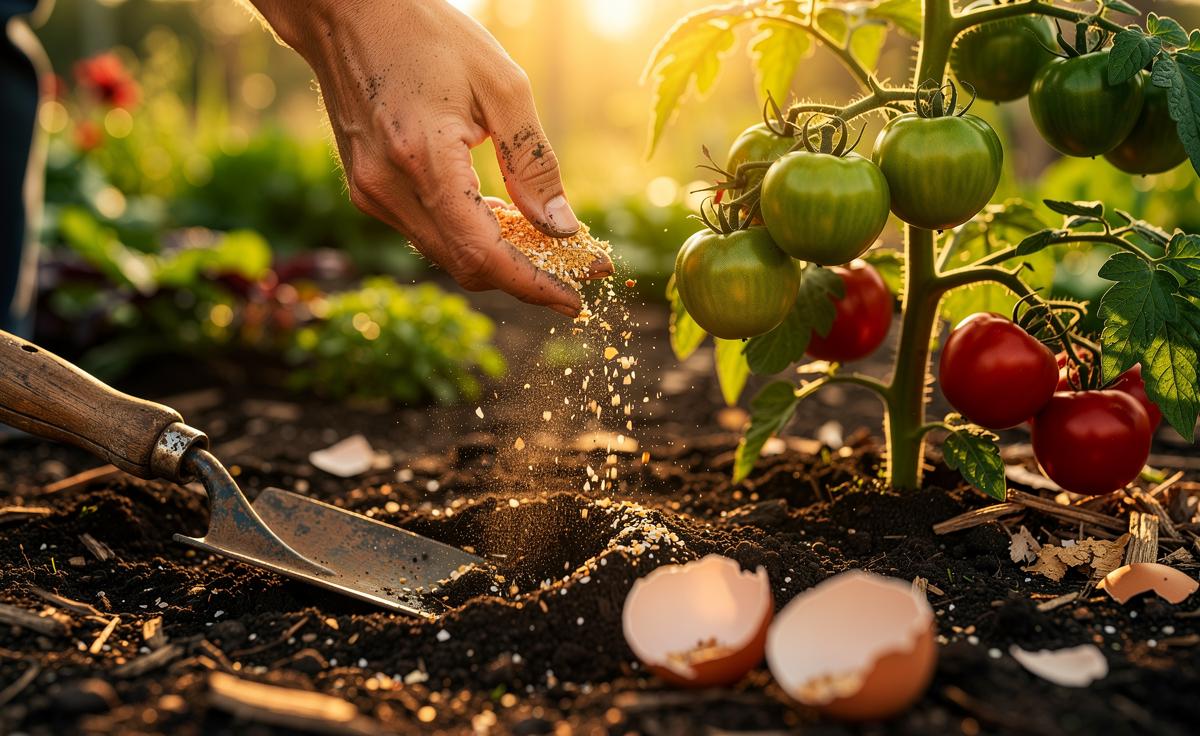
How to use it? For containers, blend 1–2 tablespoons of shell powder per litre of potting mix before planting. For borders, work 50–100 g per square metre into the top 5–10 cm of soil, or add a small handful in each tomato, pepper, or aubergine hole. Side‑dress perennials in spring and again mid‑season. Shells in compost accelerate once paired with acids from decomposing greens; worm bins relish the grit. The so‑called “eggshell tea” gives only a mild lift unless you use a fine powder and warm, slightly acidic water. Soil contact beats soak water.
For seedlings, a pinch of dusted shells acts as gentle liming and provides grit that improves drainage. Just avoid overdoing it in alkaline mixes. A light hand wins.
PH, Solubility, and Common Myths
Eggshells are overwhelmingly calcium carbonate. In chemistry terms, that means low solubility in neutral or alkaline soils, but far better dissolution where pH is modestly acidic. If your bed is already chalky, shells won’t release much, and their liming effect—though mild—nudges pH upwards. That’s helpful for sour soils that sap brassicas, but not for acid‑loving plants such as blueberries, rhododendrons, and camellias. Know your pH before you scatter shells. A simple soil test saves seasons of guesswork and prevents creeping alkalinity in sensitive beds.
Now the myths. No, shells aren’t an instant cure for blossom end rot; inconsistent watering and rapid growth spurts are often the main culprits. Shell rings rarely deter slugs for long, especially after rain. Whole or chunky shells decompose at a glacial pace. The solution is precision: grind very fine, apply early, and manage moisture. Eggshells are a slow, sustainable amendment—not a quick fix. When used alongside compost, mulches, and regular irrigation, they become part of a resilient system that quietly keeps tissues strong and fruiting steady.
When to Use Eggshells—and When to Choose Alternatives
Use shells where crops crave steady calcium and soils lean acidic: tomatoes, peppers, aubergines, brassicas, and cucurbits in containers or beds that have seen heavy rain and leaching. Blend into seed composts that tend to go sour, or add during bed preparation well before flowering. If your soil already tests high in calcium or sits above pH 7.5, prioritise moisture management and balanced feeding instead. Match the amendment to the soil, not the folklore. When faster or pH‑neutral calcium is needed, alternatives may serve better.
| Material | Main Nutrient | Solubility/Release | pH Effect | Best Use |
|---|---|---|---|---|
| Eggshell Powder | Calcium carbonate | Slow; faster if finely ground | Slightly raises pH | Acidic soils; pre‑planting tomatoes and brassicas |
| Gypsum (calcium sulphate) | Calcium + sulphur | Moderate, more available | Neutral effect | Alkaline soils needing calcium without liming |
| Garden Lime | Calcium carbonate | Moderate | Raises pH noticeably | Correcting acidity, clubroot prevention in brassicas |
Practical tip: for container tomatoes on peat‑free mixes, combine shell powder with a steady watering regime, balanced feed (not just high potassium), and a surface mulch to stabilise moisture. For alkaline clay, pick gypsum. For very acid beds, lime first, then add organic matter; reserve shells as a gentle top‑up. Strategy beats scatter.
Turning eggshells into a soil improver brings the kitchen and the garden into a neat loop: less waste, stronger plants, more reliable crops. The science is simple—calcium strengthens cell walls and steadies growth—but the craft lies in grinding fine, applying early, and watering well. Small rituals, big returns. Next time you crack an egg, think roots, not rubbish. If you tested your soil tomorrow, where would a teaspoon of powdered shell make the most difference in your garden—or your windowsill pots?
Did you like it?4.5/5 (20)