In a nutshell
- 🌱 Used tea nourishes soil microbes and improves structure and moisture retention; nutrients are modest, acting as a gentle, slow-release tonic.
- 🫖 Apply as a diluted tea drench (1:3 with water) or add leaves to compost/wormeries; use small, regular amounts for best results.
- 🌸 Best for acid-loving plants (azaleas, blueberries, camellias); go light or avoid with lime-loving herbs and brassicas; consider soil pH.
- ♻️ Split bags and compost only leaves; choose plastic-free bags or loose-leaf; never add milk or sugar to prevent mould and pests.
- ⚠️ Myths debunked: tea isn’t a high-nitrogen fertiliser; caffeine risks are minimal at household levels—watch containers, cover leaves, and moderate frequency.
Britain’s love affair with tea leaves a daily by-product hiding in plain sight: a mild, slow-release plant feed. Instead of tossing damp bags in the bin, gardeners are turning to leftover tea to enrich borders, pots, and compost heaps. It’s frugal. It’s easy. It’s part of a circular, low-waste routine that slots neatly into any allotment or balcony garden. Used tea can improve soil structure, feed microbes, and nudge acidity for choosy plants. With a few sensible precautions, yesterday’s brew becomes today’s boost, supporting healthier growth without pricey inputs or synthetic fertilisers. Here’s how to make your cuppa work twice—first for you, then for your soil.
How Tea Feeds Soil Life
At its core, tea is organic matter. When you add used leaves to soil or compost, you’re delivering a buffet for beneficial microbes. Those organisms break down the material into humus, improving structure and water retention. That matters in dry spells. It also matters after heavy rain, when better crumb structure helps roots breathe. Tea contains small amounts of nitrogen, phosphorus, and potassium, plus traces of calcium, magnesium, and manganese. Not a miracle dose, but a gentle, sustained release that complements compost and mulches. The real magic is microbial: feed the soil life, and the soil life feeds your plants.
Tea’s tannins and polyphenols also play a role. In modest amounts, they can subtly lower pH near the application zone, suiting acid-leaning ornamentals. They complex with minerals too, helping lock nutrients into the soil matrix where roots can tap them over time. Spent leaves, textured and fibrous, help sandy soils hold moisture a bit longer; in heavier clays, they can fluff compacted layers when mixed with other organics. Think of tea as a seasoning rather than a main course. Used thoughtfully, it rounds out a soil diet already rich in compost, leaf mould, and well-rotted manure.
What about caffeine? In large, repeated doses it can discourage some seedlings, but normal household volumes are minimal once diluted by soil or mixed into a compost heap. As tea decomposes, caffeine levels drop. The upshot: in realistic garden use, the benefits of organic matter and microbe food overshadow any downsides. Still, moderation wins. Rotate inputs, keep a varied compost, and let roots enjoy a balanced plate.
Which Plants Benefit, and Which Don’t
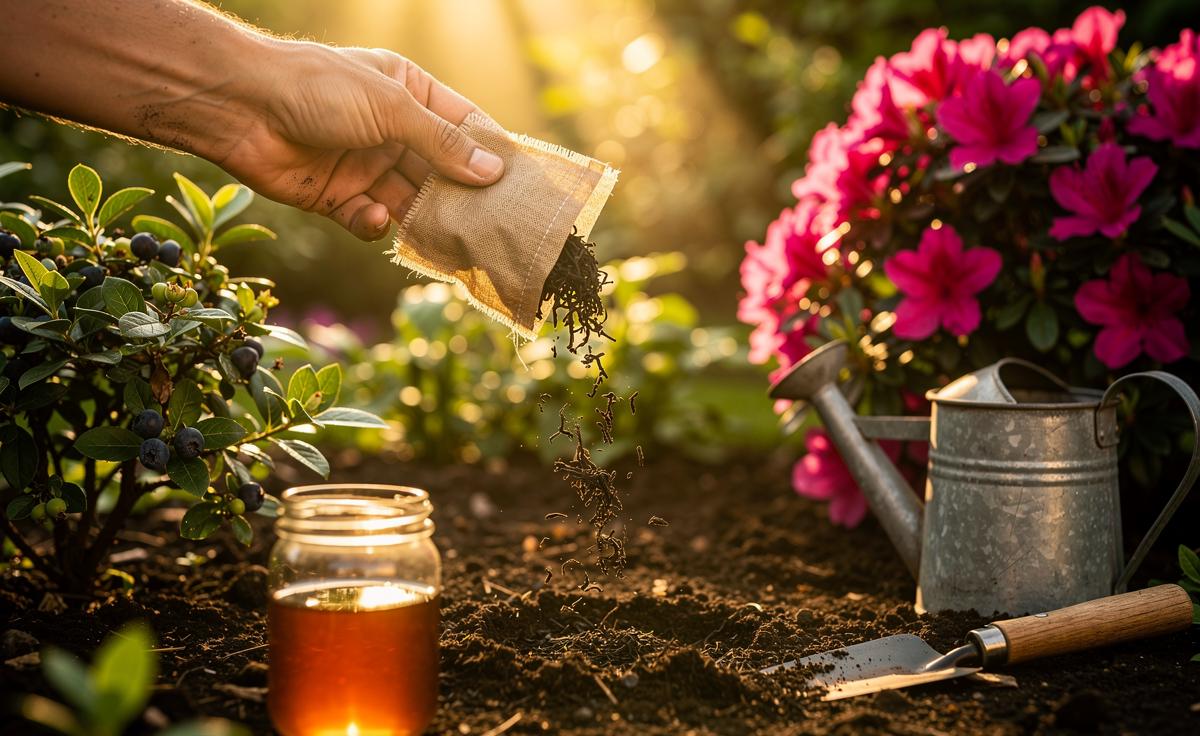
Acid lovers are first in the queue. Azaleas, rhododendrons, blueberries, camellias, pieris, heathers, and many ferns appreciate the slight acidifying nudge around their root zones. Roses and tomatoes won’t complain about the organic matter either, provided the soil isn’t pushed too acidic. In neutral beds, a light sprinkle worked in at the surface or an occasional tea-water drench is ample. When in doubt, test your soil pH before piling on the leaves. If your patch already skews sour, rely more on compost and leaf mould than tea.
| Tea Type | Likely Effect | Best For | Notes |
|---|---|---|---|
| Black tea | Mild acidifying | Azaleas, blueberries, camellias | Good general soil conditioner |
| Green tea | Mild acidifying, lighter | Ferns, houseplants that like slightly acidic media | Use sparingly as a drench |
| Herbal “teas” | Variable, often neutral | General soil addition | Check ingredients; avoid added sugars |
Go slow with lime-loving species. Many brassicas, lavender, and some Mediterranean herbs prefer neutral to slightly alkaline conditions. They won’t thank you for repeated acidic inputs. Houseplants can benefit, but small pots magnify mistakes; a thin layer of cooled, diluted tea every few weeks is plenty. Never pour milky, sugary tea onto soil—dairy and sugar invite mould, smells, and fungus gnats. As for the bag itself, many brands still use heat-sealed polypropylene; split the bag and compost only the leaves, binning the mesh if it’s not clearly plastic-free.
Safe Methods: From Fresh Brew to Compost
The simplest method is a tea drench. Brew your cuppa as usual, then when it cools, dilute one part tea to three parts water. Apply to moist soil, not bone-dry pots, to help spread nutrients evenly. Repeat every two to four weeks in the growing season. Err on the lighter side for seedlings. Think of tea as a tonic, not a substitute for balanced feeding. For mulching, tear open cooled bags and scatter the leaves thinly under shrubs, then cover with compost or bark to keep them from drying into a crust.
Composting is even easier. Toss spent leaves into your heap as a green input, balancing with browns like shredded cardboard or autumn leaves. Their moisture wakes up the pile, and the fine texture integrates quickly. In a wormery, tea is a modest, welcome snack—again, without milk or sugar. Rotate with kitchen veg scraps to avoid clumping. If you use loose-leaf tea, even better: no bag material to worry about. For bagged tea, check packaging for “plastic-free,” “compostable,” or PLA-based fibres; when uncertain, empty the contents and discard the casing.
Trouble preventing? Keep it tidy. Rinse out mugs so no dairy slips in. Don’t bury intact bags whole; split them so the contents contact microbes. Stop if you see mould mats on pot surfaces, then fluff the soil and reduce frequency. Small, regular additions outperform occasional dumps that overwhelm the system. And remember rain timing: applying before a steady shower helps wash the goodness down to the roots without leaching it away in a deluge.
Troubleshooting and Myths
Worried about pests? Fungus gnats love consistently damp, sugary conditions, not plain tea leaves. Let the top centimetre of potting mix dry between waterings and cover freshly added leaves with compost. If a musty smell develops, you’ve added too much too quickly; remove the surface layer and start again at half-rate. Moderation and coverage solve most tea-related hiccups in containers. In open beds, incorporate lightly with a hand fork to avoid mats that shed water.
One persistent myth claims tea is a high-nitrogen fertiliser. It isn’t. Nutrients are present but modest; the main win is improved soil biology and structure. Another concern is caffeine toxicity. In lab settings at high concentrations, yes; in garden reality with normal household volumes and composting, the risk is negligible. If you brew intensely strong tea daily and garden in tiny pots, dilute more and alternate with plain water. Watch pH-sensitive crops and use a cheap soil test once a season if you’re curious.
Finally, packaging. Some bags shed microplastics; others, made with plant-based fibres, break down. Check your brand’s sustainability page, and when in doubt, liberate the leaves and bin the rest. The cleanest route is loose-leaf tea paired with a simple compost routine. Treat tea as part of a broader resource loop—kitchen scraps, leaf mould, grass clippings—and you’ll see healthier tilth, calmer watering, and subtly happier plants without chasing bottled feeds.
Turn your daily brew into practical soil care and you’ll trim waste while nudging the garden towards resilience. The gains are not flashy, but they accumulate: better structure, steadier moisture, and a livelier underground community. Pair tea with regular composting and thoughtful mulching, and fertiliser bills usually shrink. The rule is simple: little and often, and no milk or sugar. Ready to set a caddy by the sink and give your borders a sip as well as a soak—what plant will you treat first, and how will you gauge the difference over the season?
Did you like it?4.5/5 (22)