In a nutshell
- 🌿 The science: aquarium bacteria convert ammonia into plant-ready nitrate, delivering a fast, gentle feed with added phosphorus, potassium, and micronutrients for stronger flavour and quicker growth.
- 💧 How to use: choose established freshwater tank water; dilute 1:1 for basil, coriander, and chives, and 1:2–1:3 for thyme, rosemary, and sage; feed every 7–14 days in summer, less in winter.
- ⚠️ Safety first: never use medicated, salted, or foul-smelling water; let pots drain fully to avoid root suffocation; watch for signs of overfeeding like floppy, overly lush leaves.
- ♻️ Benefits and pitfalls: enjoy resource efficiency and richer aromas while avoiding issues like algae, fungus gnats, or pH swings by keeping compost free-draining and light levels appropriate.
- 🔁 Mini aquaponics mindset: test with strips, aiming for 20–50 mg/L nitrate; pair feeds with pruning; choose containers wisely (terracotta breathes, plastic retains) and consider bottom-watering for clean, targeted nutrition.
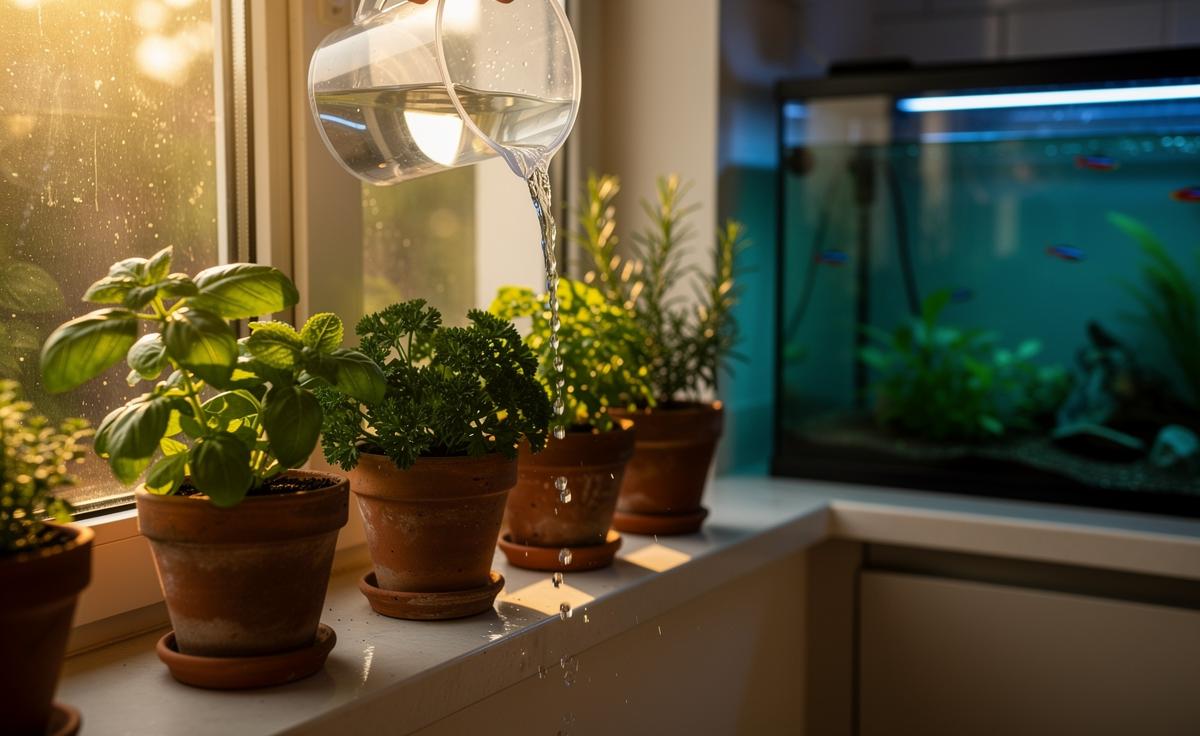
Pouring used aquarium water onto a pot of basil feels almost cheeky. Free plant food, kindly supplied by fish. Yet the practice is grounded in real biology, not whimsy. When you fertilise herbs with fish tank water, you’re delivering a cocktail of nitrate, phosphorus, potassium, and trace minerals formed by the aquarium’s living ecosystem. The result can be startling: tighter internodes, punchier flavour, accelerated leafing. It’s circular, thrifty, and kinder to waterways than synthetic salts. Think of it as a pocket-sized form of aquaponics adapted for windowsills and patios. Done right, your herbs respond quickly. Done poorly, they sulk. Here’s how to make the most of that nutrient-rich water without stressing plants or fish.
The Science Behind Nutrient-Rich Aquarium Water
Fish excrete ammonia. Left unchecked, it’s toxic. In a healthy tank, colonies of beneficial bacteria convert ammonia to nitrite, then to nitrate through the nitrogen cycle. Plants love nitrate because it’s instantly usable; no energy-intensive conversion required. That’s the crux of the speed you’ll notice when feeding herbs with aquarium water. Alongside nitrogen, you’ll find dissolved phosphorus and potassium from fish food, plus micronutrients such as iron, calcium, and magnesium that underpin chlorophyll production and enzyme function. Nitrate delivered in solution gets to work faster than slow-release granules buried in compost.
The water also carries humic substances, carbonates, and microbial life that can subtly improve soil structure and root health. A mature tank’s pH typically sits near neutral, which suits many culinary herbs. Basil, parsley, and mint respond vigorously to this gentle nutrient stream, producing lush foliage without the salt shock sometimes linked to aggressive fertilisers. Woody Mediterranean species like rosemary and thyme prefer leaner feeds, yet still benefit from a light drench during active growth. The takeaway is simple: bioavailable nutrients plus biological complexity equal quicker, more resilient herb growth in everyday containers.
How to Use Fish Tank Water for Herbs
Start with water from an established, freshwater aquarium. Avoid marine tanks, and skip very new setups that haven’t cycled. Apply the water after your routine partial water change, when nutrients are highest. For soft-leaved herbs such as basil, coriander, and chives, a dilution ratio of 1:1 (one part tank water to one part plain water) is usually ideal. For thyme, rosemary, and sage, go milder: 1:2 or 1:3. Water the soil thoroughly, then let the pot drain fully. Do not allow pots to sit in nutrient-rich runoff, which can suffocate roots.
Frequency matters. In spring and summer, feed every 7–14 days, syncing with pruning to prevent legginess. In winter, reduce to once a month unless you’re under grow lights. If your tank runs high nitrate (above 60–80 mg/L), extend dilution and intervals. Watch the foliage: rich green and steady growth signal success; dark, floppy, or overly lush leaves hint at overfeeding. Never use aquarium water treated with medications, algicides, or salt—those residues can burn herbs.
| Herb | Suggested Dilution | Feed Interval | Notes |
|---|---|---|---|
| Basil | 1:1 | 7–10 days | Responds quickly; pinch tips for bushiness |
| Mint | 1:1 | 7–14 days | Keep contained; vigorous feeder |
| Parsley | 1:1–1:2 | 10–14 days | Likes steady moisture |
| Thyme | 1:2–1:3 | 14–21 days | Low-input; avoid soggy compost |
| Rosemary | 1:2–1:3 | 14–21 days | Well-drained, sandy mix preferred |
Practical Benefits and Common Pitfalls to Avoid
There’s elegant economy here. You save mains water, reduce reliance on synthetic feeds, and close a nutrient loop in your household. Resource efficiency is the quiet headline. Herbs benefit from a diverse mineral profile that shop-bought fertilisers sometimes miss, and you’ll notice stronger aromas—a sign of robust secondary metabolism. The practice also nudges you into a rhythm: water change, herb feed, tidy trim, repeat. Small rituals, big gains.
But caution keeps the gains coming. Overfeeding encourages soft growth that slumps under low light. Anaerobic, foul-smelling aquarium water signals filter trouble—don’t use it. If you have a water softener, bypass it for top-ups; sodium is tough on plants. Never pour water dosed with fish medications or salt onto edibles. Rinse canisters and buckets used for chemicals separately. Watch for fungus gnats if pots stay wet; gravel mulch helps. Tap pH extremes can combine with tank water to skew the root-zone; compost with added buffering (like crushed grit or biochar) steadies conditions. One last check: if algae blooms on soil, you’re feeding too often or leaving light on the surface—adjust both.
From Aquarium to Windowsill: A Mini Aquaponics Mindset
Treat your kitchen herb shelf as an offshoot of the tank. That shift unlocks consistency. Test strips reveal nitrate and pH in seconds; aim for 20–50 mg/L nitrate going into most herbs, diluting more for woody species. Pair feed days with pruning, then use the trimmings in dinner—culinary feedback is honest and instant. In bright months, increase frequency; in dim British winters, throttle back and prioritise light. Light drives demand for nutrients; starved photons make even perfect feed schedules underperform.
Container choices matter. Free-draining mixes with added perlite prevent compaction under repeated liquid feeds. Terracotta breathes, lowering rot risk, while plastic holds moisture for thirsty mint. If odour is a worry, bottom-water by standing the pot in a tray of diluted tank water for ten minutes, then discard leftovers. That keeps leaves clean and nutrients targeted at roots. Over time, you’ll notice fewer yellowing leaves, tighter growth habit, and a subtle intensification of flavour oils—classic signs your aquarium-to-herb loop is humming.
Reusing fish tank water to feed herbs is a small domestic revolution: thrifty, scientific, and surprisingly effective. By delivering bioavailable nutrients in a gentle stream, you unlock faster growth, richer flavour, and a cleaner conscience about waste. Stick to safe sources, sensible dilution, and a rhythm that suits your light levels, and you’ll see the difference within a fortnight. Your fish won’t mind; your basil will cheer. Ready to turn water changes into harvests—and what tweaks will you try first to tailor the routine to your own windowsill ecosystem?
Did you like it?4.3/5 (24)