In a nutshell
- 🌱 Eggshells are ~95% calcium carbonate, acting as a gentle liming agent that releases calcium slowly, strengthens cell walls and root tips, and delivers cumulative benefits over months.
- 🧪 Best practice: rinse, dry, and lightly bake (100–120°C), then grind fine; apply 1–2 cups per m² in beds or 1–2 tbsp per 10 L pot—greater surface area accelerates the slow-release effect.
- 🧱 Physical perks: improves soil structure and provides worm grit; powder breaks down in months, fine grit in 1–2 years, and coarse pieces over several years, with mild pH buffering.
- 🍅 Realistic limits: supports tomatoes, peppers, and brassicas but won’t instantly cure blossom-end rot; severely acidic soils still need proper liming after a soil test; slug-barrier claims are unreliable.
- ♻️ Integrate shells with compost, leaf mould, and mulches as part of a broader soil-care routine—a sustainable, low-cost way to recycle kitchen waste and enrich soil over time.
Kitchen waste rarely feels like a breakthrough for the border, yet eggshells come close. Crushed or powdered, they return minerals to the ground in a way that’s steady, modest, and surprisingly helpful for structure. Unlike quick-acting fertilisers, shells work slowly, easing into the soil’s life as microbes and moisture do their work. That makes them a good fit for home gardeners seeking low-cost, low-impact care. Think of eggshells as a long-game soil conditioner rather than a silver bullet. Used well, they support healthier roots, fewer calcium-related disorders, and less waste in the bin. Here’s what truly happens when shells meet soil, and how to get the most from them.
Why Eggshells Enrich Soil Over Time
Eggshells are roughly 95% calcium carbonate with trace magnesium, phosphorus, and organic matrix proteins. Calcium carbonate behaves like a gentle liming agent. In acidic conditions it slowly dissolves, releasing calcium into the soil solution while nudging pH upwards. That shift is not dramatic. It’s gradual, moderated by rain, carbon dioxide, root exudates, and microbial activity. The result is a subtle, cumulative benefit. Plants rely on calcium for cell walls, strong root tips, and orderly nutrient transport. When calcium is steadily available, tissues are tougher and less prone to physiological blemishes.
There’s also a physical effect. Coarser shell fragments act like a light, mineral grit, increasing porosity in heavy soils and helping sandy beds hold structure. Earthworms will ingest fine shell particles as grit, aiding digestion and leaving enriched casts. However, release rates hinge on surface area. Powder exposes far more reactive sites than chunky shards. Crush shells well if you want noticeable results in the same season; leave them coarse if you’re happy to build soil over years. Expect the chemistry to unfold over months, not days, especially in cool or dry conditions where dissolution slows.
Preparing and Applying Eggshells the Right Way
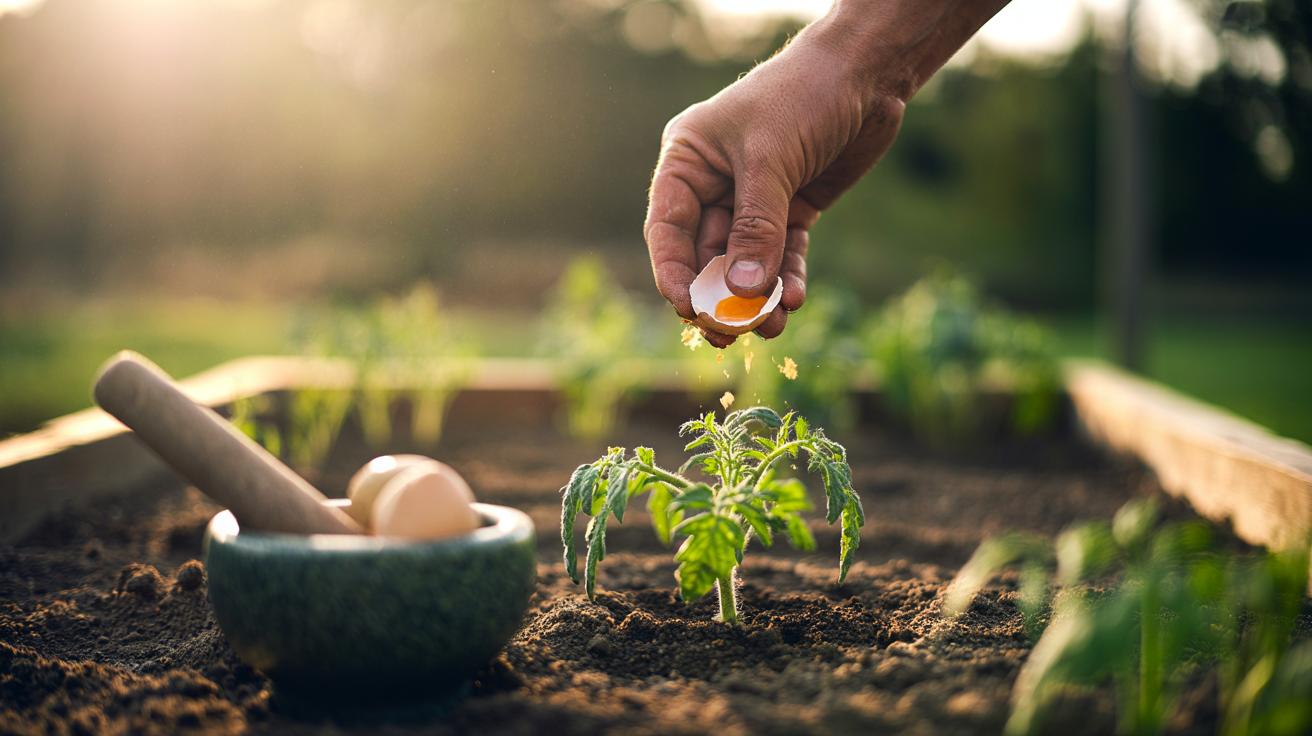
Rinse shells to remove residues, then dry them thoroughly. A brief bake on a tray at about 100–120°C speeds drying, makes them brittle, and reduces odours. Once crisp, grind to a fine meal with a rolling pin, blender, or mortar. The finer the grind, the faster the slow-release calcium becomes accessible. For beds, mix roughly one to two cups of shell powder per square metre into the top 5–8 cm of soil, ideally before rain or watering. For containers, add a tablespoon or two per 10-litre pot when making a mix, or work a teaspoon into the surface between crops.
You can tuck a small handful in planting holes for tomatoes, peppers, brassicas, and roses, but don’t expect instant rescue from issues such as blossom-end rot; consistent watering and overall soil health matter more. Shell “tea” contributes very little unless acidified, which risks overdoing it—skip the gimmicks. In compost, shells raise pH slightly and add long-term minerals; crush first to avoid recognisable flakes lingering for years. Clean, dry, and finely crushed: that simple trio determines how well eggshells will perform in your soil.
| Form | Breakdown Time | Main Effects | Best Uses |
|---|---|---|---|
| Powder | Months | Quickest calcium release, mild pH buffering | Beds, potting mixes, planting holes |
| Fine grit | 1–2 years | Steady release, improves texture, worm grit | Compost, borders, mulches |
| Crushed pieces | Several years | Very slow release, structural amendment | Long-term soil conditioning |
What to Expect in the Garden: Benefits and Limits
Done properly, shells help maintain soil pH in the slightly acidic-to-neutral range many edibles prefer, and they provide a reliable calcium trickle that supports firm fruit and resilient foliage. Beds gain a touch of friability; compost heaps gain a modest buffer. Tomatoes and courgettes, often accused of calcium hunger, benefit indirectly because improved structure and steady moisture make calcium actually reach their tissues. Yet there are limits. Severely acidic soils still require proper liming based on a soil test. Shells are too mild and too slow to correct large deficits alone.
What about pests? Crushed shells as a slug barrier are unreliable; sharpness blunts under rain and growth. Copper tape or beer traps work better. Similarly, don’t rely on shells to “fix” blossom-end rot mid-season; it’s commonly a water transport issue, not a simple shortage of calcium in soil. Pair shells with rich homemade compost, leaf mould, and mulches to stabilise moisture and feed the microbial web. Think integration, not isolation: eggshells shine as part of a broader soil-care routine. Above all, give time. The real gains appear across seasons, shaping a soil that quietly supports plants rather than promising overnight miracles.
Used thoughtfully, eggshells turn a household leftover into a slow, steady investment in living soil. They won’t transform a plot overnight, yet they will lift structure, temper acidity, and supply calcium in a way that aligns with nature’s pace. That thriftiness matters in a cost-of-living squeeze, and the sustainability story is strong: fewer inputs, less waste, healthier beds. So, will you start saving, drying, and grinding those shells—then watch what a year or two of patient, mineral-rich care can do for your garden’s soil? What experiment will you try first?
Did you like it?4.5/5 (21)