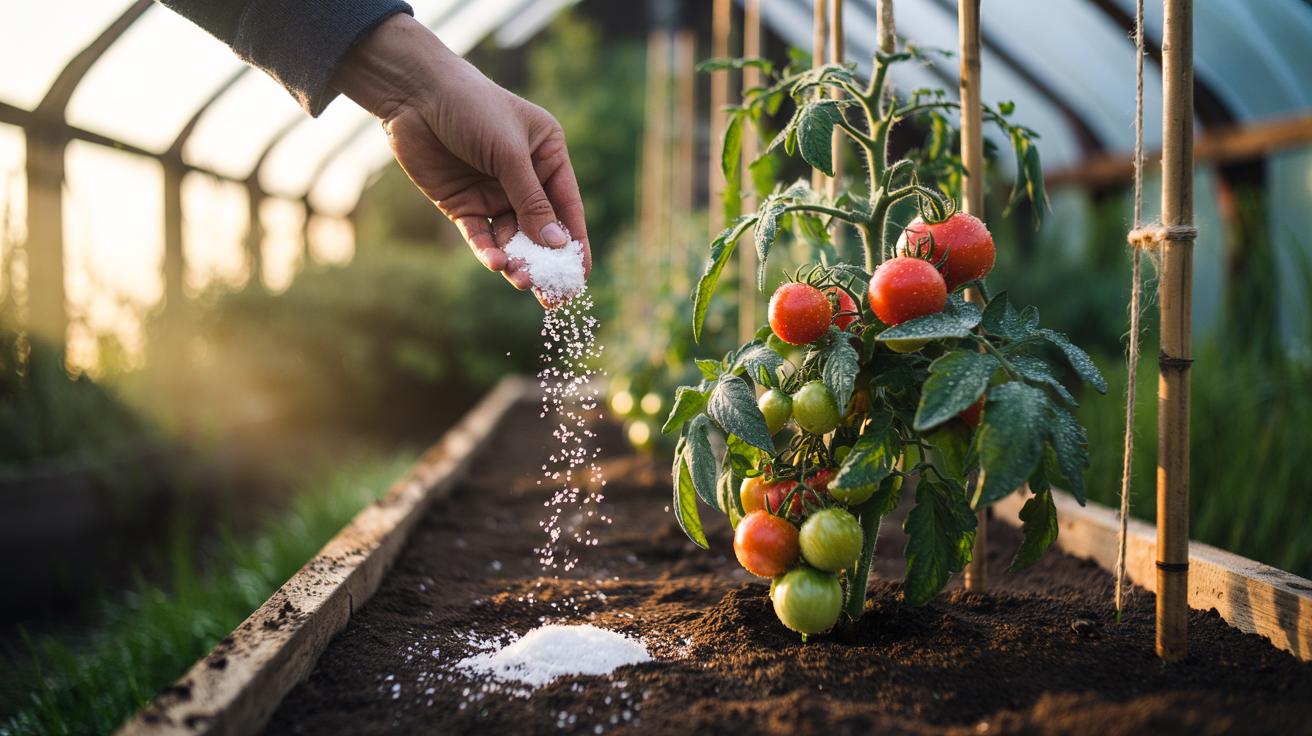
In a nutshell
- 🍅 Epsom salt is magnesium sulphate; correcting magnesium deficiency boosts chlorophyll, photosynthesis and can speed tomato growth, but it’s not a universal tonic.
- ⚗️ Works best in sandy soils, containers, and when heavy potash feeds cause lockout; look for interveinal yellowing on older leaves as the key symptom.
- 🧪 Apply safely: 1–2 tbsp at planting, or 1 tbsp per 5 L as a soil drench every 3–4 weeks; foliar sprays at the same rate; avoid overuse and note it won’t fix blossom end rot.
- 🔍 Expect greener leaves and steadier trusses within a week; if there’s no response, test the soil and check for issues like cold, nitrogen shortage, or watering errors before adding more.
- 🌿 Real speed comes from warmth, strong light, even watering, phased feeding (switch to higher potash after first truss), generous spacing, and large containers—Epsom salt is just one precise lever.
Tomato growers love a shortcut. Few hacks inspire more debate than sprinkling Epsom salt around your vines to make them grow faster. The promise sounds bold: greener leaves, speedier trusses, richer fruit. There is real science behind the trick, but also caveats worth your compost. Epsom salt is simply magnesium sulphate. If your soil or potting mix is low in magnesium, a light touch can turbocharge photosynthesis and correct yellowing that slows growth. If your beds are already balanced, it does little—and too much can backfire. Here’s how to use it smartly, the evidence behind the claims, and when to leave the bag on the shelf.
What Epsom Salt Actually Does for Tomatoes
Magnesium sits at the heart of chlorophyll. More chlorophyll means a bigger solar panel, so plants fix more energy and push new growth faster. That’s the core of the Epsom salt argument: supply the element that powers the plant’s engine. The “salt” part, sulphate, also matters. Sulphur supports amino acid formation and enzyme activity, helping tomatoes process nitrogen efficiently and build sturdy, productive tissue. In short, it’s the chemistry behind the “magic”.
When do tomatoes run short? In sandy beds, containers, and raised planters where nutrients leach quickly. Also where high-potash tomato feeds are used aggressively, because potassium can block magnesium uptake. You’ll see magnesium deficiency as interveinal yellowing on older leaves while veins remain green; growth slows, flowers drop, and fruit set lags. Apply Epsom salt there and leaves often green within days, restoring momentum.
Equally important is what Epsom salt does not do. It will not cure blossom end rot—that’s primarily a calcium and watering consistency issue. Nor will it correct poor light or cold nights. Epsom salt is near-neutral in pH and very soluble, which makes it fast-acting but also easy to overdo. Think seasoning, not a main course.
How to Apply It Safely and Effectively
Use Epsom salt as a precision tool. At planting, mix 1–2 tablespoons (15–30 g) of magnesium sulphate into the backfill beneath each transplant, keeping granules a few centimetres from the roots. For active growth, a gentle drench works well: dissolve 1 tablespoon per 5 litres of water and apply around the drip line. Repeat every 3–4 weeks if deficiency symptoms persist. For rapid leaf greening, a foliar spray can be strikingly quick—1 tablespoon in 5 litres, misted in the cool of morning onto both sides of leaves. Always dissolve crystals fully and avoid spraying in hot sun.
Keep totals modest. As a rule of thumb, stay below 30 g per plant per month unless a soil test says otherwise. Overuse can raise soil salinity and displace other cations. If you’re feeding with high-K tomato fertilisers, alternate weeks with an Epsom drench to counter potassium-induced lockout. In containers, where leaching is heavy, small and frequent beats large and rare. On fertile, loamy beds with regular compost, you may not need Epsom at all.
| Method | Rate | Timing | Notes |
|---|---|---|---|
| Planting mix-in | 15–30 g per plant | At transplanting | Keep away from direct root contact |
| Soil drench | 1 tbsp per 5 L water | Every 3–4 weeks | Apply at drip line; water in lightly |
| Foliar spray | 1 tbsp per 5 L water | When leaves yellow | Spray mornings; avoid sun scorch |
Signs It’s Working — And When to Stop
Results should be visible fast. Within a week, leaves deepen in colour, veins balance out, and new growth hits stride. Flower trusses hold better. Plants look “alive” rather than listless. If nothing changes after two light applications, pause. Lack of response is a signal to test the soil rather than keep dosing. Many sluggish plants are cold, overwatered, or short of nitrogen—not short of magnesium.
Learn the difference between problems to avoid costly mistakes. Magnesium deficiency shows as interveinal yellowing on older leaves first, often with a green net of veins. Blossom end rot presents as a dark, sunken patch on the fruit’s base; Epsom won’t help and can worsen calcium uptake if overused. Uniform yellowing across the plant suggests nitrogen shortage. Brown, crispy edges point to salt stress or underwatering.
Use a simple test kit or send a sample to a local lab if in doubt. In the UK, many garden centres stock basic soil tests that flag major nutrients and pH. If magnesium reads adequate, stop the Epsom. If it’s low, continue gently and reassess in a fortnight. Always let the plant, not the trend, set the dose.
Beyond Epsom Salt: Quick-Growth Habits That Actually Work
Epsom salt is a lever, not a lift. Real speed comes from environment. Warmth first: tomatoes idle under 10°C nights, so deploy cloches, fleece, or a greenhouse in spring. Light matters as much—at least six hours of direct sun, ideally eight. Water is rhythm, not volume; deep, even watering keeps nutrients moving and prevents stress that stalls growth. Mulch with compost to regulate moisture and feed microbes.
Feed in phases. Early on, a balanced fertiliser supports leaf and root build; once the first truss sets, move to a higher-potash tomato feed. If you push potash hard, a little magnesium sulphate can keep leaves green. Space plants generously for airflow, prune to one or two leaders, and tie in promptly so stems channel energy upwards. In containers, go big—at least 20–30 litres of quality, peat-free compost—and refresh the top layer mid-season.
Finally, pick often. Harvesting ripened fruit cues plants to keep setting. Stagger plantings by a fortnight to maintain momentum through a British summer that can swing from heat to drizzle in a day. The fastest tomato is the one that never gets stressed. Epsom salt helps prevent one specific stress. The rest is craft.
Used with intent, Epsom salt can turn pale, sluggish tomatoes into vigorous, fruiting machines by correcting hidden magnesium shortfalls. It’s simple, inexpensive, and—when symptoms fit—fast. But it is not a universal tonic, and careless use can create new problems. Read your plants, keep records, and adjust the plan as the season unfolds. What would you test this year: a careful side-by-side trial with and without Epsom salt, or a broader rethink of feeding, warmth, and watering to push your tomatoes into top gear?
Did you like it?4.6/5 (30)