In a nutshell
- 🌱 Mulch acts as instant insulation, trapping air to reduce conduction, blocking wind to curb convection, and softening radiative heat loss—lifting near-surface temperatures within minutes.
- 🧱 Choose winter-smart materials: straw, shredded bark, wood chips, and leaf mould provide breathable warmth; target depths of 5–10 cm and keep a small gap from stems to prevent rot.
- 🧰 Apply a “doughnut” ring around crowns and grafts on moist (not frozen) soil; for containers and borderline-hardy plants, pair mulch with fleece/cloches for two-layer protection.
- ⚠️ Avoid common mistakes: over-mulching, burying collars of alpines/lavenders, and sealing frozen ground; adjust materials where slugs or persistent damp are issues.
- 🦔 Think wildlife and soil health: mulched beds can shelter hedgehogs and feed soil life; check before topping up and rotate materials to balance insulation with pest control.
On a bitter morning, the first instinct is to wrap up warm. Plants need the same treatment at soil level. A layer of mulch acts like a thermal blanket for roots, cutting heat loss, calming wind at the surface, and keeping living tissues just a crucial few degrees warmer. The physics is simple yet powerful. Air pockets inside organic material slow conduction, while a covered surface sheds far less heat to the night sky. Spread it right and the base of a plant feels warmer almost immediately because convective chill is stopped in its tracks. For UK gardeners facing fickle frosts, this is fast, practical protection.
How Mulch Insulates Roots in Seconds
Cold bites in three ways: conduction into frigid air, convection from wind, and radiation to a clear night sky. Mulch tackles all three at once. Its loose structure traps air, which is a poor conductor, creating a buffer between soil and atmosphere. The surface layer breaks the breeze. A still boundary layer forms. This alone reduces heat loss within minutes of application. Even a modest 5–8 cm cover can lift near-surface temperatures by a couple of degrees, a lifesaver for shallow-rooted perennials and winter veg in exposed beds.
There’s another gain: moisture moderation. Damp soil conducts heat better than bone-dry ground, which helps daytime warmth penetrate and stay put overnight. Mulch stabilises soil moisture, so any sun that does appear is banked below. It also prevents frost heave, that damaging up-and-down cycle that snaps fine roots. By evening, mulched beds cool more slowly and stay warmer for longer, protecting crowns and graft unions. Think of it as a night storage heater for your borders, charged by daylight and released gently after dusk, with the mulch acting as the smart casing.
Choosing the Right Mulch for Winter Warmth
Not all mulches are equal for midwinter work. You want structure, trapped air, and materials that don’t mat into a cold, soggy quilt. In the UK, straw, shredded bark, wood chips, and leaf mould shine. They insulate, breathe, and improve soil as they break down. Avoid heavy, fine compost alone on the surface in deep winter; it can seal, chill, and invite rot around soft stems. If your soil is light and sandy, you’ll benefit from slightly thicker layers. Clay-rich plots need less depth and careful collar clearance to prevent damp.
| Mulch Type | Ideal Depth | Insulation Traits | Decomposition Speed |
|---|---|---|---|
| Straw | 8–10 cm | Very airy, excellent frost buffer | Fast |
| Shredded Bark | 5–8 cm | Stable structure, resists compaction | Moderate |
| Wood Chips | 5–8 cm | Good air pockets, long-lasting | Slow |
| Leaf Mould | 6–8 cm | Holds moisture, insulates well | Moderate |
Evergreen shrubs cope well with bark or chips; their woody stems prefer a drier collar. Herbaceous perennials relish leaf mould’s gentle warmth and microbe boost. For veg beds, straw is fast and forgiving. Whatever you choose, keep mulch a finger’s width away from stems to prevent rot and slug harbours. That breathing room keeps bases warm yet safe.
Step-by-Step: Mulching to Keep Crowns and Grafts Warm
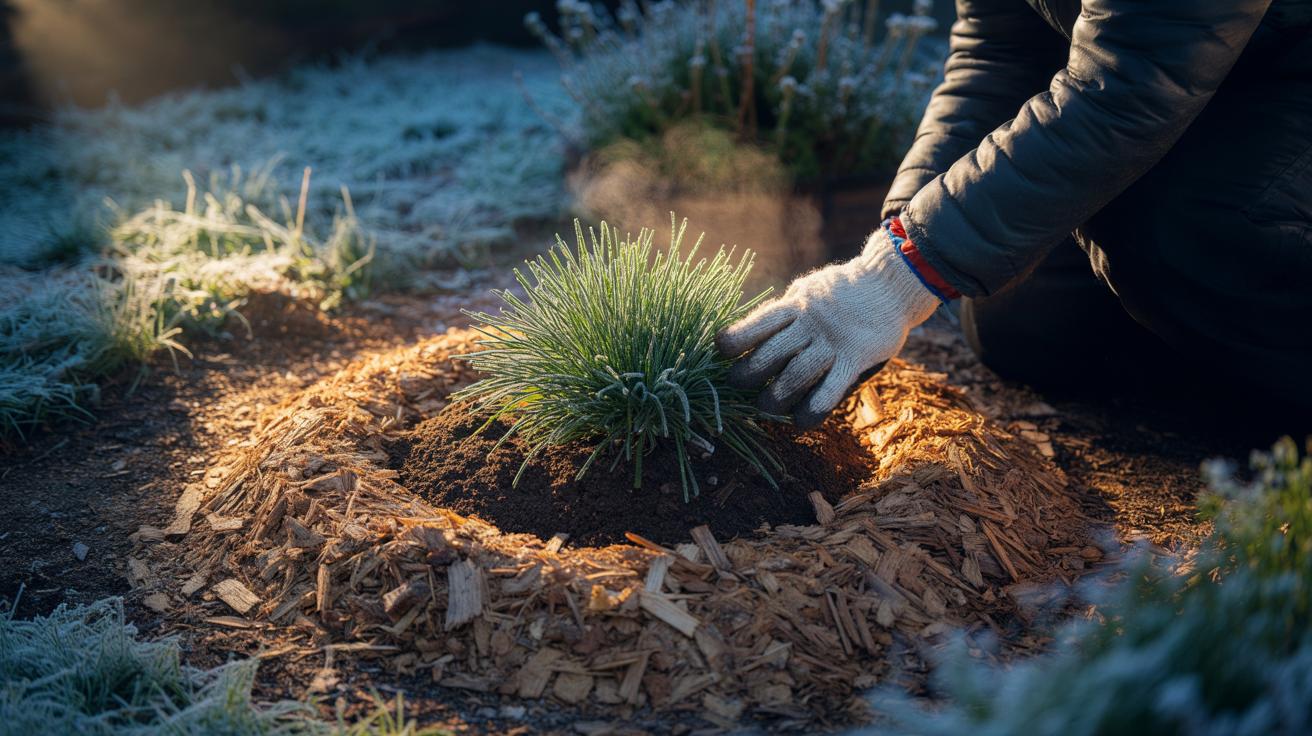
Work when soil is slightly moist, not saturated or frozen. First, weed lightly and water if the bed is powder-dry; moisture helps store daytime heat. Then fluff your chosen mulch so it’s loose. Apply 5–10 cm across the root zone, shaping a shallow “doughnut” that rises away from the stem base. For roses and grafted fruit, build the ring a touch higher outwards, leaving the union visible yet cradled. This form sheds winter wet from sensitive collars while still buffering temperature swings.
On containers, the effect is immediate. A 3–5 cm cap of bark or leaf mould cuts wind chill whipping across pots. For borderline hardy plants—agapanthus in tubs, salvias in free-draining beds—add a secondary shield on the coldest nights: fleece or a cloche above, mulch below. Two layers, two mechanisms. The cover blocks radiative chill, the mulch slows conductive loss through the pot or soil. That combination can be the difference between a mushy crown and spring regrowth. Finish by labelling and noting depths; you’ll adjust by a centimetre or two as conditions swing through the season.
Common Mistakes, Safety, and Wildlife Considerations
Over-mulching is the classic error. Piling 15 cm of anything around soft tissue traps damp and invites fungal trouble. Keep it modest and airy. Never bury crowns of alpines, heucheras, or lavender—warm roots, yes; smothered collars, no. Another misstep: mulching frozen ground. Wait for a brief thaw so you’re storing warmth, not sealing in cold. Where slugs are rampant, avoid dense, wet leaf layers in contact with stems; switch to bark and use pellets or traps if pressure is high.
There’s a wildlife angle too. In British gardens, a thick hedge-bottom mulch can become a cosy zone for hedgehogs. That’s good, but be careful when topping up. Disturb gently and check for occupants. In veg plots, straw mulches are brilliant insulators, yet they can harbour pests if left sodden. Keep pathways mulched with wood chips, beds with straw or leaf mould, and rotate materials. Good mulching warms roots while still breathing, feeding the soil web, and leaving room for life to thrive. Done right, it’s a winter comfort and a spring head-start in one tidy habit.
Mulch doesn’t create summer in January, but it does change the microclimate at plant bases fast, and in frosty snaps that marginal lift matters. Air trapped in organic fibres is free insulation you can deploy in an afternoon. Choose the right material, lay it with a respectful gap, and let soil biology do the quiet work beneath. Come spring, you’ll see sturdier crowns, fewer frost scars, and richer tilth waiting for growth. What will you insulate first this week—the tender salvias by the patio, or the strawberries poised for an early flush?
Did you like it?4.4/5 (22)