In a nutshell
- 🌙 Salt works by osmotic pressure, dehydrating weeds and soft-bodied pests overnight; it’s potent and non-selective, so precision is essential.
- 🧂 Apply safely on hard surfaces: a pinch per weed or a 1 tbsp/L solution, avoid spraying, keep off lawns and beds, and remove residues to protect soil and pets.
- 🌧️ Watch environmental and legal risks: salt raises soil salinity, accelerates corrosion, harms wildlife, and polluted run-off may breach UK protections—use spot-treated doses only.
- 🛠️ Prefer smarter alternatives: boiling water, brushing, mulch, repointing, plus integrated slug controls like copper tape, iron phosphate pellets, traps, and nematodes.
- 🧭 Strategic takeaway: reserve salt for stubborn hardscape hotspots, prioritising prevention and reversible methods that do the least harm for the longest benefit.
In British gardens, a humble kitchen staple has become a midnight ally against stubborn invaders: salt. While you sleep, this crystalline mineral quietly dehydrates weeds in paving cracks and deters soft-bodied pests that graze after dusk. The appeal is obvious—no noisy tools, no harsh synthetic sprays, just a familiar household product. Yet salt is potent. Used carelessly, it can scorch ornamentals, disrupt soil ecology, and contaminate run-off. Understanding exactly how it works, where it belongs, and when to hold back will help you harness its benefits without collateral damage. Here’s the science, the safe methods, and the smarter alternatives every UK gardener should consider.
Why Salt Works on Weeds and Pests
Salt draws water out of living cells through osmotic pressure. When crystals or saline droplets contact plant tissues, they upset the delicate ion balance across cell membranes, collapsing turgor, interrupting photosynthesis, and ultimately desiccating the weed. Night-time matters: humidity is higher, evaporation is lower, and many pests are active, so the salt stays in contact longer. For slugs and snails, the same process is rapid and dramatic, stripping moisture from their bodies. Salt is a non-selective killer; it does not distinguish between a dandelion in the patio and a prized alpine in a crevice.
In soil, sodium displaces essential nutrients on clay particles, increasing soil salinity and impeding water uptake by nearby plants. Surface applications on hard landscaping—paths, patios, block paving—limit that movement, making them the safest venues for spot treatment. Think of salt not as a blanket cure, but as a precise tool for hardscape weeds and specific pest pressure in contained areas, applied lightly and with intent.
How to Apply Salt Safely Overnight
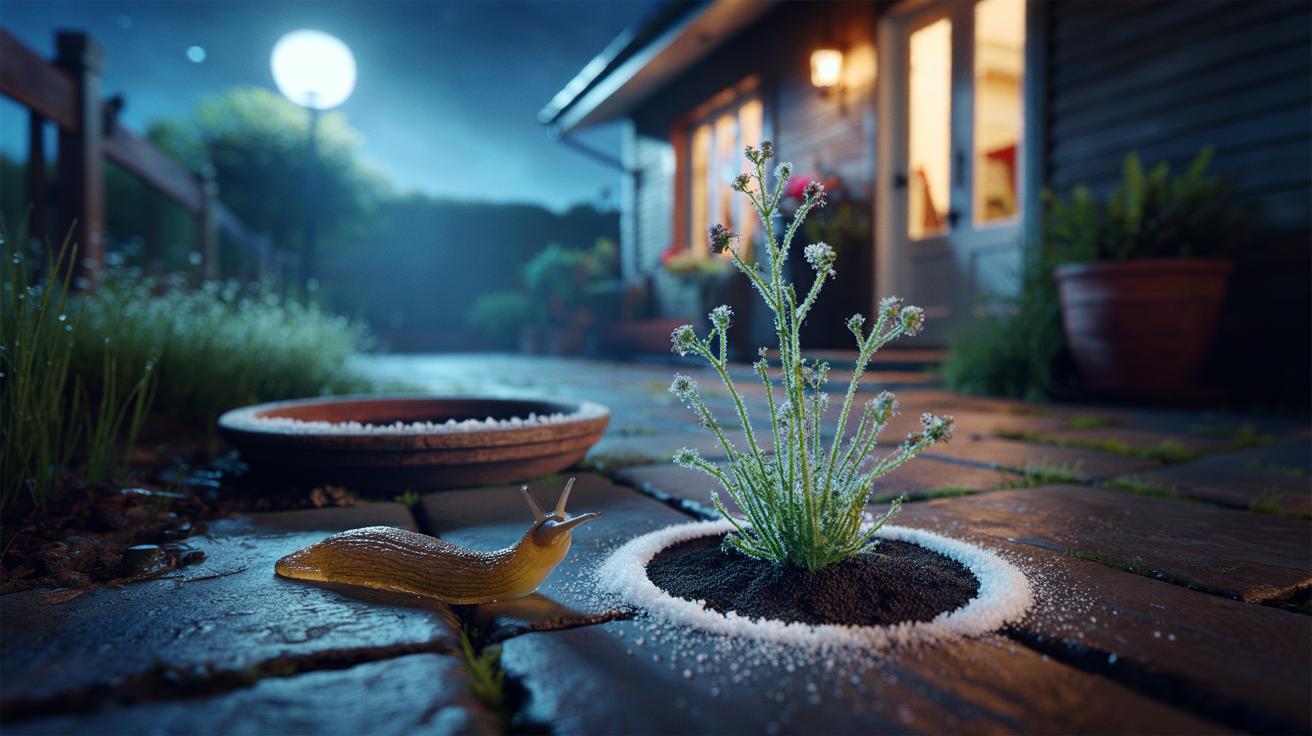
For weeds in cracks or between slabs, use a pinch of granulated salt per target plant, placing it directly on the crown and any exposed roots. A weak saline solution—about a tablespoon per litre of warm water—can be dribbled with a spouted bottle for controlled coverage; avoid spraying, which drifts onto valued plants. Apply after dusk on a dry forecast so crystals persist until morning. Keep salt off lawns, beds, and young tree roots; residues can travel with rain. For pests, favour barriers over lethal doses: a narrow ring on a pot rim deters slugs overnight without salting the soil, and it can be wiped away at dawn.
| Target | Salt Form | Indicative Amount | Placement | Notes |
|---|---|---|---|---|
| Paving weeds | Granules | Pinch per weed | Crown and crack | Best in dry weather |
| Patio moss | Weak solution | 1 tbsp/L | Targeted dribble | Brush off residues |
| Slug access on pots | Fine line | 2–3 mm ring | Pot rim only | Wipe away after dew |
| Ant trails on paths | Solution | Light dab | Direct trail | Combine with sealing |
Seal unused salt, wear gloves, and keep pets away until dawn. Never hose salt into gullies or drains; sweep or lift residues and bin them to prevent damage to waterways and garden soil.
Environmental Risks and Legal Considerations
Salt does not vanish once the weed is gone. It accumulates, altering soil structure, reducing microbial diversity, and stressing ornamentals that never received a direct hit. Run-off is the real hazard. On sloped drives, rain can carry sodium chloride into borders or straight into road drains that feed streams. Under UK rules, allowing pollutants to enter watercourses can breach environmental protections. If you can see crystals near a drain or bed, you’ve applied too much.
Hard surfaces also suffer. Salt accelerates corrosion on metal edging and can pit certain concrete mixes, especially older pointing. Wildlife is at risk: amphibians and beneficial invertebrates are sensitive to saline changes. Ethically, salting slugs is a harsh lethal method; many gardeners now prefer deterrents. The take-home: reserve salt for stubborn hardscape weeds in small, spot-treated doses, and keep it far from permeable soil. If in doubt, choose a reversible tactic that won’t persist beyond the season.
Smarter Alternatives and Integrated Pest Management
Avoiding collateral damage is simpler than repairing it. For cracks and paving, boiling water collapses soft tissues instantly and leaves no residue; repeat as needed. A stiff wire brush dislodges moss and seedlings, while polymeric sand or fresh pointing denies new footholds. In beds, mulch at 5–7 cm suppresses annual weeds and stabilises moisture. For deep-rooted perennials, a narrow weeding knife or corkscrew weeder lifts crowns without chemical fallout. Precision and prevention outperform brute force.
Night-active pests are best tackled with integrated methods. Copper tape on pots deters slugs, as do raised pot feet and tidy, dry perimeters. Wildlife-friendly iron phosphate pellets target slugs with lower non-target risk than metaldehyde, which is banned for outdoor use in the UK. Beer traps, upturned grapefruit halves, and wooden “slug hotels” concentrate pests for morning disposal. Nematode treatments (Phasmarhabditis spp.) offer biological control in warm, moist conditions. Combine tactics, monitor weekly, and reserve salt only for hardscape hotspots.
Salt can deliver overnight wins, but it is a sharp tool in a living system. Kept to hard surfaces and used sparingly, it dispatches weeds and blocks pest routes with ruthless efficiency. Used broadly, it salts the very earth you’re trying to nurture. The choice is not between purism and pragmatism—it’s about placing each method where it does the least harm and the most good. What single change could you make this week—on your patio, path, or pots—to shift from blunt-force salting to a cleaner, longer-lasting strategy?
Did you like it?4.7/5 (26)