In a nutshell
- 🌿 How it works: Vinegar’s acetic acid acts as a contact herbicide, dissolving leaf cuticles to desiccate young annual weeds fast; perennials may reshoot as roots remain intact.
- 🧪 Choose the right strength: 5% white vinegar suits seedlings and patio cracks; tougher jobs may need horticultural vinegar (10–20%) with full PPE; sunny, dry weather boosts results.
- 🎯 Safe application: Spray in calm, dry conditions with a fine nozzle, shield prized plants, add a drop of surfactant, and never mix vinegar with bleach or ammonia; keep children and pets away until dry.
- 🧰 Smart prevention: Pair spot-sprays with mulch, dense groundcovers, weekly hoeing, and hardscape fixes like polymeric jointing or membranes to block regrowth and seed germination.
- ✅ Practical benefits: A quick, low-cost, non-selective option for paths, patios, and edges; expect repeat treatments and prioritise precision and restraint to protect soil life.
There’s a fast, low-cost way to stop weeds without resorting to harsh chemicals: ordinary vinegar. In the time it takes to boil the kettle, a spritz of acetic acid can scorch tender weeds and tidy borders, paving and patios. Because vinegar is a contact herbicide, it acts on the surface it touches, disrupting cells and drawing out moisture. Used with care, it’s a nimble tool for allotments, paths and driveways, helping you reclaim hard-to-weed spaces. Targeted, timely spraying keeps the job simple and avoids collateral damage. Below, we unpack the science, the safest method, and the smart tricks that make vinegar a credible ally in a resilient, wildlife-friendly garden.
How Acetic Acid Attacks Weeds
Vinegar’s active ingredient, acetic acid, dissolves the waxy cuticle on leaves, causing rapid desiccation. Young annual weeds—dandelion seedlings, chickweed, bittercress—collapse within hours, particularly in warm, sunny weather when evaporation speeds up. The effect is dramatic yet localised: vinegar only kills what it touches. That’s why precise spraying and repeat treatments matter. Perennials with deep reserves—nettles, dock, bindweed—often reshoot because their roots remain intact. Think of vinegar as a surgical strike for new growth, edging, cracks and vegetable paths where germinating weeds are your main headache.
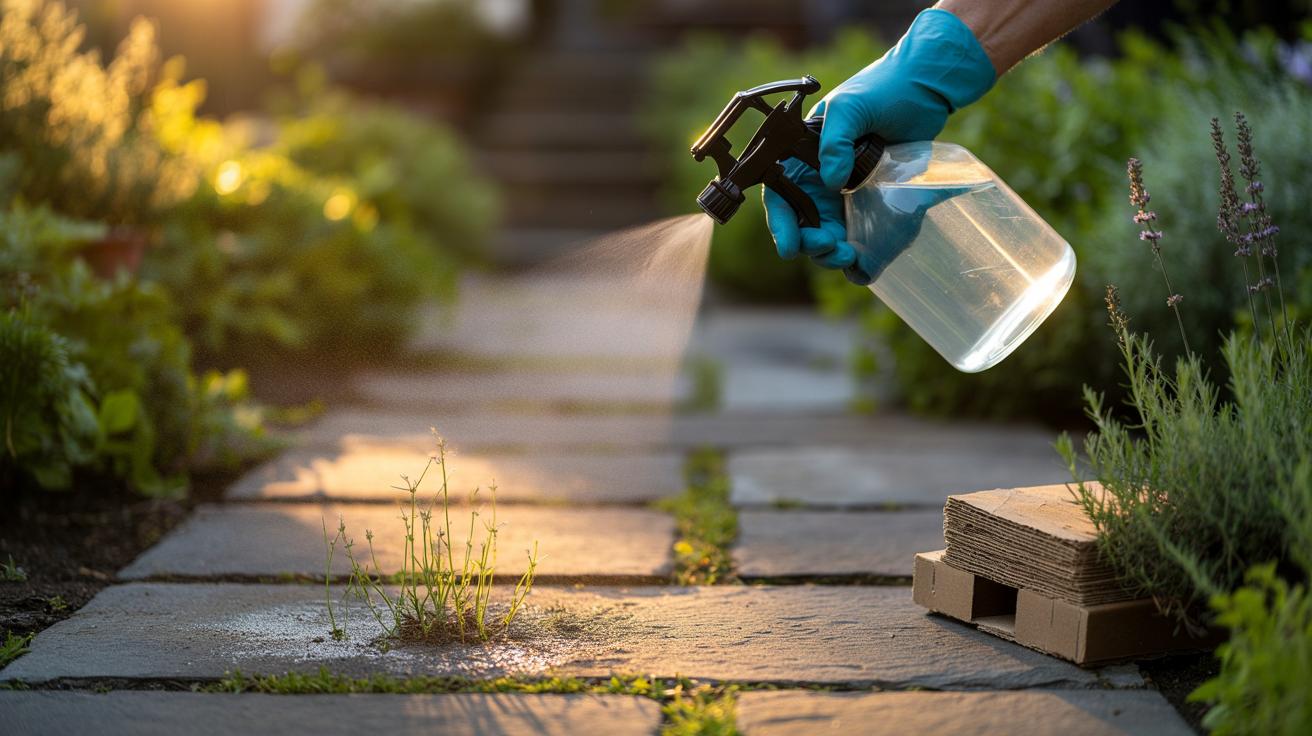
In practice, vinegar is non-selective: it will burn any foliage, from weeds to lavender and lawn grass. Shield prized plants with cardboard or a hand-held board to protect them from drift. Never spray on breezy days and keep the nozzle close to the target. On soil, acetic acid breaks down quickly and leaves little residue, though it can nudge surface pH for a short time. That makes it a nimble option for patios and gravel, while in beds it’s best used with care and precision.
Choosing the Right Vinegar for Different Jobs
For light work and frequent touch-ups, standard white kitchen vinegar at around 5% acetic acid is a safe starting point. It’s ideal for seedlings and small annuals in paving cracks or raised-bed edges. For tougher rosettes on hard standing, some gardeners use horticultural vinegar (10–20% acetic acid). The higher strength gives a harsher, faster burn, but it also raises the safety stakes. Protect eyes, skin and lungs with goggles, gloves and a mask, and consider diluting for control rather than scorch. In all cases, warmth and sunshine supercharge results; shade and cool air slow them.
Choose the mildest strength that does the job, and prioritise technique over brute force. Avoid adding salt in beds and borders; while salt boosts burn, it lingers in soil, harming structure and soil life. A drop of washing-up liquid can help the spray spread across glossy leaves. Below is a quick guide for typical UK garden scenarios.
| Vinegar Type | Acetic Acid (%) | Best Use | Weather/Timing | Notes |
|---|---|---|---|---|
| White kitchen vinegar | ~5% | Seedlings, annuals, patio cracks | Dry, sunny midday | Low risk; may need repeat sprays |
| Horticultural vinegar | 10–20% | Tougher foliage on hard standing | Warm, calm afternoon | Wear full PPE; keep off lawns and borders |
| Cleaning vinegar | 6–8% | General maintenance, edging | Dry, bright weather | Use with a fine, directed spray |
Step by Step: Safe, Effective Application
Start by identifying your targets. Prioritise small, sunlit weeds; leave anything interwoven with treasured perennials for hand weeding. Mix your solution: for kitchen vinegar, use neat or 4 parts vinegar to 1 part water; add 1–2 drops of washing-up liquid per litre as a surfactant. Decant into a hand sprayer with an adjustable nozzle for a tight cone. Test-spray a single weed and check for scorch within two hours, adjusting strength only if necessary.
Choose a dry, windless window. Angle the nozzle downward and spray until leaves are evenly glistening but not dripping. Wipe accidental splashes on desirable plants immediately with a damp cloth. Keep children and pets away until leaves have dried. For perennials, wait three to five days, then reapply to any fresh growth. Never mix vinegar with bleach or ammonia—dangerous gases can form.
Clean equipment thoroughly; acetic acid can corrode cheap metal parts. Store vinegar in its original container, tightly capped, and label any decanted spray bottles clearly. If you’ve sprayed on paving, brush away the dead foliage to deter re-rooting. In vegetable beds, a light mulch after treatment blocks the next wave of germination and cuts repeat work.
Smart Combinations and Preventive Tactics
Vinegar shines when folded into a broader, soil-friendly strategy. Combine targeted sprays with mulch—5–8 cm of composted bark or leaf mould—so fewer seeds see daylight. On paths and patios, replace soft sand with polymeric jointing or set a geo-membrane beneath gravel to halt colonisation from below. Deal with weeds when they are tiny; at the cotyledon stage, a mist of 5% vinegar is often enough for a clean kill without escalation.
For beds, plant densely and choose groundcovers that shade soil—geraniums, thyme, or alpine strawberries—to outcompete stragglers. Consider a sharp hoe for weekly “slice and leave” maintenance, reserving vinegar for edges, fence lines and obstacle mazes where blades can’t reach. If a perennial bully persists, switch tactics: dig out crowns after rain, then spot-spray the soft regrowth for a one-two finish.
Skip salt in living soil and go easy on repeated high-strength applications. Encourage a thriving soil web with compost and minimal disturbance; healthy beds germinate fewer weeds. Time your vinegar work to the forecast: warm, dry afternoons deliver the quickest results, while looming rain dilutes effort and cost. Precision and restraint make vinegar a powerful, sustainable ally rather than a blunt instrument.
Handled thoughtfully, vinegar offers a swift, natural check on weeds without compromising your garden’s character or its pollinators. By understanding how acetic acid works, selecting the right strength, and applying with care, you can keep paths crisp, beds neat and maintenance light. Fold it into a smarter routine—mulch, dense planting, quick weekly sweeps—and you’ll prevent most problems before they sprout. What’s your biggest weeding bottleneck right now, and where could targeted, sunlit vinegar spot-sprays save you the most time this season?
Did you like it?4.5/5 (20)