In a nutshell
- 🐌 Science: Snail slime meets copper to create a tiny microcurrent that stings on contact, deterring (not killing) pests—most effective on moist nights.
- 🛠️ Installation: Choose tape, wire, or mesh; build a continuous barrier with overlapped ends and no gaps over 5 mm, set 3–5 cm above soil to avoid bridging.
- 🌿 Best and worst use-cases: Excels on pots, raised beds, greenhouse benches, and trunk guards; struggles in large, mulched borders unless paired with integrated pest management.
- 💷 Costs and options: Tape (20–30 mm) £6–£12/roll; solid wire (1.5–2.5 mm) £8–£15 per 10 m; mesh collars £5–£10 per metre—durability ranges from one season to multi-season.
- 🧽 Maintenance: Keep copper clean and unbridged; wipe oxidation with vinegar and salt or fine wool, clear debris, check overlaps, and widen or twin-wire for heavy pressure.
Give a snail a slick rim of copper and watch it hesitate. Gardeners across the UK swear by copper wire and tape as a neat, chemical-free way to defend lettuce, hostas, and strawberries. It looks simple because it is: a thin, gleaming band can be all it takes. Yet behind that modest barrier sits a tiny burst of physics that slugs and snails dislike. When slime meets metal, things spark—figuratively. The result is a consistent, low-effort barrier you can refresh each season, and it won’t harm pets, hedgehogs, or the soil food web. Copper repels; it doesn’t poison. Done right, it’s tidy, humane, and highly effective.
How Copper Wire Creates a Mini Shock: The Science in Your Garden
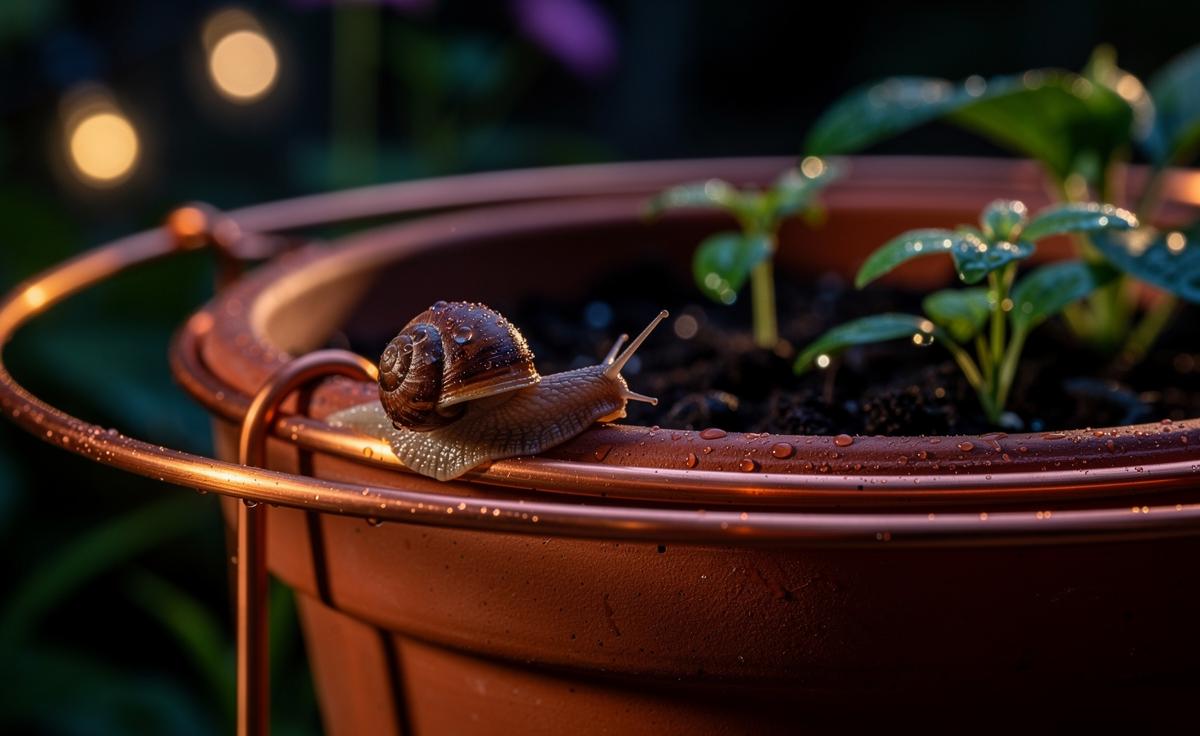
Snails crawl on a film of electrolyte-rich slime. Copper is a reactive metal. Bring the two together and you form a tiny galvanic cell: ions move, a microcurrent flows, and the animal experiences a stinging tingle on contact. It’s not dramatic. It’s enough. The creature recoils, chooses an easier route, and your plants are spared. The effect deters rather than kills, making copper a humane, wildlife-friendly option. Moist nights enhance the sensation because the slime—and the surrounding humidity—improve conductivity, which is why copper barriers shine during peak slug weather.
There are caveats. Oxidation dulls bright copper, slowly forming a surface patina that can reduce the deterrent bite. Cleaning helps. So does presenting a wider or doubled band that forces prolonged contact before a snail can bridge the strip. Crucially, the barrier must be continuous—no gaps, no accidental “ramps” of foliage or mulch—because a slug will exploit the smallest bridge if you give it one. Think of copper as a fence that works only when it is unbroken, clean, and well-sited.
Choosing Materials and Installing the Barrier Right
Decide where you need protection first. For containers and raised beds, self-adhesive copper tape (20–30 mm wide) offers instant coverage; for long runs, a loop of solid copper wire (1.5–2.5 mm diameter) is rugged and reusable. Tape gives broad contact; wire is tougher and easier to reposition. Aim for a continuous ring round the pot, bed, or cloche base. Overlap tape ends by at least 2 cm, or twist wire ends together firmly to avoid a conductivity break. No gaps bigger than 5 mm. That’s the rule that stops midnight raids.
Preparation matters. Clean the surface with alcohol or mild detergent, dry thoroughly, then apply copper tape to smooth rims or screw in insulated cable clips to hold wire at a uniform height. Keep the barrier 3–5 cm above soil to prevent splash and debris accumulation. For timber beds, seal rough grain before sticking tape; for masonry, use outdoor-rated adhesive where needed. Consider a double-row of wire, spaced 5–8 mm, to force repeated contact. Finally, prune any leaf that hangs over the strip and remove mulch piled against it. Bridging defeats copper faster than rain ever will.
Where Copper Barriers Work Best—and When They Don’t
Copper excels on discrete assets: individual pots, salad planters, cold frames, greenhouse benches, and the legs of staging. It also performs around raised beds with defined edges, especially when paired with tidy paths that discourage hidden approaches. Tree trunk guards made from copper mesh can protect young bark from slug nibbling and climbing snails. In small, high-value areas—seedling trays, herb troughs—the cost-to-benefit ratio is outstanding. You see fewer ragged leaves almost overnight. Any gap is an invitation; any bridge is a bypass.
Where does copper struggle? Vast borders with multiple entry points, deep mulch systems, and beds that shed soil or leaves onto the strip. Very heavy infestations may overwhelm a narrow band, especially if debris dulls the metal. Copper needs contact to deter, meaning a slug that never touches it—perhaps arriving via a stake, stone, or overhanging foliage—won’t feel a thing. The fix is not complicated: widen the band, clean it, and prune bridges. Support the barrier with integrated pest management—night-time hand-picking, habitat for ground beetles and thrushes, minimal hiding spots under clutter. Copper is a cornerstone, not a cure-all.
Quick Reference: Sizes, Costs, and Maintenance
Budget and longevity influence the choice between tape, wire, and mesh. Tape provides instant width; wire survives seasons of weather and handling; mesh creates collars that combine rigidity with broad contact. Pick for your layout and the pressure you face from local snail populations. In most small gardens, one evening of fitting protects a growing season’s worth of salads.
| Material | Typical Size | Best Use | Fitting Notes | Longevity | Indicative Cost (UK) |
|---|---|---|---|---|---|
| Copper tape (self-adhesive) | 20–30 mm wide, 10 m rolls | Pots, planters, raised bed rims | Overlap ends; apply to clean, dry surfaces | 1–2 seasons; re-stick if peeling | £6–£12 per roll |
| Solid copper wire | 1.5–2.5 mm diameter | Long runs, cloche bases, bed perimeters | Secure with clips; maintain a continuous loop | Multi-season; very durable | £8–£15 per 10 m |
| Copper mesh/collar | 50–100 mm wide strips | Seedling rings, trunk guards | Form snug collars; avoid soil contact | 2–3 seasons; reshape as needed | £5–£10 per metre |
Maintenance is light. Wipe tarnished copper with vinegar and salt, rinse, and dry; or lightly abrade with fine wire wool. Re-check overlaps monthly. After storms, sweep away soil splash and leaf litter. A clean, continuous, and unbridged copper line is the difference between perfect lettuce and lacework. For sustained pressure, upgrade to wider tape or twin-wire rails to increase contact time and stop determined pests.
In a world awash with pellets and dubious potions, a simple ring of copper stands out: elegant, reusable, and reliably kind to everything except snails. It harnesses basic chemistry to protect tender shoots, turns routine maintenance into quick wipe-downs, and keeps gardens both productive and safe for wildlife. Results arrive fast. Costs are modest. And the learning curve is gentle. If a barrier can be both beautiful and effective, this is it. Will you sketch a plan tonight—pots, beds, benches—and decide where a shining copper line could save your next flush of greens?
Did you like it?4.5/5 (30)