In a nutshell
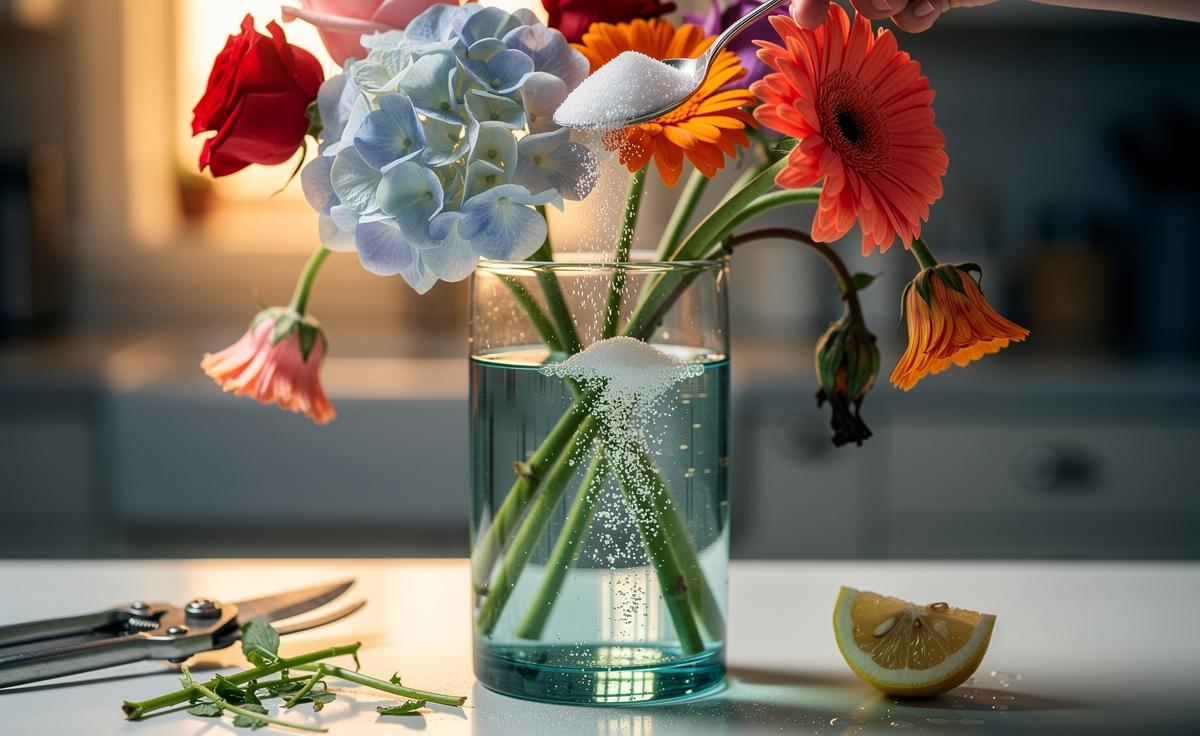
- 🌸 A measured dose of sugar (sucrose) fuels cut flowers and, with water uptake via osmosis, restores turgor pressure for a rapid perk-up.
- 🛠️ 5-minute rescue: recut stems at 45°, strip leaves below the waterline, use lukewarm water for most blooms (cool for tulips), and let them drink 10–20 minutes.
- 🥄 Proven recipe: per litre, 1 tsp sugar + acidifier (lemon/citric) + tiny biocide (¼ tsp bleach) keeps xylem clear and boosts uptake.
- 🌡️ Adjust for species: lower sugar ratios and cool water for delicate stems; warm start for woody types like hydrangea, then cool to hold shape.
- ⚠️ Avoid pitfalls: excess sugar breeds bacteria, folklore add-ins misfire; prioritise clean tools, correct pH, timely water changes—some damage remains irreversible.
It looks like a floral tragedy: limp stems, drooping heads, petals creased like tired linen. Then someone whispers the old florist’s trick — a spoon of sugar — and within minutes your bouquet lifts. It isn’t magic, it’s plant physiology at the kitchen sink. The right sweetened solution, paired with clean cuts and the correct water temperature, can restore turgor pressure and coax thirsty cells back to life. Not every bloom revives, and not every remedy is equal. Use too much sugar and you’ll fuel bacteria. Use the right ratio and you’ll buy a day, sometimes two. Handled with care, wilt can be a reversible moment rather than the end.
Why Sugar Works on Wilted Flowers: The Science in a Vase
Freshly cut flowers lose their root supply of carbohydrates. A measured dose of sucrose mimics that lost energy source, feeding petals and leaves as they work to rehydrate. The revival you see is mostly water physics: osmosis draws water back into cells, restoring turgor so drooped tissues stand again. Sugar supports this by powering the living tissues that regulate water flow and stomata. Without fuel, the plumbing stutters; with fuel, it flows.
There’s a hitch. Sugar alone also feeds microbes, which clog xylem vessels like limescale in a kettle. That’s why professional flower food blends add an acidifier (citric acid or lemon juice) to keep water slightly acidic and a mild biocide (a tiny dash of bleach) to suppress bacteria. Warmer water, within reason, moves faster into stems, speeding the “perk-up” effect. Some species, tulips for instance, prefer cool water to keep stems firm. The trick is balance: just enough sugar to energise, enough acid and biocide to keep the water clean, and the right temperature for the species.
Step-By-Step: The 5-Minute Rescue Method
Start with triage. Clear a clean sink, then recut stems by 1–2 cm at a 45-degree angle. Do it under water if possible to avoid air embolism entering the xylem. Strip any foliage below the waterline; submerged leaves breed bacteria that race to block the stem. Always remove soggy leaves — it’s the quickest way to stabilise a struggling bouquet.
Mix a quick vase solution: about 1 teaspoon sugar per litre of water, a squeeze of lemon or 1/4 teaspoon citric acid, and a tiny 1/4 teaspoon household bleach per litre. Stir until dissolved. Use lukewarm water (around bath temperature) for roses, gerberas, and most mixed bouquets to accelerate uptake; switch to cool water for tulips and ranunculus to preserve structure. Place the flowers in deep for ten minutes, then arrange as normal. If heads are severely drooped, give stems a supportive wrap of paper while they drink. Most recoveries happen in 5–20 minutes; patience for half an hour often doubles your success.
The Right Recipe: Ratios, Temperatures, and Add-Ons
A reliable vase solution has three jobs: feed, sanitise, and optimise uptake. Sugar feeds; acid lowers pH; biocide keeps the plumbing clear. Keep measurements modest and consistent. More is not better — excessive sugar collapses a revival by turbocharging bacteria. Below is a quick reference you can make in a mug, jug, or bucket without special kit.
| Vase Solution | Sugar Ratio | Acid/Biocide | Water Temp | Best For |
|---|---|---|---|---|
| Standard rescue mix | 1 tsp sugar per litre | 1 tsp lemon juice + 1/4 tsp bleach per litre | Lukewarm (35–40°C) | Roses, gerberas, mixed bouquets |
| Delicate stem mix | 1/2 tsp sugar per litre | 1/2 tsp lemon juice, no bleach | Cool (10–15°C) | Tulips, ranunculus, anemones |
| Woody/hydrangea boost | 1–2 tsp sugar per litre | 1 tsp lemon juice + 1/4 tsp bleach | Warm (40–45°C), then cool | Hydrangeas, lilac, viburnum |
Adjust within a narrow band for species and room temperature. Replace the solution after 24 hours if keeping the bouquet. Always start low on sugar; you can add a pinch, but you can’t subtract bacteria once they bloom.
Common Mistakes and When Sugar Won’t Help
Some wilts are irreversible. Petals browned by heat or blooms crushed in transit won’t recover with any cocktail. If a stem has severe air embolism or decay at the base, cut higher until you find clean tissue; if none, compost it. Don’t overdose the vase: heaps of sugar create a syrupy broth that invites biofilm, not bounce. When in doubt, halve the sugar and change the water sooner.
Avoid folklore add-ins like aspirin, pennies, or fizzy drinks; they’re inconsistent and often corrosive. Stick to a tiny measure of bleach and a tart acid. Mind temperature: hot water can scald delicate stems, while very cold water slows uptake too much for a rapid revival. Hydrangeas can benefit from a brief warm soak and a stem-end dip in just-off-boiling water to seal sap bleeds, but don’t generalise this to all species. Keep vases and tools spotless. Clean kit and the correct recipe beat any miracle hack, every time.
Handled like this, a droop becomes drama without disaster. A precise pinch of sugar, a clean recut, and water tuned to the flower’s preference can restore lift with newsroom-speed efficiency, often in minutes. You won’t cheat time forever, but you’ll salvage evenings, photographs, and dinner tables with professional calm. The craft is measured, not mystical, and your bouquet will show it. Which stems are you most eager to rescue next, and what conditions in your home — warmth, light, vase type — could you tweak to make the revival last longer?
Did you like it?4.3/5 (30)