In a nutshell
- 🌞 Microclimate matters: a tomato’s ripening rate shifts by inches on the sill; variations in light, heat, and ethylene concentration make south-facing faster than north-facing in UK homes.
- 🧪 Science and temps: aim for 18–24°C days with a slight night cool; above 30°C stalls lycopene, below 12°C dulls flavour; diffuse harsh midday sun to prevent overheating.
- 🧭 Placement tactics: keep fruit 2–5 cm from the pane, off the glass, in a single layer with spacing; rotate regularly, avoid radiators, and use a white tray to reflect light and even colour.
- ⚡ Speed hacks: deploy ethylene clustering—group ripening tomatoes or add a ripe banana in a breathable bag/box near the warmest pane; improve airflow with a rack and manage humidity with kitchen paper.
- 🛡️ Quality control: check daily for first colour “break,” then move to a cooler counter; remove soft or spotty fruit promptly; target a bright, warm, stable sill for faster ripening without sacrificing texture.
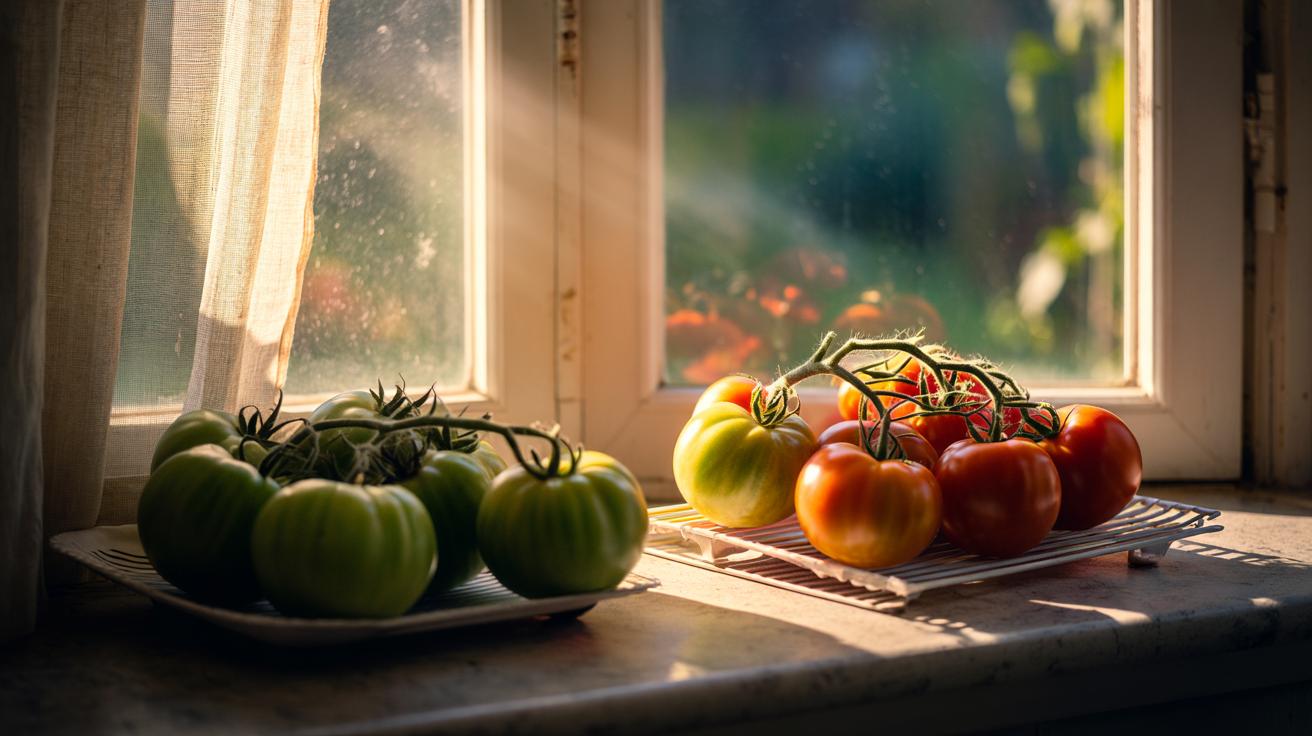
Plucked early to dodge the first frost or salvaged after a storm, green tomatoes need a nudge—not magic—to blush red. The unsung accelerator is where you place them on the windowsill. Shift them a few inches and the clock changes. A brighter pane, a warmer ledge, or a quieter corner can shave days off ripening. Why? Because light, heat, and ethylene don’t distribute evenly across a sill. Small placement choices deliver outsized effects. In a British home, the difference between a north-facing nook and a south-facing frame can be stark. Here’s how to harness that microclimate so your tomatoes colour up swiftly, safely, and with better flavour.
The Science of Sunlight, Heat, and Ethylene on a Sill
Tomato colour change is a choreography of chlorophyll breakdown and lycopene synthesis, primed by warmth and triggered by ethylene. A windowsill changes all three. Glass admits the photosynthetically useful part of sunlight while creating a pocket of warmth, accelerating the fruit’s respiration and ethylene sensitivity. Aim for a gentle diurnal temperature swing—about 18–24°C by day, a few degrees cooler at night. Position influences this swing, and the swing speeds ripening. Too hot—near or above 30°C—and lycopene stalls, yielding yellow-orange tones rather than deep red. Too cold—below about 12°C—and metabolism slows, inviting dull flavours and mealy texture.
Ethylene, the natural ripening hormone, is both produced by and acts upon tomato fruit. Grouping fruit increases the local ethylene concentration—especially if you add an ethylene-rich companion like a ripe banana. Yet gas build-up isn’t everything; humidity and air movement matter. A still, warm corner lets ethylene linger, while modest airflow prevents condensation that can spur mould. The best sill spot balances trapped warmth with breathable space. Direct, scorching midday sun behind modern glazing can overheat the skin; diffuse light with a net curtain if necessary. The sweet spot? Bright, warm, stable—and not sauna-like.
Finding the Sweet Spot: Orientation, Height, and Distance From the Pane
Think of the sill as a map. In the UK, a south-facing windowsill is typically the quickest: plentiful light, reliably warm. East-facing offers gentle morning sun—good for steady progress with lower risk of overheating. West-facing brings a warm afternoon spike that can turbocharge colour but needs vigilance in heatwaves. North-facing works, slowly, with fewer heat spikes. Height matters, too: higher panes often sit in slightly warmer air. Don’t let fruit touch the glass; condensation can chill one side and invite rot. Keep tomatoes 2–5 cm from the pane, in a single layer on absorbent paper or a slatted rack, and rotate every other day.
Never park them directly above a roaring radiator; short bursts of very high heat can toughen skins while the core lags. A white tray reflects light back onto shaded flanks, evening colour. Leave a finger’s width between fruits to curb bruising and improve airflow. You’re aiming for a warm, bright eddy, not a hothouse. If a spot feels cosy to the back of your hand without feeling hot, it will likely suit the fruit. Use this quick guide to map positions to outcomes:
| Position | Microclimate | Typical Ripening Time | Risks/Tips |
|---|---|---|---|
| South-facing, 3–5 cm from pane | Bright, consistently warm | 4–7 days (mature green to red) | Watch for overheating; diffuse midday sun |
| East-facing, 5–10 cm from pane | Gentle morning warmth | 6–10 days | Steady; minimal scorch risk |
| West-facing, 5 cm from pane | Afternoon warmth spike | 5–8 days | Check for afternoon heat build-up |
| North-facing, 3–5 cm from pane | Cool, diffuse light | 8–14 days | Group fruit to boost ethylene |
| Interior shelf, >25 cm from pane | Even, cooler air | 10–16 days | Add banana; keep room warm |
Speed Hacks: Clustering, Containers, and Controlled Airflow
Want to shave off a couple of days? Leverage ethylene clustering. Place two or three ripening tomatoes with green ones to create a self-amplifying cloud of ripening gas, or tuck in a ripe banana or apple as a catalyst. Then harness the sill’s warmth without suffocating the fruit: set the cluster in a breathable paper bag or a small cardboard box with a few pinholes, positioned near the best pane. This combines elevated ethylene with the sill’s gentle heat. Check daily; once colour “breaks” (the first blush), remove from the cluster to avoid over-softening.
Control moisture. Line the tray with kitchen paper to wick condensation, swap it when damp, and avoid stacking. A mesh trivet or cooling rack improves circulation beneath the fruit. If the room is very dry, drape a light tea towel near—never on—the fruit to stabilise humidity. Speed should not sacrifice flavour or texture. For unevenly coloured fruit, rotate a quarter turn each day. If one tomato softens or spots, remove it immediately; rot races. Use your eyes for ripeness cues: glossy skin, a uniform glow, and that first tomato scent at the calyx. Then move to a cooler counter to finish, locking in colour without oversoftening.
Place matters. Not by a little, by a lot. A savvier windowsill—brighter but not blistering, warm yet breathable—turns orphaned green fruit into kitchen-ready jewels days sooner. Think orientation, distance, and companionship, and your tomatoes will respond with better colour and fuller flavour. Let the sill do the heavy lifting while you curate its microclimate. Which position will you test first—south-facing sprint, east-facing steadiness, or a clever clustered setup by the warmest pane—and what tweaks will you try to beat your own ripening record?
Did you like it?4.5/5 (20)