In a nutshell
- 🌱 Damping off is a seedling-killing complex (e.g., Pythium, Rhizoctonia, Fusarium) thriving in cool, humid, poorly ventilated conditions—prevention, not cure, is the winning strategy.
- 🧪 Cinnamon water spray delivers gentle antifungal action (cinnamaldehyde, eugenol) that suppresses spores on the compost surface; it won’t reverse active infections but tilts the balance toward healthy growth.
- 🧴 Mix and use: 1 tsp cinnamon to 250 ml just-boiled water, steep 6–12 hours, strain, then mist lightly at sowing and every 3–4 days until true leaves; make fresh weekly and dilute if scorching appears.
- 🧼 Pair with best practice: clean trays, peat-free seed compost, thin sowing, steady temps (around 18–21°C), strong airflow, and bottom-watering; avoid waterlogged media and reused compost.
- 💡 Practical gains: a low-cost, pleasant-smelling aid that, used early and lightly, reduces losses dramatically and complements hygiene, ventilation, and careful watering for resilient seedlings.
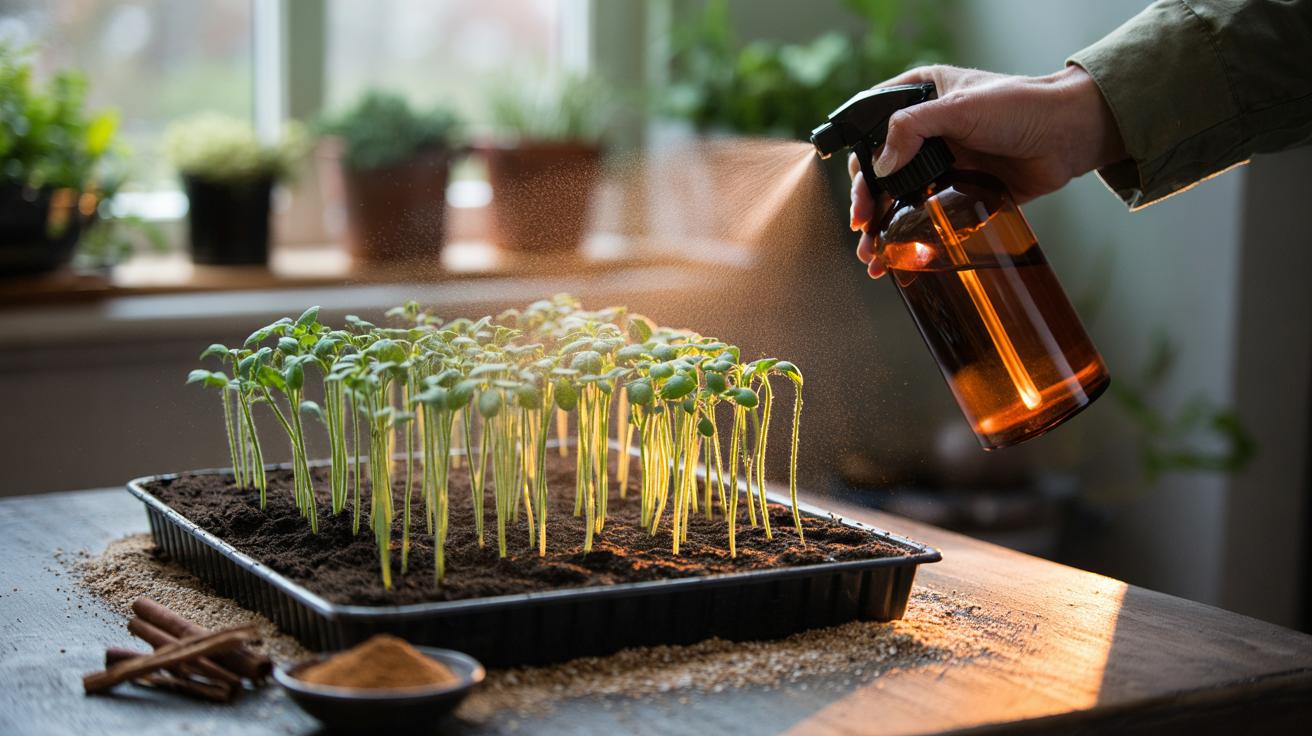
Gardeners dread the moment a tray of promising seedlings collapses into limp threads, felled by the stealthy rot known as damping off. In a cool, humid British spring, trays on windowsills and in unvented propagators are a perfect storm for this seedling-killing complex of fungi and oomycetes. A simple, low-cost tactic is winning converts: a cinnamon water spray that helps keep the surface of your compost inhospitable to pathogens while remaining gentle on tender growth. This is a preventative nudge rather than a cure-all, but used early it can save an entire sowing. Here’s how it works, how to mix it properly, and how to weave it into a broader defence that keeps young plants thriving.
What Is Damping Off and Why It Strikes
Damping off is not a single disease but a set of infections, usually from Pythium, Rhizoctonia, and Fusarium, that kill seedlings just before or after emergence. Stems pinch at soil level, cotyledons flop, and roots blacken. The culprits live in waterlogged media and spread fast where airflow is poor and temperatures swing. In the UK’s short, dim days, heat mats without ventilation and overgenerous watering create perfect conditions for spores.
The key risk factors are soggy compost, crowded sowings, reused trays that weren’t cleaned, and stale air. Once a tray is actively collapsing, rescue is rare; prevention is the winning strategy. This is where a light-touch antimicrobial surface treatment can help. By discouraging pathogen growth on the compost crust during the most vulnerable fortnight, you buy time for roots and stems to toughen. Pair that with clean kit and measured moisture, and losses plummet.
Why Cinnamon Works: The Science and the Limits
Ground cinnamon contains cinnamaldehyde and eugenol, compounds with well-documented antifungal activity against a range of plant pathogens. In water extracts, these molecules help suppress spore germination and mycelial spread on the compost surface. The effect is local and modest, but that’s precisely what seedlings need: gentle protection without nuking the micro-life that supports healthy growth. Think of cinnamon water as a biological nudge that tilts the balance away from infection.
There are limits. Cinnamon will not reverse established damping off, and very strong brews can scorch tender tissues. Different species of fungi vary in sensitivity, and results depend on hygiene and climate control. A dash of non-ionic wetting agent can improve coverage, yet restraint is wise with baby plants. The aim is a fine mist on the surface and stems, not a drenching. Used alongside clean trays, fresh peat-free seed compost, and airflow, cinnamon is a smart, low-risk layer of defence.
How to Mix and Use Cinnamon Water Spray
For a balanced brew, add 1 level teaspoon (about 3 g) of ground cinnamon to 250 ml of just-boiled water. Stir, cover, and let it steep until cool—ideally 6–12 hours—then strain through fine muslin or a coffee filter to remove particles that clog nozzles. Decant into a clean mister. Optional: one drop of a mild, unscented washing-up liquid per 500 ml as a surfactant. Always label the bottle and make a fresh batch weekly to maintain potency.
Apply as a light mist to the compost surface and seedling stems right after sowing, then every 3–4 days until true leaves form. Avoid spraying in full sun or under intense grow lights to prevent spotting. Use bottom-watering for routine moisture so the surface stays relatively dry, with cinnamon mist providing the protective film. If you see any scorch, dilute the next batch by half and reduce frequency. Clean and sterilise sprayers between batches.
| Step | Ratio/Detail | Timing | Notes |
|---|---|---|---|
| Mix | 1 tsp cinnamon : 250 ml water | Steep 6–12 hours | Strain thoroughly |
| Spray | Fine mist, not runoff | At sowing + every 3–4 days | Stop after true leaves |
| Storage | Sealed bottle | Use within 7 days | Remake weekly |
| Caution | Halve strength if leaf spotting | Immediate | Test on a small tray first |
Beyond the Spray: Hygiene and Growing Conditions
No spray replaces basics. Start with fresh, reputable peat-free seed compost and scrubbed trays; a 10-minute soak in hot, soapy water, then a rinse, is usually enough. Sow thinly so air can move, and resist the urge to pamper with constant warmth. A daytime 18–21°C for most veg and flowers, with nights slightly cooler, discourages explosive pathogen growth. Good airflow is the cheapest fungicide. Crack propagator lids, add a tiny fan on low, and rotate trays on dim windowsills to even out microclimates.
Water from below and let trays drain freely; seedlings prefer “evenly moist” over “ever wet”. If you must top-water, do it early in the day so surfaces dry by night. Consider sprinkling a very thin layer of sterile grit or vermiculite after sowing to keep stems off damp compost. Above all, avoid reusing old compost, which can harbour spores. Combined with the steady support of cinnamon water, these habits make damping off a rare hiccup rather than a season-wrecker.
The best gardening tricks feel almost cheeky in their simplicity, and a humble cinnamon water spray fits the bill. It costs pennies, smells pleasant, and—applied with restraint—adds a protective sheen to the most vulnerable days of seedling life. Used as a companion to cleanliness, airflow, and sensible watering, it can be the difference between patchy losses and trays brimming with promise. Will you trial cinnamon alongside a few tweaks to your sowing routine this season, and if so, which crops will be your first candidates for a side-by-side comparison?
Did you like it?4.5/5 (22)