In a nutshell
- 🌬️ Fans cool you, not the room, by boosting evaporative cooling and aiding thermoregulation—key for drifting off on hot nights.
- 🤧 Main risks: dryness (eyes, throat), circulating allergens that can flare asthma/hay fever, and stiff necks from a fixed, direct stream—yet fans don’t cause colds.
- 🎧 Core benefits: gentle white noise masks city sounds, improves sleep latency and stability, and offers energy-efficient cooling versus AC—helpful for hot flushes and heat-related headaches.
- 🛠️ Safer setup: keep 1–2 metres away, use oscillation/indirect airflow, clean blades weekly; pair with a HEPA purifier, add humidity, use a timer, and aim for 16–20°C.
- 🧭 Bottom line: it isn’t inherently bad—context matters. Adjust distance, direction, and cleanliness to find your personal sweet spot between cool comfort and clear breathing.
Britain’s sultry summer nights spark the same bedtime debate year after year: is it fine to leave the fan humming till dawn, or could it be quietly sabotaging your health? The question splits households. Some swear by the gentle breeze and soothing whirr; others wake with a scratchy throat and streaming nose. What do the professionals say? In short, it depends on your body, your room, and how you use the device. Fans don’t create cold viruses or carbon monoxide—those are myths—but they can stir dust and dry out tissues if misused. Here’s a clear-eyed look at the science, the trade-offs, and practical ways to keep cool without compromising wellbeing.
How Fans Affect Your Body at Night
At its core, a fan doesn’t cool the room air; it cools you by increasing the evaporation of sweat and enhancing thermoregulation. That airflow helps your skin shed heat, easing the drop in core temperature your brain needs to initiate sleep. In heatwaves, this can be the difference between tossing and dozing. Yet there’s a flipside. The same air movement can boost evaporative loss from your eyes, nose, and throat. For contact lens users, those with dry eye, or people who mouth-breathe, that can mean morning irritation.
Respiratory clinicians note that moving air can also stir up indoor allergens—pollen, pet dander, dust—and waft them towards your face. If you have asthma or hay fever, that may translate to congestion or a tickly cough. It’s not inevitable, but it’s common in poorly cleaned rooms or on carpets that harbour particulates. The key mechanism isn’t “cold air making you ill”; it’s airflow amplifying what’s already present in your environment. Keep that distinction in mind when judging whether the breeze is helping or hindering your sleep.
Potential Downsides: Allergens, Dryness, and Stiff Necks
Three complaints dominate the inboxes of sleep and respiratory specialists: dryness, allergic irritation, and muscle stiffness. Dry mucous membranes can lead to a sore throat, morning hoarseness, or crusty nostrils. People with eczema or sensitive skin sometimes notice itchier patches where the breeze hits. Allergic symptoms arise when the fan acts as a dust distributor: blades and grilles gather particles, then fling them across the room. If your windows are open, pollen can join the party. The musculoskeletal issue is simpler. A fixed, cool stream aimed at your neck or shoulder can trigger overnight tension.
Noise matters too. For some, the fan’s white noise masks disruptive sounds; for light sleepers, a rattly grille becomes a metronome of misery. Aim for devices under roughly 50 dB on low settings. Despite folklore, fans do not cause colds or pneumonia; viruses do. But poorly positioned, unclean fans can make you feel bunged up or achey by morning. If you wake with symptoms, move the fan further away, switch to oscillation, and clean the blades. Many people find that simple tweaks fix the problem without ditching the cooling comfort.
| Potential Effect | Why It Happens | Who’s Most Affected | Quick Fix |
|---|---|---|---|
| Dry throat/eyes | Evaporative moisture loss | Mouth-breathers, dry eye | Increase humidity, indirect airflow |
| Allergy flare | Dust and pollen circulation | Asthma, hay fever | Clean blades, use purifier, shut windows at peak pollen |
| Stiff neck | Cold, fixed stream on muscles | Side sleepers, desk-strained necks | Oscillate or point above/beside bed |
| Sleep disruption | Vibration and noise | Light sleepers | Lower speed, newer quieter models |
The Benefits: Cooling, White Noise, and Sleep Quality
There’s a reason fans are bedroom staples. A cooler sleeping environment supports melatonin release, shortens sleep latency, and reduces night-time awakenings. For urban dwellers, a steady fan hum can neutralise sirens, commuter traffic, or a neighbour’s late film. That consistent sound masking improves perceived sleep quality even when temperatures aren’t extreme. Energy-wise, a typical pedestal fan uses a fraction of the electricity of an air conditioner, making it a pragmatic option during energy-conscious months.
For people prone to heat-related headaches or hot flushes, the targeted breeze can be transformative. Athletes sleeping after late training, or shift workers resetting their body clock during warm afternoons, often report more refreshing sleep with intelligent airflow. The trick is tailoring the breeze: indirect, gentle, and clean. Position the fan to skim past the bed or bounce off a wall rather than blasting the face. Combine with light cotton bedding, breathable pyjamas, and blackout blinds to reduce solar heat gain. Done right, the fan becomes a simple, low-cost tool for deeper rest.
Safer Setup: What Doctors Recommend
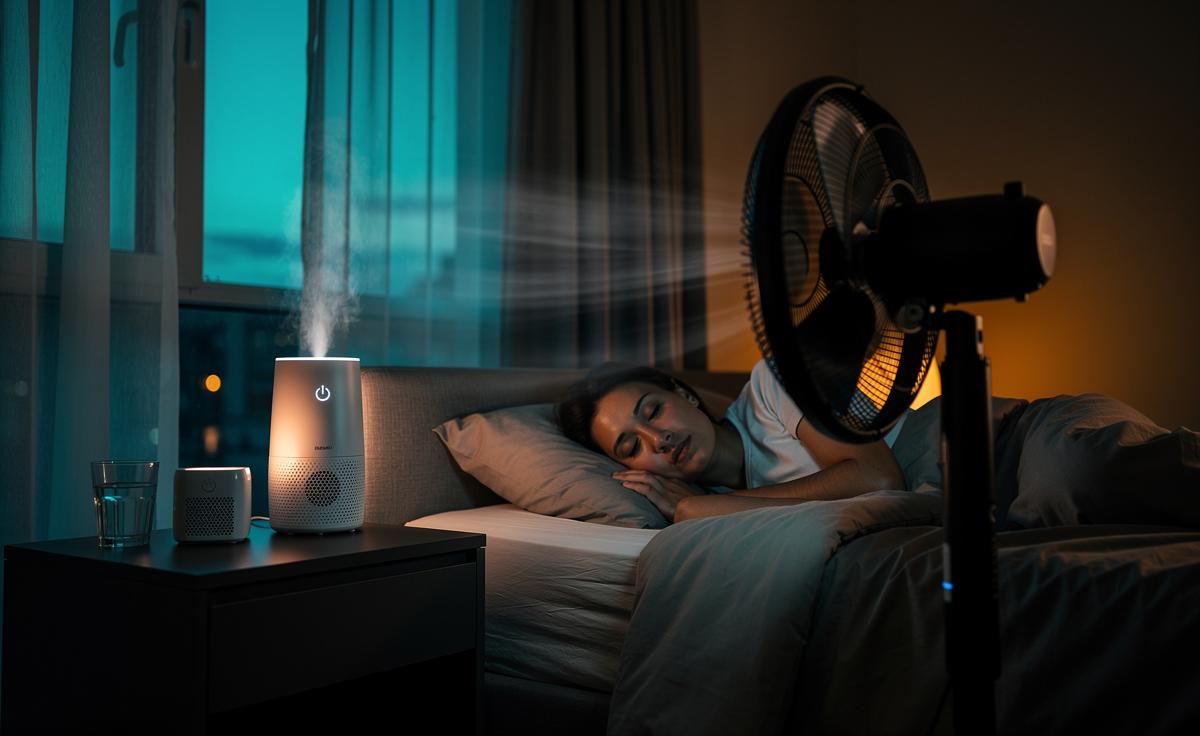
Clinicians tend to agree on safeguards. Keep the fan at least 1–2 metres from the bed and use oscillation to avoid a constant stream on one body area. Angle it slightly above or beside your head so the airflow passes by, not into, your mouth and eyes. Clean blades and grilles weekly; dust build-up is the enemy. If allergies bite, pair the fan with a HEPA air purifier or close windows during peak pollen hours, then ventilate at cooler times.
Manage dryness with a simple humidifier (or a bowl of water away from electrics), a glass of water by the bed, and saline nasal spray if needed. Eye irritation? Consider preservative-free lubricating drops before lights out. Use a timer to reduce overnight exposure, especially in cooler pre-dawn hours, and keep room temperatures in the comfortable 16–20°C range. A fan is safe when it supports your biology rather than battling it. Avoid scented oils on the grille—they can irritate airways. If you have severe asthma, chronic sinusitis, or significant neck pain, test changes in small steps and observe how you feel the next morning.
So, is it bad to sleep with a fan on? Not inherently. It’s about context—your sensitivities, the room’s air quality, and how intelligently you direct the breeze. Used thoughtfully, a fan can cool you efficiently, calm noisy nights, and help you drift off faster. Mismanaged, it can stir up sneezes and stiffness by sunrise. Let airflow work for you, not against you. What tweaks—distance, oscillation, cleaning, humidity—could you try this week to find your personal sweet spot between cool comfort and clear breathing?
Did you like it?4.6/5 (21)