In a nutshell
- 🧊 Cooling counts: a cold milk compress eases sunburn by promoting vasoconstriction and reducing nerve signaling, while milk’s fats and proteins form a soothing film that limits TEWL.
- 🥛 How-to: use whole or semi-skimmed milk chilled (not icy), apply for 5–10 minutes per round, repeat as needed, then seal with a fragrance-free emollient; discard used milk.
- ⚠️ Smart choices: whole milk cushions best; skimmed cools with less relief, and plant milks can irritate due to additives; patch-test if sensitive and avoid use on blistered or broken skin.
- 🔬 The science: cooling dampens TRPV1 pain pathways; milk lipids act as light occlusives, and gentle lactic acid may soften roughness—use is supportive, not curative.
- 🌞 Aftercare: prioritise hydration, shade, loose clothing, and introduce SPF 30+ when tolerated; seek medical help for extensive burns, fever, or worsening redness.
Sunburn arrives with a hot, insistent sting that makes even a cotton T‑shirt feel abrasive. Among the simplest home remedies, a cold milk compress stands out for its swift, soothing effect. The chill tamps down surface inflammation, while the milk’s fats and proteins lay a calming film over sensitised skin. Think of it as a short, cooling interlude that helps the skin stabilise before you moisturise and rehydrate properly. Use cool—not icy—milk to avoid thermal shock, keep contact brief, and follow with a gentle emollient. Done correctly, this quick kitchen fix can lower the burn’s bite and buy your skin time to heal more comfortably.
Why Cold Milk Works on Sunburned Skin
When skin overheats in the sun, micro‑inflammation, vasodilation, and nerve irritation combine to create that unmistakable sting. A chilled compress triggers vasoconstriction, slowing blood flow at the surface and reducing swelling. Cooling also decreases nerve conduction, so pain signals feel less intense. What elevates milk beyond water is its composition: milk fat provides an occlusive layer that helps curb trans‑epidermal water loss (TEWL), while proteins such as casein can form a light film that feels instantly comforting.
Milk’s slightly acidic pH and gentle lactic acid content can help soften roughness without scraping already compromised skin. Vitamins and minerals are not the main actors here; the immediate benefit is physical—cooling plus a protective coat. Apply cool, not ice‑cold, compresses to avoid cold injury, and never rub. Pat the area, let the film sit briefly, then transition to a fragrance‑free moisturiser to lock in hydration and maintain the newfound calm.
How to Make and Use a Cold Milk Compress
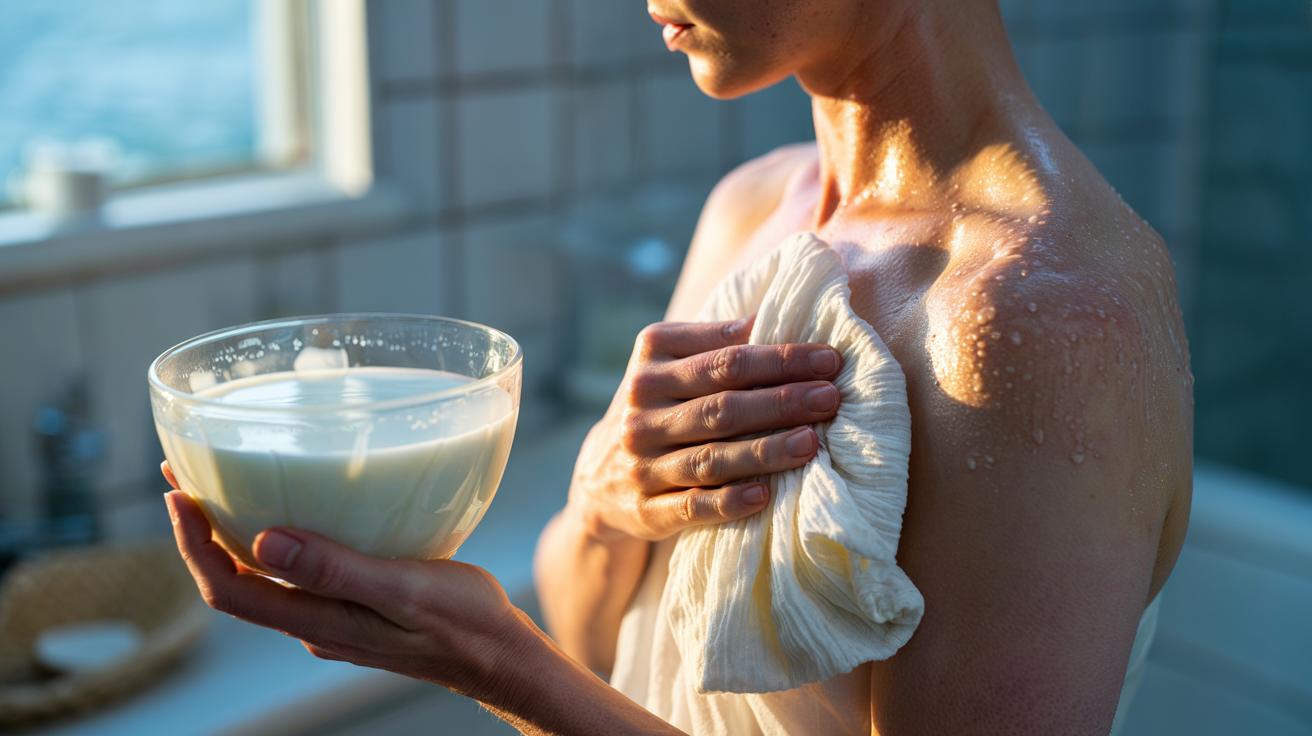
Start with whole or semi‑skimmed milk chilled in the refrigerator. Pour a cup into a clean bowl, then submerge a soft cotton cloth or gauze. Wring gently so it’s damp, not dripping. Lay the cloth on the sunburn for 5–10 minutes, lifting if it warms. Re‑soak with fresh cold milk and repeat up to three cycles, keeping total contact to about 20–30 minutes for the day’s first session. The aim is consistent cooling, not saturation.
After compressing, allow a thin milk film to sit for a minute, then either rinse with cool water or go straight to a bland, fragrance‑free emollient to seal moisture. Discard used milk to avoid bacterial growth. Avoid broken or blistered skin, and stop if stinging worsens. Do not combine with harsh exfoliants, perfumed after‑sun gels, or alcohol‑based products. Over the next 48 hours, prioritise hydration, shade, loose clothing, and a broad‑spectrum SPF 30+ once skin tolerates application.
Choosing the Right Milk and What to Avoid
For topical use, the sweet spot is milk with enough fat and protein to leave a soft, occlusive veil without residue. Whole milk hits that balance nicely; semi‑skimmed still works if that’s what’s in your fridge. Skimmed milk cools but lacks the lipid cushion. Fermented products and plant milks bring variables—pH, sugar, thickeners—that can irritate sensitised skin. Always patch‑test a small area first if you have reactive skin or a history of dairy allergy.
| Option | Pros for Compress | Cautions |
|---|---|---|
| Whole cow’s milk | Good fat/protein for occlusion and comfort | Avoid if dairy allergy; use only when fresh and cold |
| Semi‑skimmed milk | Decent cooling with moderate lipids | Less cushioning than whole milk |
| Skimmed milk | Cooling effect | Minimal fats; relief may be shorter‑lived |
| Greek yogurt (thinned) | Protein‑rich | Acidity may sting; rinse promptly |
| Plant milks (oat/almond/soy) | Cooling if chilled | Lower fats/proteins; additives may irritate |
Skip condensed or sweetened milk, which can be sticky and pro‑inflammatory on hot skin. Do not apply spoiled milk. If blistering, fever, or large‑area burns are present, seek medical advice rather than home remedies.
What Science Says About Chill, Lipids, and Proteins
Dermatology basics support the milk compress idea. Cooling narrows surface vessels and dampens inflammatory signalling, while reduced thermal input slows TRPV1-mediated pain pathways—hence the rapid easing of sting. Milk fat acts as a light occlusive, mimicking aspects of the skin’s own lipid barrier to reduce TEWL. Casein micelles and whey proteins can form a micro‑film that improves slip and comfort, lowering friction on touch‑sensitive areas. Lactic acid in fresh milk is minimal, but its gentle keratolytic profile may soften scaliness that follows sunburn.
Evidence remains pragmatic rather than blockbuster: clinicians often recommend cool compresses, with milk cited for its skin‑feel advantages rather than curative magic. Never use on open, weeping, or infected skin, and discontinue if redness intensifies. For severe burns, children, or those with known dairy allergies, stick to sterile saline or water‑based cool compresses and professional care. Still, as a fast, accessible intervention, a cold milk compress is a surprisingly elegant blend of physics and biochemistry.
Sunburn recovery is about calming heat, protecting the barrier, and keeping hydration in. A cold milk compress offers all three: quick cooling, a soft lipid shield, and a smoother glide that makes skin feel less raw. Keep sessions short, the milk fresh and chilled, and follow with a simple emollient to lock in comfort. Then give your skin the time and shade it needs to settle. When the next heatwave hits, will you be reaching for a jug of whole milk alongside your SPF, or do you have another tried‑and‑tested remedy that cools the sting just as fast?
Did you like it?4.6/5 (25)