In a nutshell
- 🥾 Immediate friction reduction: Vaseline acts as a boundary lubricant, lowering skin–shoe friction and shear so hot spots don’t escalate into blisters.
- 🧴 How to apply: Clean and dry skin, map hot spots, warm a pea-sized amount, spread a thin film on ankles/heels, lock in with smooth socks, and reapply every 2–3 hours; avoid excess that could cause slippage.
- ✅ Pros and cautions: Instant comfort, low cost, easy to find; downsides include grit attraction and minor marking, and it won’t fix poor fit. Avoid on open skin; people with diabetes or neuropathy should seek clinical advice.
- 🔁 Alternatives compared: Anti-chafe balms (drier, longer-lasting), hydrocolloid plasters (cushion), double-layer socks (shift friction), and moleskin/tape (sacrificial surface)—choose by distance, heat, and moisture.
- 🧠 Smart strategy: Pair Vaseline with gradual break-in, good socks, and fit tweaks; if rubbing persists, escalate to padding, heel grips, or a different last for lasting comfort.
New shoes can look the part yet feel ruthless on a first outing. When stiff uppers and snug heel counters rub your ankles, skin overheats, layers separate, and a blister forms. A simple hack used by runners, hikers, and commuters alike is applying Vaseline—a brand of petroleum jelly—to the ankle and heel. This quick fix creates an immediate slip between skin and shoe so micro-movements do not chafe. The result is an instant reduction in friction at the exact pressure points that usually flare up within minutes. Cheap, accessible, and mess-free when used correctly, Vaseline can turn a risky break-in into a comfortable walk, especially over the first few wears.
Why Petroleum Jelly Prevents Blisters
Blisters develop when repetitive rubbing creates heat and shear, causing the upper layers of the epidermis to separate and fill with fluid. Petroleum jelly interrupts that cycle by acting as a boundary lubricant: it inserts a slick layer between skin and shoe, reducing the coefficient of friction so movement glides instead of grabs. This limits hot spots at the ankle collar, heel cup, and shoe edges where stiffness focuses force.
The jelly also forms an occlusive barrier that fills micro-gaps on the skin surface, evening out irregularities that might otherwise catch on sock fibres or rough lining. By lowering friction at the skin–shoe interface, you stay below the threshold where shearing damage begins and blisters are born. The effect is immediate, which is why Vaseline is so valued on day one with brand-new footwear, from loafers to hiking boots.
How to Apply Vaseline for Immediate Relief
Start with clean, dry skin. Wipe sweat and dust from the ankle bone, Achilles area, and the rim where the shoe collar meets skin. Map your hot spots by gently flexing and walking around indoors; note exactly where rubbing starts.
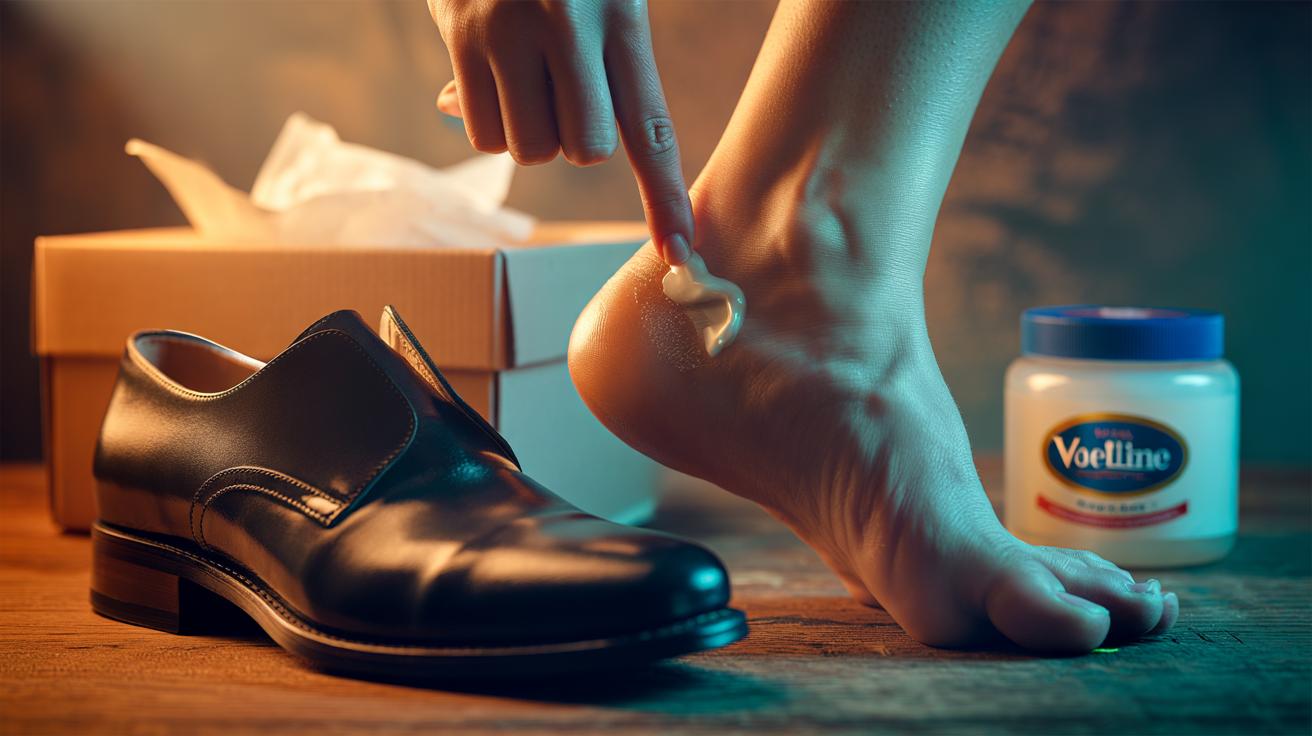
Warm a pea-sized amount of Vaseline between fingertips. Apply a thin, even film over those zones—think sheen, not shine. Include the back of the heel, outer and inner ankle bones, and any bony toe knuckles if narrow uppers are involved. Use the smallest amount that lets the skin feel slippery without looking greasy.
Lock it in with a smooth, synthetic or merino sock, which helps distribute the jelly and keeps it from transferring onto the shoe lining. If you sweat heavily or are on a long walk, reapply after 2–3 hours; carry a travel pot for commutes and hikes. Avoid slathering large amounts that could migrate underfoot, as that may make the heel slip more than intended.
Pros, Limitations, and When to Use Something Else
Used sparingly, petroleum jelly offers instant comfort, costs little, and is available virtually anywhere. It is ideal when breaking in stiff leather, wearing formal shoes without cushioned collars, or heading out for a one-off event where immediate relief matters most. For many people, the first few wears are the danger zone, and a touch of lubricant is enough to get past it.
It is not perfect. Vaseline can attract lint and grit, may require reapplication in heat, and can lightly mark some leathers if overused at the edge of the collar. It also does little to correct poor fit. People with diabetes, neuropathy, or circulatory issues should consult a clinician before using lubricants on high-pressure areas, and you should never apply to open blisters or broken skin. If footwear continues to rub even after lubrication, consider structural solutions such as padding, heel grips, or refitting.
Comparison of Quick Anti-Blister Options
When discomfort persists or conditions change—rain, long mileage, steep hills—other tools may outperform petroleum jelly. Here is a simple comparison to help you choose the right fix for your feet and your shoes.
| Method | How It Reduces Friction | Best For | Reapplication | Downsides |
|---|---|---|---|---|
| Petroleum jelly (Vaseline) | Creates a slick boundary layer | Short outings, breaking-in days | Every 2–3 hours if needed | Can attract grit; may migrate |
| Anti-chafe balm (stick) | Dry-feel lubricants reduce grab | Warm weather, long walks | Less frequent than jelly | Costs more; some scents |
| Hydrocolloid blister plaster | Cushions and protects skin layers | Existing hot spots or minor blisters | Wear for 1–3 days | Not ideal for very wet use |
| Double-layer socks | Friction shifts between layers | Daily training, long commutes | N/A | Can change shoe volume |
| Moleskin or tape | Creates a sacrificial surface | Targeted ankle/heel spots | Replace after activity | May lift with sweat |
Choose the least invasive option that keeps friction below the threshold for skin shear. If you only need help for a single day in new shoes, Vaseline is typically enough; for regular long walks, a balm plus technical socks may be a smarter, tidier combination.
In short, applying a tiny amount of Vaseline to your ankles and heels can prevent blisters from new shoes by instantly lowering friction where it counts. Pair the method with good socks, gradual break-in, and small fit tweaks, and you dramatically reduce the chance of hot spots. If the first trial still rubs, escalate to structured padding or a different last. Your goal is not to toughen skin but to minimise shear in the first place. How will you refine your own anti-blister strategy the next time a box-fresh pair tempts you out the door?
Did you like it?4.5/5 (26)